A recovery budget that stops at the reopening date can understate the cost of a fire. Business-income insurance may finish its main period of protection when repairs are complete, while the customer income needed to support the business is still recovering.[1][2]
The financial exposure sits between those milestones. A larger insurance limit does not, by itself, lengthen the period in which a loss qualifies. The useful question is how much income remains missing after restoration, and which policy provision—if any—still responds.[2][4]
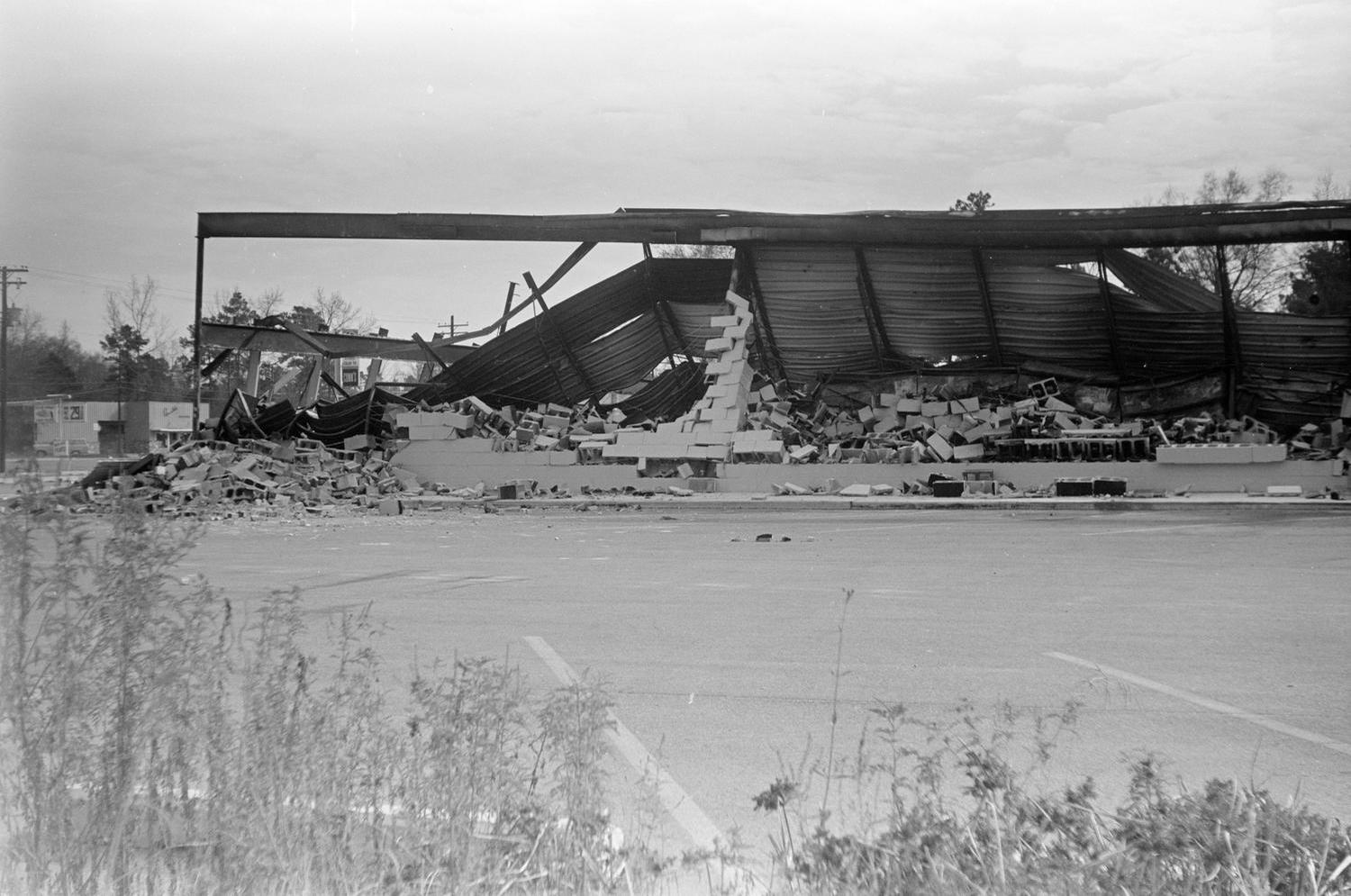
Repairs finish before the sales recover
Consider a hardware shop whose covered fire damage has been fully repaired. The shelves are restocked and the premises can operate normally, but regular customers have started buying elsewhere. In this hypothetical case, the closure caused the loss of custom; the wider market has not weakened.
U.S. business-income cover generally measures lost net income together with normal continuing operating expenses. Its main coverage period is tied to the reasonable time needed to restore damaged property. Some policies include extended business income for a defined period after restoration, when operations have resumed but income remains below the level that would otherwise have been earned.[2]
The NAIC identifies extended business interruption as protection for this interval between property repair and income recovery. It also distinguishes property insurance, which addresses physical damage, from business interruption, which addresses the resulting financial loss. A paid building claim therefore does not establish that every subsequent earnings loss is covered.[1]
This example assumes an accepted covered fire, an agreed restoration endpoint at reopening and sufficient limits. It isolates the period after reopening: closure losses, deductibles, coinsurance, taxes and extra expenses are outside the calculation. Actual policy wording and applicable state law determine a real claim.
The missing sales overstate the missing income
Assume the shop would normally generate $100,000 in monthly sales. Merchandise costs vary directly with sales and absorb 60% of revenue. All other operating expenses remain unchanged during the recovery.
After reopening, sales run at half their expected level for two months, then recover completely. For the example, each month lasts 30 days, with the shortfall spread evenly through it. These are invented operating assumptions, not industry averages or a forecast.
The lost sales are only the starting point. Lower sales also mean fewer goods purchased for resale. Subtract those avoided costs and the monthly shortfall becomes:
Lost contribution = $100,000 × one-half × (1 − 60%) = $20,000 per month.
That contribution would have supported continuing overhead and profit. Because overhead is unchanged, the fall in contribution also equals the deterioration in the shop's operating result. It is the economic loss being modeled here, rather than an automatic insurance payment.
Across the recovery period, the shop is $40,000 worse off than it would have been without the disruption. Calling the entire sales shortfall an insured loss would overstate the damage by ignoring merchandise the shop never needed to buy. United Policyholders likewise identifies inventory purchases and other expenses that cease with activity as relevant to the loss calculation.[4]
Nor is $40,000 necessarily the amount of an overdraft. Some of it may be forgone profit; the actual cash requirement also depends on opening cash, supplier terms and when any insurance proceeds arrive. The model measures deterioration against the expected trading result.
Change the extension, keep the same shop
Hold the operating facts constant and change only the cover available after restoration. For the extension cases, assume the continuing shortfall satisfies the policy's causation and recovery requirements throughout the stated period.
| Cover after restoration | Modeled covered loss | Loss remaining with the owner |
|---|---|---|
| No extended business income | $0 | $40,000 |
| Extension covering the first 30 days | $20,000 | $20,000 |
| Extension covering both recovery months | $40,000 | $0 |
These are conditional calculations, not quotations of standard benefits. Travelers illustrates a policy with a 30-day extension; that example does not make the duration universal. The actual extension and its stopping conditions must be read in the contract.[2]
In the middle case, the extension performs exactly as assumed and still leaves half the loss with the owner. Raising the dollar limit would not close that particular gap: the uncovered loss arises after the assumed time allowance has ended. Conversely, the longest extension cannot create a payment once the qualifying loss has disappeared.
The strongest counterweight is straightforward. A shop with loyal customers, a substantial order backlog or effective temporary operations might restore its expected income quickly. Chubb describes extra-expense cover that can help a business continue operating or shorten disruption through measures such as temporary relocation. Whether those measures preserve customers in a particular business is an operating judgment, but they can change the recovery path used in the model.[3]
What would break the loss estimate
The modeled post-reopening gap is disproved if the shop restores its expected contribution immediately on reopening. Repairs alone do not establish that outcome; sales and avoided costs do.
The restoration date itself also deserves evidence. United Policyholders notes that permitting, contractor and supply delays can affect the reasonable repair period. Those are different issues from customers returning slowly after an otherwise complete restoration. Its guidance emphasizes keeping repair records and confirming claim discussions in writing.[4]
Three events would determine whether the scenario survives contact with an actual recovery:
- At the agreed restoration endpoint: reconcile the repair record with the policy's definition, then identify any extension and its start and stop conditions.[2][4]
- At the first full accounting close after reopening: compare sales and variable costs with a supported no-fire forecast. Chubb identifies prior financial records and earnings projections as relevant inputs; a pre-loss budget alone is not evidence that every expected sale would have occurred.[3]
- At the extension's expiry and claim settlement: separate the qualifying loss within the covered period, the loss beyond it and the proceeds actually received. This reveals whether the remaining problem is coverage duration, the amount accepted or the timing of cash.[4]
Sources
- National Association of Insurance Commissioners, “Business Interruption and Business Owner Policy,” updated June 25, 2026 — property damage, business-income protection and extended interruption coverage.
- Travelers, “Understanding Business Income Coverage” — income definition, restoration period and an illustrative 30-day extended-income provision.
- Chubb, “Business interruption insurance and coverage basics,” November 28, 2020 — policy-specific triggers, earnings projections and extra-expense coverage.
- United Policyholders, “Post-Disaster Insurance FAQs For Small Businesses” — continuing and avoided expenses, repair-period evidence, documentation and claim timing.
- David P. Lewis, “Gibson's Store After a Fire,” December 5, 1970 — photograph of Vidor, Texas, provided by Lamar University to The Portal to Texas History, UNT Libraries.