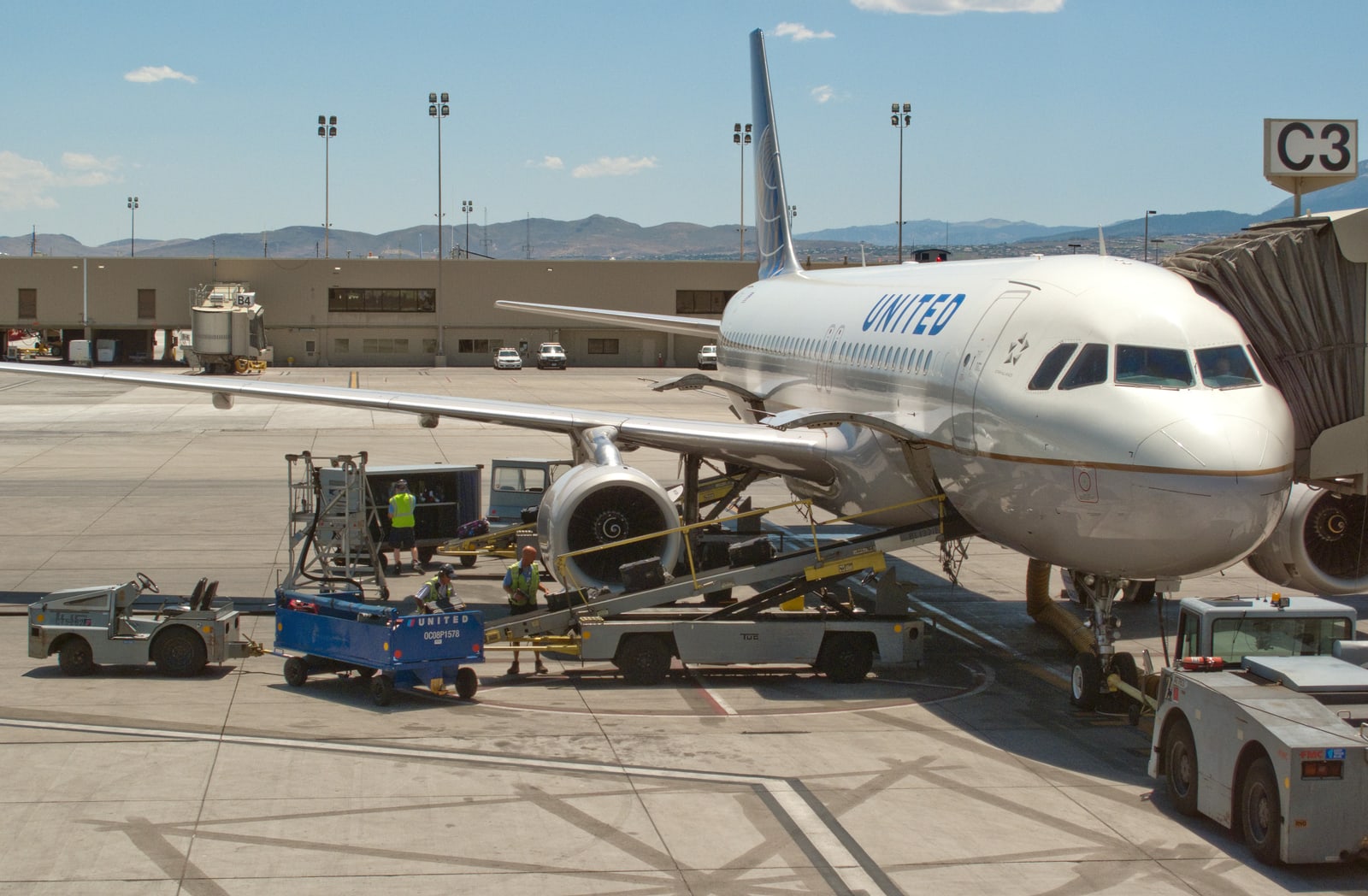
Airport handlers already have the easy part of the story: aircraft and passengers are back in record numbers. The new question is whether each additional turn lands on a trained crew and an available belt loader—or merely adds overtime, equipment risk, and delay penalties to a labor-heavy network.
That gap matters more than another traffic forecast. Menzies Aviation and Swissport both reported record 2025 revenue, while listed SATS grew faster than the flights it handled.[1][2][3] Volume is arriving. The investable spread now sits between a busy ramp and a productive one.
Traffic has already paid its admission
The headline numbers leave little room for a hidden recovery thesis. Menzies generated $3.0 billion of revenue in 2025 and $406 million of EBITDA, a 13.4% margin, after supporting 5.3 million flight activities across fueling and ground handling.[1] Swissport reported €3.9 billion of revenue and handled 4 million flights; its airport ground-operations revenue grew 4% while group underlying revenue grew 9.3%.[2]
The harder evidence arrived one quarter later. Menzies' ground-handling turns rose 7.7% year over year in Q1 2026 and revenue jumped 34% to $869 million, helped heavily by the G2 Secure Staff acquisition and better yield. EBITDA nevertheless stayed flat at $86 million, compressing margin from 13% to 10%, while EBIT fell 15%. The parent company attributed the pressure to Kuwait exit costs, airspace disruption, and new-business ramp-up as well as the acquisition mix.[8] More work entered the network; far less of the growth reached profit.
SATS provides the cleaner public-market bridge. In the year ended March 2026, group revenue rose 9.0% to S$6.35 billion, even though flights handled increased 3.2%. EBITDA margin improved only 0.3 percentage point to 18.1%.[3] That is respectable conversion, but it also shows what is already in the numbers: commercial wins, mix, cargo, food operations, and pricing have pushed sales well beyond simple flight growth.
The market should therefore resist valuing ground handlers as uncomplicated passenger-volume proxies. Airlines sell seats; airports monetize movements, shops, and property; handlers sell the coordinated work between arrival and departure. The number of flights sets the opportunity. Contract price, station density, labor readiness, equipment availability, and error rates decide the return.
One turnaround is a miniature factory
A passenger aircraft at the stand creates a short production window. Bags come off, bags go on, passengers move through the gate, cabins are cleaned, water and catering arrive, fuel is loaded, weight and balance are reconciled, doors close, and the aircraft is pushed back. Some jobs can overlap. Others cannot. A late inbound or a missing crew member compresses everything that follows.
This creates an unusual form of operating leverage. A handler wins when multiple airline contracts at one airport let it reuse supervisors, training systems, workshops, equipment, and spare labor across a dense schedule. A thin station does the opposite: the company still needs certified people and specialized machinery, but too few turns absorb the fixed readiness cost. A new contract is valuable only if its flight bank fits the existing operation or is large enough to support a new one.
The economic chain is short:
more contracted turns → denser use of crews and equipment → lower cost per turn → wider margin.
But the chain reverses just as quickly:
schedule disruption → overtime and equipment conflicts → rushed or delayed work → claims, penalties, and weaker contract renewal economics.
That is why Swissport's 98.5% on-time performance and Menzies' 90% customer-retention rate deserve more attention than passenger growth alone.[1][2] They are not soft operational ornaments. They are evidence that a handler can keep the factory synchronized well enough for airlines to buy again.
Labor is the P&L
SATS spent S$3.42 billion on employment in FY2026, about 54% of revenue.[3] Menzies and Swissport employed roughly 65,000 and 63,000 people, respectively, in 2025.[1][2] Those figures explain both the attraction and the ceiling of the model.
Scale can centralize procurement, systems, safety programs, and customer negotiations. It cannot load a bag remotely. Staff must be recruited near each airport, cleared for secure areas, trained for airline and aircraft procedures, rostered against peaky schedules, and retained long enough to become reliable. A headcount increase can be a growth asset, a start-up cost, or a sign that productivity is slipping; the revenue line alone cannot distinguish them.
The strongest operators should show three things together: revenue per handled activity rising, employment cost growing more slowly than revenue, and service or safety measures holding steady. If only the first improves, pricing may be masking a less productive ramp. If costs fall while errors rise, the apparent margin is borrowed from a future claim, penalty, or lost contract.
Equipment is a safety investment with a payback question
Ground-support equipment is the other large constraint. Belt loaders, baggage tractors, passenger stairs, pushback tugs, ground-power units, and cargo loaders spend much of their lives at one airport. Expanding a network therefore requires capital before every station has mature density.
IATA's 2025 ground-handling data recorded more than 29,000 aircraft-damage events and nearly 38,000 loading errors across an industry operating about 40 million flights.[4] The absolute rates are low; the financial tail is not. One damaged aircraft can leave the schedule, strand passengers, consume maintenance capacity, and trigger a dispute over liability. A loading error reaches beyond service quality into flight safety.
Modernization offers a real but selective answer. Menzies said it invested more than $200 million in fleet modernization and moved past 25% electric ground-support equipment; Swissport reached 26.3%.[1][2] IATA says anti-collision equipment can reduce expected ground-damage costs, while handlers using digital load-control and reconciliation systems report loading-error reductions above 90%.[4] The point is not that every electric tug creates a moat. It is that safer, connected equipment can protect availability, training consistency, insurance outcomes, and contract credibility—if utilization is high enough to earn back the spend.
The strongest counterweight: scale is starting to behave like a platform
The best objection to a margin-cautious view is that the largest handlers are no longer merely collections of local crews. Menzies expanded to 347 airports in 65 countries during 2025 and paired that reach with 90% customer retention.[1] Swissport operated at 312 airports and served more than 850 airline customers.[2] A carrier can increasingly buy a common operating framework, reporting layer, and safety standard across many stations rather than procure every airport separately.
That platform effect can improve bid discipline. A large handler can decline unattractive work, spread technology development across more turns, move management talent between stations, and cross-sell ramp, passenger, cargo, fueling, and lounge services. Consolidation can also remove duplicated overhead and make global airline contracts harder for a small local rival to match.
The caution is that reach is not density. Adding airports through acquisition can lift revenue immediately while training, systems, equipment, and local labor practices take longer to converge. Menzies' 2025 growth included the acquisition of G2 Secure Staff; its Q1 2026 margin compression then showed the cost of bringing acquired and new business onto the platform.[1][8] Swissport also expanded by acquisition and new-market entry.[2] Investors should separate purchased footprint from organic improvement at established stations.
The falsifier
This thesis is too cautious if handlers can expand margins without first improving the labor-and-equipment conversion. The cleanest public test is SATS: if Gateway Services revenue continues to outgrow handled flights, group EBITDA margin rises, and employment cost falls as a share of sales while service remains stable, then scale and contract pricing are already overcoming the operational drag.[3]
The bearish break is the mirror image. If traffic and revenue rise but labor cost accelerates, margins stall, and handlers keep buying equipment merely to preserve existing service levels, record activity is not producing record economics.
Watchlist
July 17 — SATS annual general meeting. Listen for evidence on WFS integration, contract pricing, labor productivity, and the return expected from facility and equipment spending. Broad growth language matters less than whether management can name where incremental margin will come from.[5]
August 19 — SATS first-quarter FY2027 results. Compare Gateway Services revenue with flights handled, then check EBITDA margin and employment cost. This is the first scheduled print after the full-year result and the most direct near-term test of conversion.[5]
Later in 2026 — IATA's first Baggage Community System release. IATA says the test environment is live and the first release is planned this year. Early adoption will show whether shared real-time baggage data can move from an industry standard into fewer manual handoffs and errors.[4]
March 27, 2028 — EU ground-handling rules apply. EASA's framework introduces common requirements for safety management, training, equipment maintenance, and oversight. The date is distant, but tenders, systems, and fleet plans made in 2026–27 will reveal which operators treat compliance as a scalable operating advantage and which absorb it as another station cost.[6]
Airport traffic is no longer the hidden variable. The better finance question is what happens during the minutes when an aircraft is not earning flight revenue. The handler that turns those minutes into repeatable, dense, low-error work deserves the premium; the one that merely hires and buys equipment to chase a busier schedule does not.
Sources
- Menzies Aviation, "Menzies Aviation surpasses $3bn revenue as record expansion powers future growth" (April 2, 2026) — 2025 revenue, EBITDA, flights supported, ground-handling turns, footprint, workforce, retention, and fleet investment.
- Swissport, "Swissport delivers record performance as it celebrates 30 years of aviation excellence" (May 7, 2026) — 2025 revenue, segment growth, flights, airports, workforce, customers, on-time performance, and electric-equipment share.
- SATS, 4Q FY2026 Business Update (May 25, 2026) — full-year revenue, Gateway Services revenue, flights handled, EBITDA margin, employment cost, and profit bridge.
- International Air Transport Association, "Ground handling: stronger standards, smarter equipment, better data" (May 19, 2026) — 2025 safety data, equipment modernization, electric turnarounds, digital load control, and baggage-system release plan.
- SATS, "Financial & IR Calendar" — July 17, 2026 annual meeting and August 19, 2026 first-quarter FY2027 results dates.
- European Union Aviation Safety Agency, Easy Access Rules for Ground Handling (November 2025) — common oversight and operating requirements, with general application from March 27, 2028.
- Downtowngal, "Baggage loading into airplane" — Wikimedia Commons source page for the real July 2012 photograph of a United Airbus A320 turnaround at Reno-Tahoe International Airport; resized for this article; CC BY-SA 3.0.
- Agility Global, Q1 2026 Presentation (May 2026) — Menzies revenue, EBITDA, EBIT, margins, ground-handling turns, acquisition contribution, disruption, and ramp-up costs.