Airbnb's quarter did not need to prove that people still want the core product. That part is already priced. Revenue grew 18% to $2.678 billion, Gross Booking Value reached $29.2 billion, and Nights and Seats Booked rose to 156.2 million.[1][2] The app is taking more share, first-time bookers are accelerating again, and expansion markets are still growing faster than the core base.[1] Investors already know Airbnb can still move nights at scale.
The more interesting question after Q1 2026 is narrower. Can services, experiences, hotels, and deferred-payment tools make demand cheaper and more durable, or do they just make Airbnb a broader travel storefront with a larger marketing bill?[1][2][3][4][5] That is the real new proof embedded in this quarter.
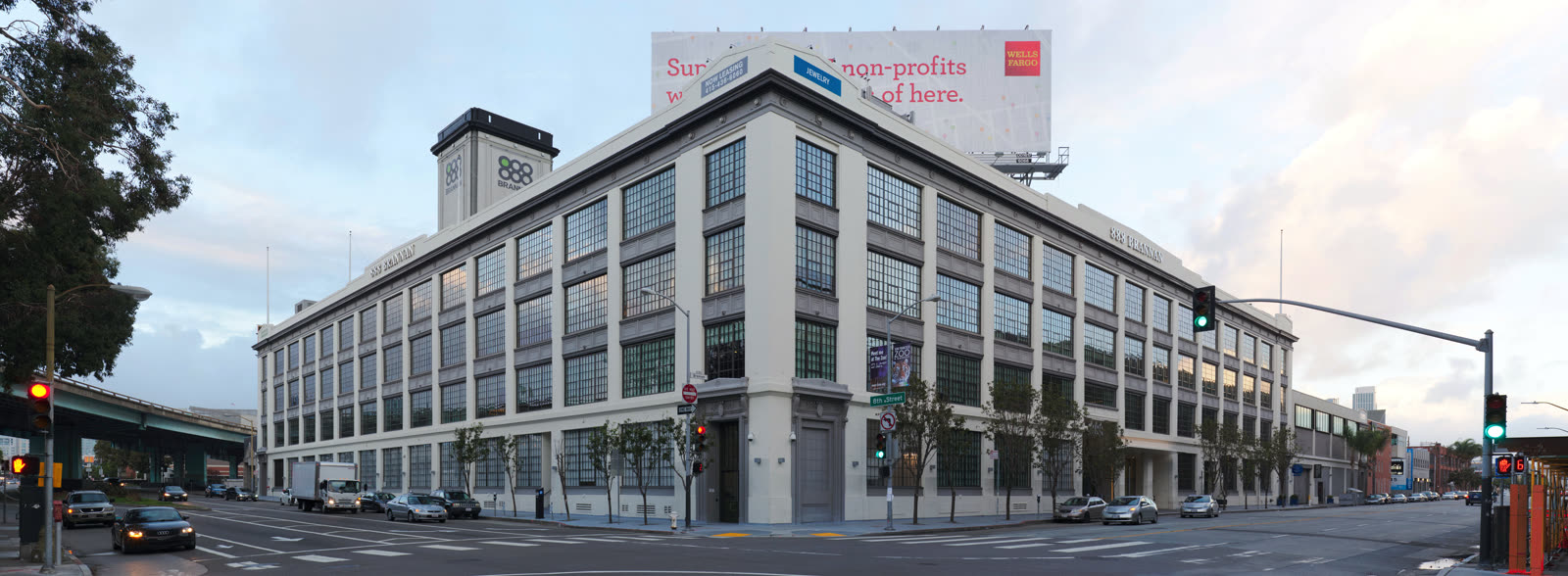
Image context: the cover uses a real Wikimedia Commons photograph of 888 Brannan in San Francisco, the building that contains Airbnb's North American headquarters, rather than a stock chart or a generic vacation montage.[6] That documentary scale fits the argument better. The debate here is about platform architecture, demand routing, and acquisition efficiency.
Priced vs new
The priced layer is straightforward. Core stays are still working. Airbnb said nights booked on its app rose 22% year over year and reached 63% of total nights booked, up from 58% a year earlier.[1] First-time booker growth accelerated to 10%, the strongest pace since early 2022, while expansion markets grew at roughly twice the rate of core markets.[1] ADR reached $187, up 9% year over year, or 4% excluding FX.[1] In other words, the main engine still has volume, pricing, and geographic breadth.
What is new is the shape of the entry funnel Airbnb is trying to build around that engine. The shareholder letter described services and experiences as demand flywheels rather than side products: nearly a quarter of guests who are new to Airbnb and book an experience go on to book a stay or a service, and roughly one in three experience bookers book a stay within 90 days.[1] The hotel pilot is being framed the same way. Airbnb says about 55% of guests who book a hotel on the platform come back to book a home.[1] If those cross-overs keep compounding, Airbnb is not just selling more trips. It is lowering the cost of finding the next booking.
Deferred payment matters for the same reason. Airbnb said roughly 20% of global GBV in Q1 came from Reserve Now, Pay Later bookings, and the company tied longer booking lead times partly to the continued expansion of those programs.[1][2] The February product launch note was even more explicit: management said the U.S. rollout of Reserve Now, Pay Later helped accelerate bookings in Q4 2025 from Q3 2025.[3] A payment feature that lifts booking frequency without obvious pricing damage is financially different from a marketing coupon.
Why the quarter can still rerate
The best bullish read is that Airbnb may be turning adjacency into acquisition efficiency. The 2025 Summer Release established the broader product map: services alongside homes and experiences in one app, with thousands of service offerings across 260 cities.[4] March's Welcome Pickups launch showed that this is still expanding, adding private car services in 125+ cities across Asia, Europe, and Latin America.[5] That matters because Airbnb is testing whether the app can become a travel operating layer rather than a once-or-twice-a-year lodging destination.
The quarter also showed that this strategy can sit on top of a still-strong core. Q2 guidance called for revenue of $3.54 billion-$3.60 billion, or 14%-16% year-over-year growth, with implied take rate up slightly and Adjusted EBITDA up year over year.[1] Full-year guidance was raised to low-to-mid-teens revenue growth with Adjusted EBITDA margin of at least 35%.[1] If Airbnb can keep reinvesting in services, hotels, partnerships, and AI while still expanding full-year margin guidance, the market can reasonably argue that the platform is becoming broader without becoming structurally less profitable.
There is also a cost discipline angle inside the product story. Airbnb said more than 40% of issues for guests contacting support through its AI Assistant are now resolved without a human agent, up from roughly a third in Q4 2025, and cost-per-booking fell about 10% year over year in Q1.[1] That matters because adjacency works better financially if the support and service layer scales with software rather than headcount.
Six numeric anchors
- $2.678 billion, $29.2 billion, and 156.2 million: Q1 revenue, GBV, and Nights and Seats Booked are the simplest proof that core stays are still growing at scale.[1][2]
- 22%, 63%, and 58%: app-booked nights growth, current app share of total nights, and the prior-year app share show that Airbnb is still shifting demand into its higher-control surface.[1]
- 10% and 2x: first-time booker growth and the relative pace of expansion-market growth versus core markets point to a still-live international acquisition runway.[1]
- Nearly a quarter, one in three, and 55%: the experience-to-stay funnel and hotel-to-home repeat behavior are the cleanest early numbers supporting management's adjacency thesis.[1]
- $751 million, 28% of revenue, and +33%: total sales and marketing expense moved up sharply, which is the clearest evidence that the new funnel still has to prove it can get cheaper.[2]
- $3.54 billion-$3.60 billion and at least 35%: Q2 revenue guidance and full-year margin guidance define the next checkpoint for whether reinvestment is still paying through.[1]
Strongest counterweight
The strongest pushback is that Airbnb may not need these adjacent products to become huge in order for the stock to work. The homes business is already large, global, and cash generative. Q1 free cash flow was still $1.7 billion, and management kept buying back stock, repurchasing 8.1 million shares for $1.1 billion in the quarter.[2] If the core marketplace can keep compounding, then services and hotels only need to improve retention and cross-sell at the margin rather than turn into separate profit centers.
That counterweight is real. But the 10-Q also shows why the burden of proof has not disappeared. Sales and marketing rose to $751 million from $563 million, with brand and performance marketing up to $512 million, and management attributed part of the increase to paid growth initiatives in emerging markets and partnerships, plus third-party service-provider costs tied to scaling Experiences and Services supply.[2] Net income only rose to $160 million from $154 million, and the company also acknowledged slightly elevated cancellations from the Middle East conflict.[1][2] The quarter was strong, but it was not free.
Falsifier
This thesis breaks if Airbnb keeps adding products while acquisition costs stay sticky. Concretely: if services, experiences, hotels, and deferred-payment tools keep expanding, but sales and marketing remains elevated as a share of revenue, cross-over behavior stops improving, and take rate does not widen enough to pay for the broader funnel, then the quarter should be read as a healthy core lodging business carrying a more expensive travel adjacency project.[1][2][3][4][5]
Watchlist
- May 20, 2026 Summer Release: management has already pointed investors to this date for the next details on services, experiences, and hotels.[1]
- Q2 2026 results: the immediate test is whether revenue lands inside $3.54 billion-$3.60 billion while implied take rate edges up and margins still expand.[1]
- World Cup 2026 conversion: Airbnb said over 100,000 homes across the 16 host cities have listed for the first time since its outreach began in October; the question is how much of that supply and demand persists after the event spike.[1]
- Next funnel disclosures: any update on hotel-to-home repeat, experience-to-stay conversion, Reserve Now, Pay Later mix, or AI support resolution rates will matter more than generic booking-growth headlines.[1][3][5]
Takeaway
Airbnb's quarter did not change the obvious part of the story. The homes marketplace still grows, app usage is deepening, ADR is holding up, and international expansion is still adding first-time demand.[1] The fresh question is more specific and more useful. Airbnb is trying to prove that services, experiences, hotels, and payment flexibility are not just extra inventory layers. They are supposed to make the next booking easier and cheaper to win.
If that works, Airbnb becomes more than a lodging marketplace without giving up margin discipline. If it does not, investors are left with a very good homes business and a broader set of products whose cost of proof remains higher than the headline quarter suggests.
Sources
- Airbnb, "Q1 2026 Shareholder Letter" (May 7, 2026) - core results, app mix, first-time bookers, services and hotel funnel metrics, event strategy, and Q2/full-year outlook.
- Airbnb, Form 10-Q for the quarter ended March 31, 2026 - sales and marketing detail, free cash flow timing, share repurchases, debt refinancing, and margin context.
- Airbnb, "Introducing 'Reserve Now, Pay Later', giving guests greater flexibility" (February 23, 2026) - deferred-payment rollout rationale and prior-booking acceleration signal.
- Airbnb, "2025 Summer Release: Now you can Airbnb more than an Airbnb" - services and experiences product architecture, app redesign, and service breadth across 260 cities.
- Airbnb, "Introducing private car services on Airbnb with Welcome Pickups" (March 31, 2026) - ongoing services expansion and 125-plus-city rollout.
- Wikimedia Commons, "File:888 Brannan, San Francisco, 2016.jpg" - source page for the headquarters photograph used as the article image.