Jackson Heights works best when you treat it as a moving street room, not a checklist of isolated restaurants. The useful seam is short: Diversity Plaza (37th Rd between 73rd/74th) as your reset point, then a Roosevelt corridor run toward the 77th–79th late-food cluster.[1][2][3]
The neighborhood texture that matters is not tactical trivia. Diversity Plaza was created from a safety-and-mobility redesign (study in 2011, interim plaza in 2012, permanent reconstruction reopened in 2018), so what looks like “casual hanging out” today is actually engineered street capacity for one of New York’s densest multilingual transit knots.[2] That is why this zone absorbs commuters, families, and late eaters at the same time without collapsing.
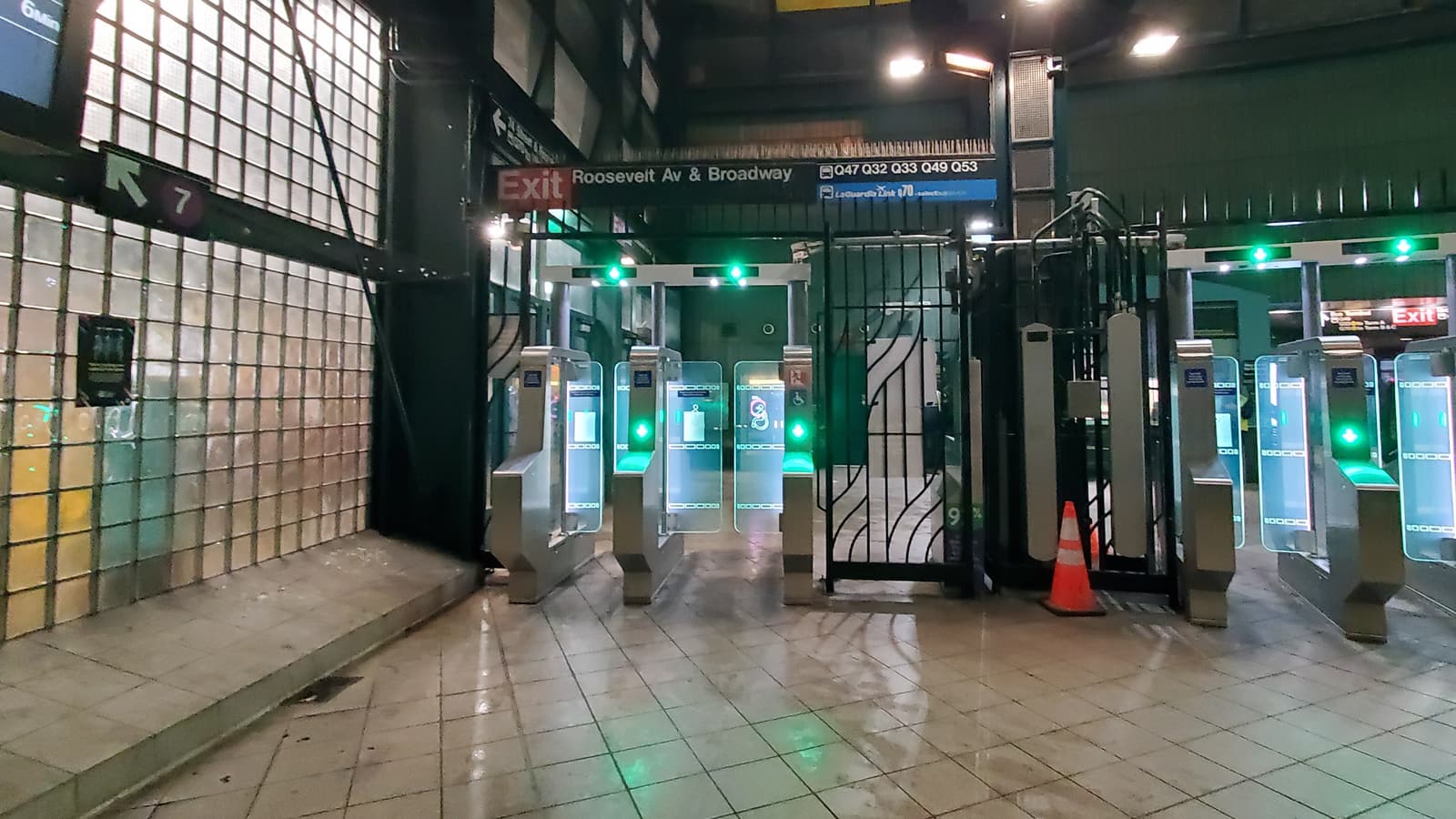
Image note: The hero image shows the Jackson Heights–Roosevelt Ave station entrance at the lane’s western edge; use it as your easiest reset landmark before committing to the first queue.
Two anchors, one 90–120 minute lane
- Anchor 1: Diversity Plaza (orientation + pacing reset)
- Anchor 2: Roosevelt Ave late-food seam around Birria-Landia / Arepa Lady orbit (77th–79th edge)
Practical loop windows:
- Day-to-evening handoff: 17:15–19:15
- Late lane: 20:30–23:30
Why those windows are high-signal:
- Birria-Landia Queens opens 17:00 on Mon–Thu and Fri, then runs late (to 01:00 / 02:00 depending on day), with weekend midday starts (12:00 Sat/Sun).[3]
- Local guides repeatedly describe Roosevelt Ave stands as strong for late solo or small-group eating, not just prime-time dinner slots.[4][5]
A tight movement clock:
- T+0 to T+20: set orientation at Diversity Plaza, choose your first order target
- T+20 to T+35: walk transfer to Roosevelt seam (typically 8–12 minutes depending on crossing cycles)
- T+35 to T+95: first and second food stops with one short standing reset
- T+95 to T+120: optional loop-back to plaza/transit exits
Eight local moves that change outcomes
- Use the plaza as a staging node, not dead time. At this hub, deciding your order sequence before you enter line saves real minutes once queues compress.[1][2]
- Run with a two-item cap per stop. Local recommendation threads and guides skew toward focused ordering (one signature item + one side/drink), which keeps the second stop meaningful.[4][5][6]
- Bias late lane for the truck, earlier lane for sit-down. Birria-Landia’s official hour bands favor evening/night flow; sit-down Colombian/Nepali spots near the same seam are better for earlier starts if you want table time.[3][4][5]
- Keep your party size at 1–3. On this corridor, queue elasticity drops fast for larger groups; a compact group turns over faster and preserves pacing.
- Carry card plus small cash optionality. Review streams in this area repeatedly mention payment-friction moments at busy windows; flexibility prevents a full-lane stall.[7][8]
- Stand one block off the most crowded curb to eat first bites. It sounds minor, but a 2–4 minute sidestep off the heaviest foot traffic improves flow and reduces spill stress.
- Order one high-fat item first, then acid/freshness second. This sequence tracks how locals structure mixed-cuisine late lanes so palate fatigue does not flatten stop two.[4][5][6]
- Exit by transit intent, not by where you finish chewing. Pick your final corner based on line transfer needs from the 74th/Roosevelt complex, then make your last stop fit that exit.
Non-local traplines
-
Trap 1: turning Jackson Heights into a six-stop “content crawl.”
Better: run 2 anchors + 1 optional in a hard 120-minute ceiling; quality stays high and lines stay manageable.[4][5] -
Trap 2: showing up at peak with no hour logic.
Better: align with official truck hours and start shoulder windows (17:15–19:15 or after 20:30) so your first line is not your whole night.[3] -
Trap 3: treating Diversity Plaza as pass-through only.
Better: use it as the control point for sequencing; the plaza exists precisely because this intersection needed pedestrian capacity and clearer movement logic.[1][2]
One-screen execution card
- Country / city: United States, New York City (Queens)
- Micro-zone: Diversity Plaza ↔ Roosevelt 77th–79th seam
- Best lane windows: 17:15–19:15 or 20:30–23:30
- Movement target: 90–120 minutes total
- Typical transfer: 8–12 minutes on foot between anchors
- Spend range: about $18–$40 per person depending on stop count and drinks
- Order logic: heavy-first, bright-second; max two core items per stop
- Navigation cue: if you lose bearings, reset at Diversity Plaza and re-enter the lane with one confirmed next order
Sources
- NYC Government (official) — Diversity Plaza location and transit-hub role
- NYC Street Design Manual — Diversity Plaza origin timeline (2011/2012/2018), context, and Q70 adjacency
- Birria-Landia official site — Queens location and operating hours
- The Infatuation (updated Oct 3, 2025) — Jackson Heights restaurant guide and lane behavior context
- Eater NY — Jackson Heights map and neighborhood food pattern framing
- Reddit community thread (r/FoodNYC) — local recommendation pattern and dish-level cues
- Google Maps local review stream — Birria-Landia (Queens)
- Google Maps local review stream — Arepa Lady (Jackson Heights)
- Wikimedia Commons source image used (station entrance recognition cue)