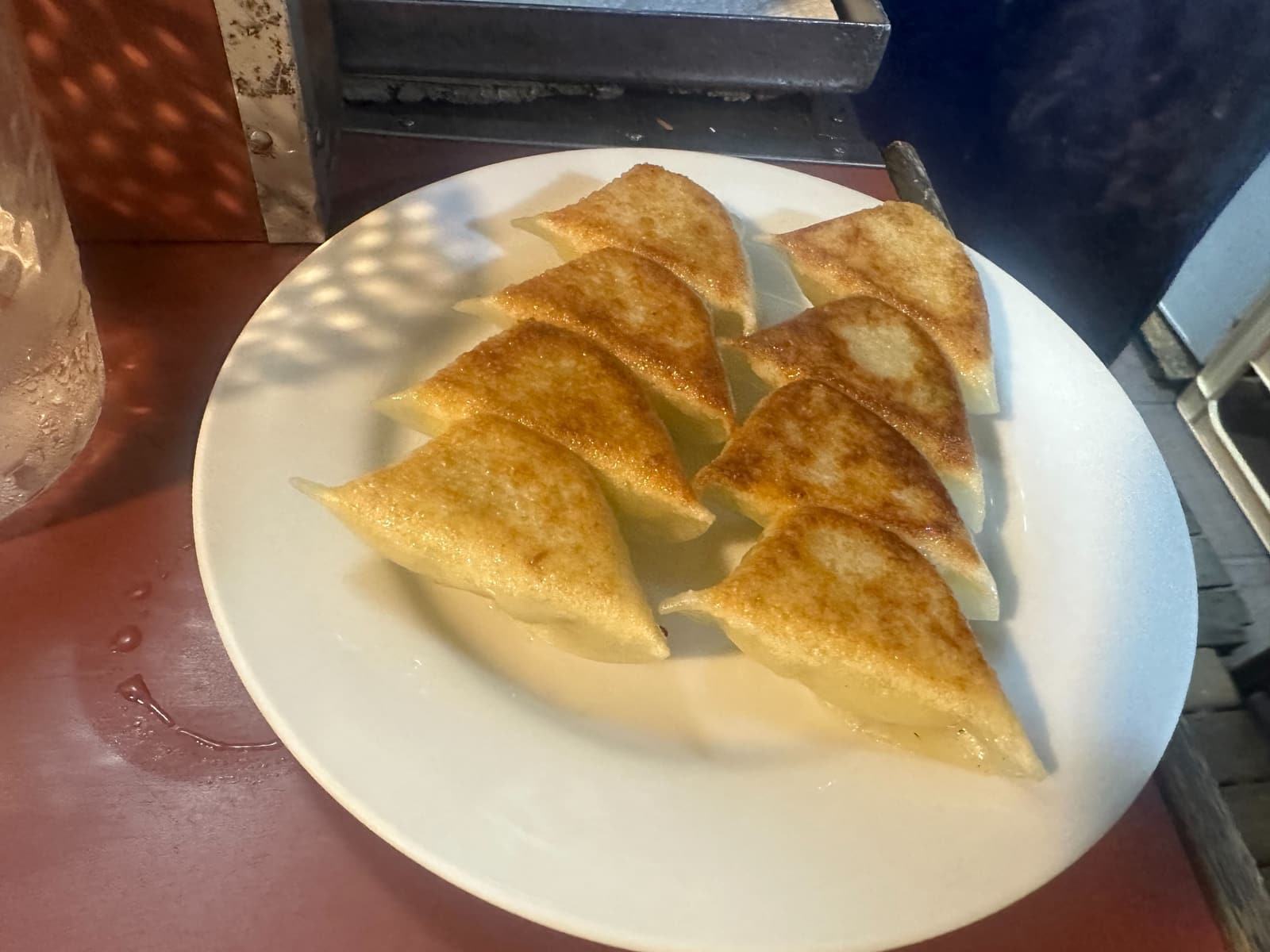
If you only have one late-night window in Fukuoka, run it as two rooms instead of random stall-hopping: Koganechan in Tenjin first, then the Nakasu yatai row near Seiryu Park. That sequence matches how the night actually compresses: first secure one iconic bowl-and-grill stop with known constraints, then move to the river-side strip when social energy peaks.
The city-level baseline is clear: Fukuoka runs 100+ yatai across multiple clusters, and many stalls start opening around 18:00.[1] Koganechan’s own listing gives the harder operating constraints: opening from 18:30, closing around 01:30 (Mon–Wed) or 02:00 (Fri–Sat), only 12 seats, and a typical spend band around ¥1,000–¥1,999.[2] That is exactly why this route works better when you front-load Koganechan instead of treating it as a “maybe later” stop.
Why this night-room sequence works
A lot of first-timers treat yatai as one interchangeable strip. It isn’t. Your outcome changes when you separate the night into:
- Anchor 1 (Tenjin / Koganechan): high-demand single-stall decision under seat scarcity
- Anchor 2 (Nakasu / Seiryu Park side): multi-stall atmosphere decision once queues and weather are visible
That split gives you one controlled commitment first, then one flexible commitment later.
Anchor 1 — Koganechan (Tenjin): lock the high-friction seat first
Koganechan is a long-running yatai known for yaki-ramen, with official local-tourism references tracing it back to 1968.[2][4] The practical constraints are what matter:
- 12 seats total (not a place to gamble on “we’ll just swing by”) [2]
- 2-minute walk from Tenjin Station Exit 1 [2][4]
- weekday close around 01:30, weekend around 02:00 [2]
If this anchor is non-negotiable for you, arriving around opening (or slightly before) is the difference between eating now and waiting through your best night window.
Anchor 2 — Nakasu yatai row (Seiryu Park side): hold flexibility for the social peak
The Nakasu river-side concentration is where you can recover optionality: multiple stalls, visible crowd texture, and easier “one more plate or stop now” decisions. Secondary references describe roughly 20 stalls in the Nakasu row and typical operating windows around 18:00–02:00 depending on weather and individual stall closure days.[1][5]
By pushing this anchor later, you avoid burning prime early time while deciding among similar-looking queues.
Local moves that change outcomes (8)
- Treat 18:30 as an operational cutoff, not just an opening hour. For Koganechan, seat scarcity starts early because there are only 12 seats.[2]
- Use a two-budget split before you leave your hotel. Example: ¥1,500–¥2,500 at Anchor 1 and ¥2,000–¥3,500 at Anchor 2, so you do not overspend before the river-side stretch.
- Keep your group to 2–3 people if Koganechan is mandatory. Small groups clear faster in tiny counters.
- If weather turns, switch priority from “most famous stall” to “first good open stall.” Official yatai guidance explicitly notes weather-driven non-opening risk.[1]
- Use station proximity as a hard decision rule. Koganechan is a short walk from Tenjin; Nakasu row sits near Kushida Shrine/Nakasu-Kawabata access points.[2][5]
- Do not hold seats after finishing. Yatai etiquette assumes short turnover because capacity is limited.[1]
- Use live review streams to sanity-check tonight’s queue reality. Tabelog review flow for Koganechan includes very recent visits (for example 2026/02 entries), which is useful for recency checks.[3]
- Set a hard move time from Anchor 1 to Anchor 2 (for example 21:00–21:30). Without this, most visitors overstay at the first queue and lose the best river-side atmosphere window.
Non-local traplines (3)
Trap 1: “All yatai are basically the same, we’ll decide on the street.”
Better move: lock one high-friction stall first, then leave second-half flexibility for Nakasu.
Trap 2: “We can come to Koganechan late; it closes at 1–2 a.m. anyway.”
Better move: closing time is not the useful metric; seat scarcity (12 seats) is.[2]
Trap 3: “Bad weather only affects comfort, not availability.”
Better move: treat weather as an opening-risk variable because stalls may not open in stormy conditions.[1]
One-screen logistics card
- Mode: Night Room (two-anchor sequence)
- Anchor 1: Koganechan (Tenjin), opens around 18:30, 12 seats
- Anchor 2: Nakasu yatai row (Seiryu Park side), commonly active from around 18:00 into late night
- Access anchor: Tenjin Station Exit 1 to Koganechan is about 2 minutes on foot
- Spend baseline: Koganechan listing around ¥1,000–¥1,999; practical two-anchor night often lands around ¥3,500–¥6,000 total depending on drinks
- Queue reality: popular stalls can require waits, especially Fri/Sat
In Fukuoka, the best late-night result usually comes from sequencing, not coverage: one scarce seat first, one flexible strip second.
Sources
- FUKUOKA HAKATA YATAI (official city yatai guide)
- Tabelog — 小金ちゃん (Koganechan) listing (hours, seats, budget, access)
- Tabelog — 小金ちゃん review stream (recent visit months incl. 2026/02)
- Yokanavi (official Fukuoka tourism) — 小金ちゃん profile
- Japan-Guide — Fukuoka yatai overview (Nakasu concentration, typical operating window, access cues)
- Google Maps — Koganechan (wayfinding + live review stream)
- Google Maps — Seiryu Park / Nakasu yatai area (wayfinding + live review stream)
- Wikimedia Commons — hero image file page (Nakasu yatai at night, Sept 2024)