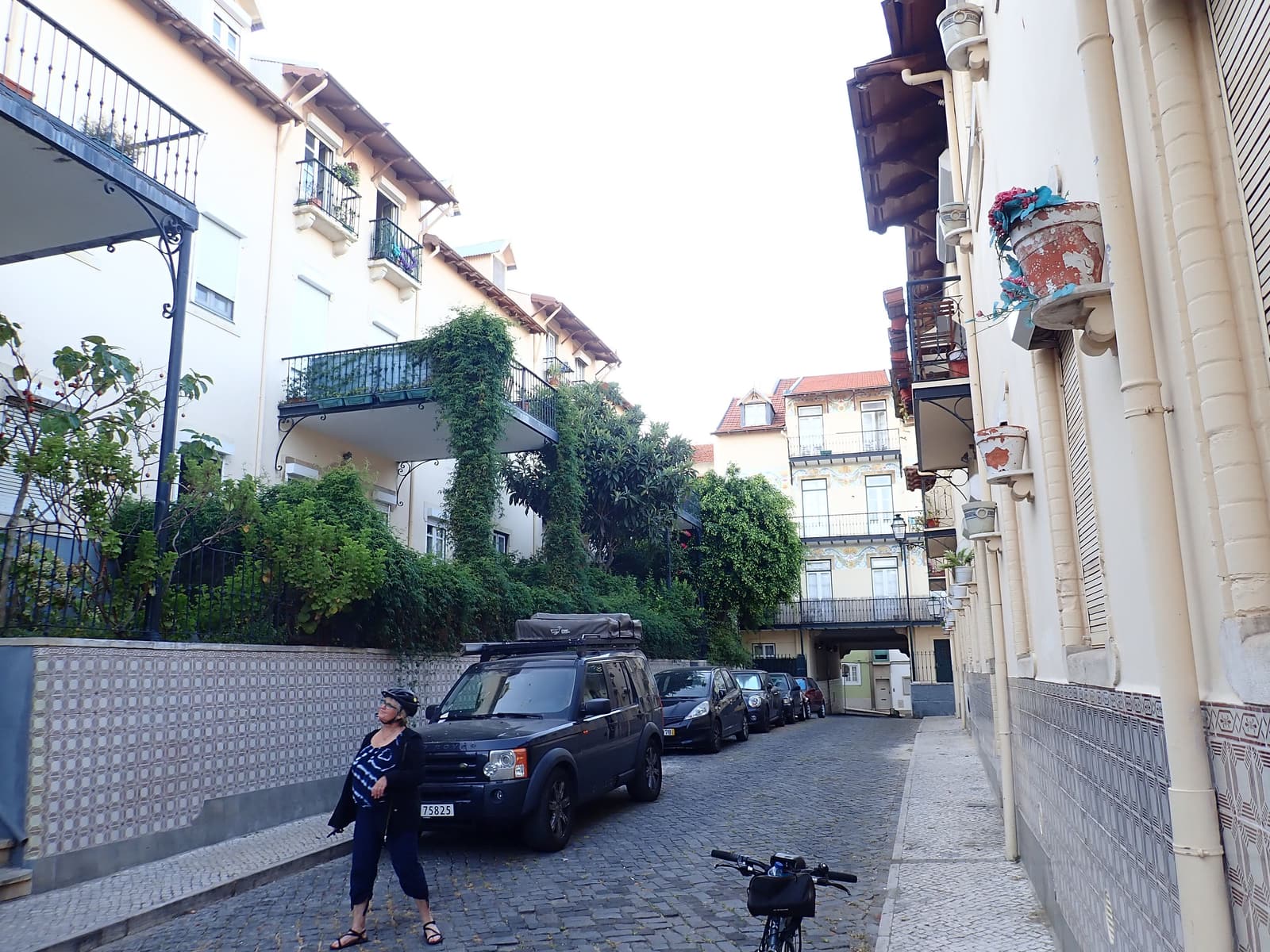
If you want Lisbon’s June festival energy without turning the night into random crowd drift, keep your scope to two anchors: Vila Berta (Graça) and Rua da Bica de Duarte Belo (Bica). That gives you one compact neighborhood arraial lane first, then one hill-street lane later, instead of trying to "cover all Santos" and ending up mostly in queues.
As of 2026-03-05, the full 2026 city program is not yet published, so the highest-confidence operating baseline is the official 2025 Festas de Lisboa pattern: citywide programming through June, parade peak on 12 June, and neighborhood arraiais distributed across multiple freguesias.[1][2][3]
Why this seasonal moment works (and when)
Official city framing is clear: June is the festival month, with parade milestones on 30/31 May + 1 June (MEO Arena) and the big street pulse on the night of 12 June.[2] EGEAC also flagged 16 arraiais across 9 freguesias in the 2025 cycle, which means your edge is not finding "the only good one" but choosing a sequence that stays walkable and recoverable.[2]
The two-anchor sequence below is built for a 4-hour field window:
- Anchor 1 (Vila Berta): roughly 19:15–21:15
- Transfer + reset: roughly 21:15–22:00
- Anchor 2 (Bica): roughly 22:00–23:45
On 12 June, shift every block 30–45 minutes earlier because the density spikes faster.[2][4]
The two-anchor run
Anchor 1 — Vila Berta (Graça): early density, local street texture
Vila Berta’s value is that it behaves like a neighborhood artery, not a single plaza stage. You feel the June rhythm quickly: grilled smoke, short dance bursts, and tight pedestrian flow. Start here while you still have movement options.[4][9]
Anchor 2 — Bica (Rua da Bica de Duarte Belo): late-night slope energy
Bica works better as your second anchor because it handles late-night spillover naturally: standing clusters, slope movement, and strong visual orientation around the funicular line. It is easy to drift too long here, so define your exit before midnight.[10]
Local moves that change outcomes (8)
- Run Santos on a non-peak night first (9–11 June) if possible. You get almost the same music-and-grill texture with lower crush risk than the 12th peak.[2][4]
- Start eating in your first 45 minutes at Vila Berta. Hunger plus late-night queues is the most common quality collapse in visitor runs.[4][6]
- Use a hard two-anchor rule. The city has many arraiais; trying three or four in one night usually converts into transfer waste, not better experiences.[2][3]
- Treat schedule discovery as a pre-night task. Local community behavior itself moved from scattered spreadsheets/PDFs toward consolidated app-style checking for a reason: too many parallel listings change fast.[5]
- Mark a metro cutoff alarm at 00:15. Metro normal operation is 06:30–01:00; if you ignore that, your final leg becomes surge-priced or long-wait surface transit.[7]
- If your plan relies on the Bica lift, verify service status on the same day. Carris posted a multi-week closure in 2025 (21 Apr–30 May) for maintenance; treat this as a standing reliability lesson, not a one-off.[8]
- Carry one small drink-and-food budget block per anchor. A simple split (for example, one spend block before transfer, one after) prevents the classic overpay-at-midnight scramble.
- Use one uphill/downhill decision point only. In Bica, repeated vertical backtracking burns energy fast; commit to one top-side or bottom-side lane and hold it.
Non-local traplines (3)
Trap 1: “We’ll just improvise all night across the city.”
Better move: lock two anchors and one transfer window. Officially, the citywide footprint is broad (16 arraiais / 9 freguesias in the latest full cycle), so structure beats ambition.[2]
Trap 2: “Only 12 June is worth it.”
Better move: use 9–11 June for cleaner movement; keep 12 June only if you specifically want maximum compression and parade-night intensity.[2][4]
Trap 3: “Transport will sort itself out at 1 a.m.”
Better move: build around metro closing time (01:00) and check Bica lift status on the day; both constraints are publicly documented and repeatedly ignored by first-timers.[7][8]
One-screen logistics card
- Mode: seasonal June night run
- Anchors: 2 (Vila Berta + Bica)
- Best field window: 19:15–23:45 (about 4h 30m)
- Peak-night adjustment (12 June): start 30–45 minutes earlier
- Metro baseline: opens 06:30, closes 01:00
- Cadence reality: many lines run around 4–10 minute frequencies depending on line/time band
- City festival breadth reference: 16 arraiais across 9 freguesias (latest full official cycle)
Lisbon’s June advantage is not that there is one perfect festa; it is that short-distance neighborhood intensity can be sequenced well. Two anchors are enough when your timing is disciplined.
Sources
- EGEAC — Festas de Lisboa overview (official)
- EGEAC — “As Festas de Lisboa são de toda a gente” (official 2025 details incl. marchas timeline and 16 arraiais/9 freguesias)
- EGEAC — Festas de Lisboa 2025 program PDF
- Time Out Lisboa — Santos Populares 2025 arraiais tracker (local press, updated)
- Reddit r/lisboa — “Aplicação dos Santos Populares” (community signal on schedule consolidation)
- Reddit r/lisboa — “Santos em Lisboa pela primeira vez” (community first-timer constraints and budget concern signal)
- Metropolitano de Lisboa — timetables and frequency (official operating hours)
- Carris — Ascensor da Bica temporary immobilization notice (official service reliability signal)
- Google Maps — Vila Berta (wayfinding/review stream)
- Google Maps — Rua da Bica de Duarte Belo (wayfinding/review stream)
- Wikimedia Commons file page (hero image provenance)