Dakar can feel like it is asking for speed: traffic, Plateau errands, bargaining, heat, and the constant temptation to add one more monument before lunch. Gorée asks for the opposite. The strongest first visit is not "do the island" as a day-trip trophy. It is simpler and more disciplined: let the public ferry set the pace, walk the island compactly, give Maison des Esclaves your full attention, then leave before fatigue turns memory into scenery.[1][2][3]
That starts at the embarcadère in Dakar, not on the island. Au Sénégal's local ferry page describes the Dakar-Gorée service as a 20-minute maritime link to an island 2.5 km offshore, operated through the Port autonome de Dakar's Liaison Maritime Dakar-Gorée, with tickets bought on site rather than reserved in advance.[1] The official Maison des Esclaves visitor page makes the same practical point in the museum's own language: visitors reach the house by boat, locally called la chaloupe, and should bring an identity card or passport to access the ferry terminal.[2] In other words, the crossing is not decorative. It is the gate, the queue, the schedule, and the first tone-setting device.
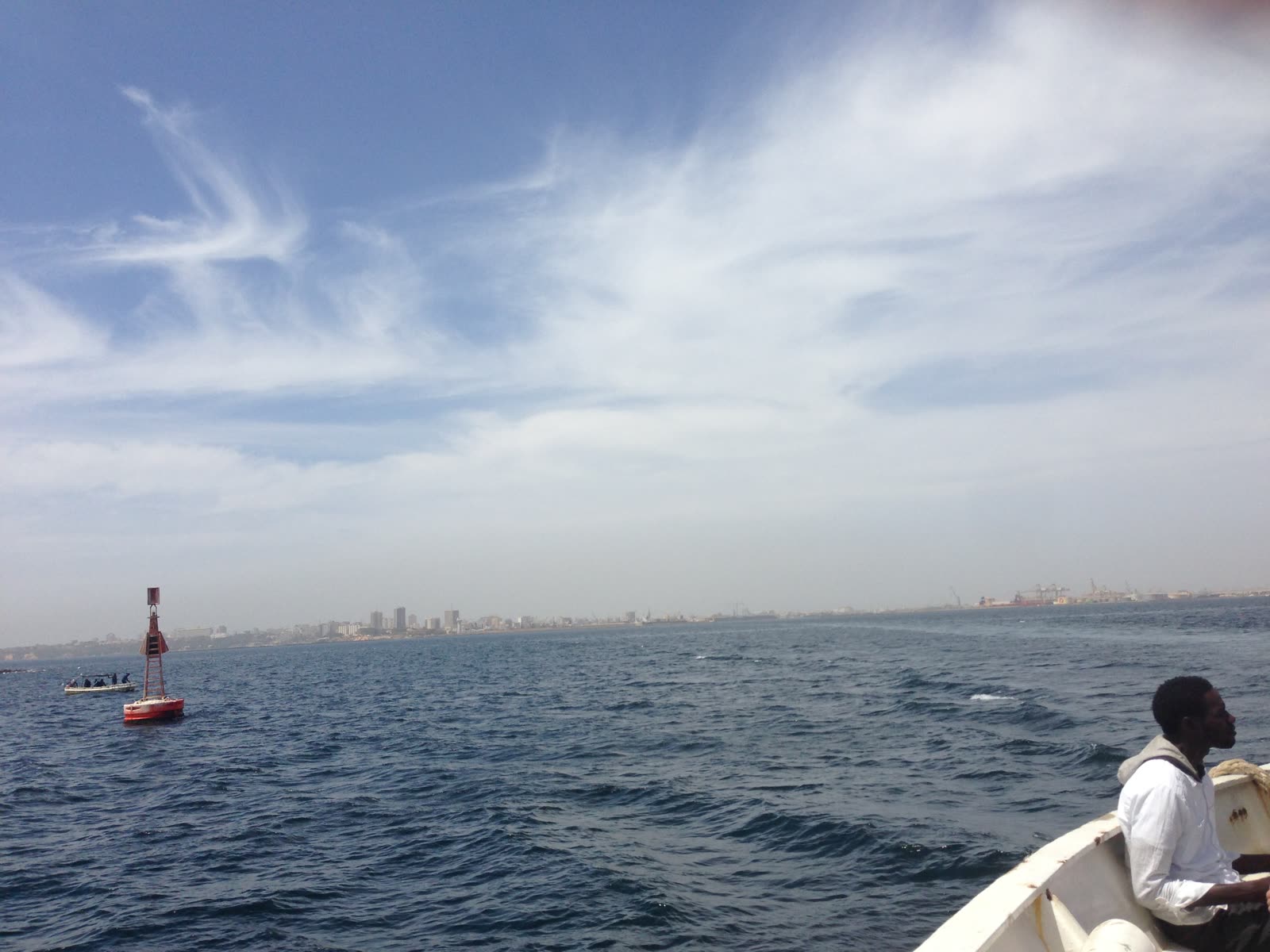
The best move is to treat the ferry like public transport with emotion attached. On weekdays, Au Sénégal lists Dakar departures beginning at 06:15, then 07:30, 10:00, 11:00, 12:30, and onward into the evening, with a different Sunday and holiday pattern that starts at 07:00.[1] SeneGambia Travel summarizes the same operating logic for visitors: crossings run roughly every 90 minutes, tickets are bought at the port kiosk, and the boat is the only regular way to reach the island.[6] That means you should not drift to the terminal as if another boat will appear instantly. Pick a departure, arrive with margin, and let the timetable narrow the day.
The non-local trap is to think "ferry" means "easy." It is easy only if you respect the local mechanics. The Maison des Esclaves visitor page explicitly tells visitors to bring ID or a passport for the ferry terminal, while a recent July 2025 island guide gives the blunt crowd rule: arrive early to avoid long queues, especially on weekends.[2][4] SeneGambia Travel adds the capacity logic behind that advice, warning that weekends and school holidays can fill early boats quickly.[6] For a first visit, the 07:30 weekday boat is excellent if you are already moving, but the more realistic tourist version is to be at the terminal early enough for the 10:00 or 11:00 crossing without assuming your preferred boat is guaranteed.[1][6]
Money is another place where precision helps. Au Sénégal lists adult return fares at 1,500 CFA for Senegalese nationals, 3,500 CFA for African residents, and 6,000 CFA for non-resident adults, plus a 500 CFA communal tax for visitors before boarding.[1] Build that into the route as cash-and-counter time, not as an afterthought. The useful local move is to arrive with small notes, ID visible, and no plan that depends on sprinting from taxi to gangway.[1][2]
Once the island appears, resist the urge to make Gorée visually pretty before you make it historically serious. Britannica describes Gorée as a small island of 88 acres or 36 hectares, long active as an Atlantic trading outpost, and notes its 1978 UNESCO World Heritage inscription after a history that included Portuguese, Dutch, British, and French control.[3] The island's physical scale is small, but the moral scale is not. That mismatch is the whole reason the ferry-first approach works: the crossing gives your body time to stop behaving like Dakar's city rhythm is still in charge.
Maison des Esclaves should be the first interior anchor, not a thing squeezed in after lunch. Its official visitor page says normal arrival-ticket purchase is possible on the island, while private or educational visits can be reserved in advance; it also states that private guided visits can be arranged in French or English.[2] If you take a guide, agree on price and scope clearly before starting. If you do not, slow down anyway. This is not the place to perform understanding by moving quickly.
There is also a history trap here. Public summaries and visitor materials can make Gorée's slave-trade role sound simpler than the historical debate allows.[3][5] A Cambridge Core article frames Maison des Esclaves at the intersection of history, memory, and public emotion after a late-1990s debate over its historical claims.[5] The better visitor posture is not to litigate every claim while standing in a memorial room, and not to repeat grand numbers casually either. Hold two thoughts together: Gorée is a real place of Atlantic memory, and memory sites can carry layered, debated, and sometimes mythologized histories. That makes attentiveness more necessary, not less.[3][5]
After the house, keep the island small. Isla Guru notes the practical pleasure of Gorée's car-free scale: visitors move on foot, with walking shoes, water, sun protection, and respect around memorial photography doing more work than a long attraction list.[4] Use that hour, but do not turn it into a scavenger hunt. Walk the lanes after the memorial visit, look back toward Dakar from the waterfront, and let the pedestrian quiet do its work. SeneGambia Travel is right to call the crossing part of the experience; the return crossing is the other half of the experience, because it puts Dakar back into view after the island has changed your tempo.[6]
Here are the local moves that make the route work:
- Carry ID before you leave your lodging. The ferry terminal is not just a tourist pier; access checks matter.[2][4]
- Choose the boat before choosing lunch. The timetable has real gaps, especially around morning and midday lulls, so plan around departures first.[1][4]
- Use small cash. The fare and communal tax are easier when you are not making the ticket window solve your change problem.[1][4]
- Board with the return in mind. If you land late, decide immediately which afternoon or early-evening boat gets you back.[1][6]
- Put Maison des Esclaves before the island stroll. The walk reads differently once the memorial work has happened.[2][3]
- Negotiate guide scope at the start. Guided context can help, but the price and route should be clear before you follow anyone.[2]
- Let one quiet lane be enough. Gorée is not improved by over-collecting every facade, museum, and viewpoint.[4][5]
- Leave before the last convenient ferry becomes the plan. The day is better when the return is deliberate, not anxious.[1][6]
The common visitor mistakes are predictable. The first is arriving late on a weekend and blaming the island for feeling crowded. The better alternative is a weekday morning or the earliest boat you can manage during holidays.[1][4][6] The second is treating the ferry as empty transit time. Sit where you can see the approach, but keep the camera secondary; the water is doing orientation work.[6][7] The third is reducing Gorée to either a beautiful colonial island or a single grief room. The better version is harder: hold the public streets, memorial architecture, disputed storytelling, and present-day visitor economy in the same visit.[3][4][5]
For a clean first pass, give the whole outing four to five hours from central Dakar: terminal buffer, 20-minute crossing, Maison des Esclaves, one slow island loop, return queue, and the boat back.[1][2][4] Expected spend for a non-resident adult starts around 6,500 CFA for ferry plus communal tax before museum, guide, food, or drinks.[1] The best time window is a weekday morning outside school holidays, with the return chosen before you sit down anywhere.[4][6] The navigation cue is simple: Dakar port -> chaloupe -> Maison des Esclaves -> quiet lane / waterfront pause -> return ferry.
Dakar will be loud again when you land. That is fine. The point of Gorée is not to escape the city. It is to let one short public crossing create enough distance that memory, tourism, and daily movement stop collapsing into one impatient errand.
Sources
- Au Sénégal, "Chaloupe de Gorée" - local ferry page with Dakar-Gorée travel time, operating body, no-reservation rule, timetable, return fares, and communal tax.
- Maison des Esclaves de l'île de Gorée, "Réservez votre visite" - official visitor page for private/pedagogical reservations, ferry access, ID reminder, and site contact details.
- Britannica, "Gorée Island" - overview of the island's size, Dakar harbour position, colonial control history, Atlantic trading role, and 1978 UNESCO World Heritage inscription.
- Isla Guru, "Travel Guide to Gorée Island: Senegal's UNESCO World Heritage Gem" (July 28, 2025) - recent visitor guide with ferry timing, queue advice, car-free island notes, memorial etiquette, and practical packing guidance.
- Cambridge Core / African Studies Review, "La Maison des esclaves de Gorée: à l'intersection entre histoire, mémoires et émotions" - scholarly article on the history-memory debate around Maison des Esclaves.
- SeneGambia Travel, "Dakar-Gorée Ferry" - regional travel listing describing the ferry as the only regular access route, with 20-minute crossing, rough frequency, and kiosk ticketing.
- Wikimedia Commons, "File:Dakar Goree by ferry.jpg" - photographic source for the article image, made from a ferry trip from Dakar to Gorée.