As of 2026-04-25 UTC, the useful way to read Xinference is not as one more self-hosted OpenAI-compatible endpoint and not as a generic “run any model” slogan. The sharper AI-China signal is that it is becoming a runtime switchboard for China-linked open-model traffic: a place where Qwen, DeepSeek, GLM, Kimi, MiniMax, InternVL, and adjacent multimodal families can be exposed through one familiar contract while the messy part stays below the line in engines, replicas, hardware, and model lifecycle management.[1][2][3]
That matters because the China model cycle is now too fast for every team to keep rebuilding its serving layer by hand. One week the interesting release is a new Qwen line, then a DeepSeek update, then a GLM branch, then speech, OCR, or image-edit variants that want a slightly different engine or dependency stack. In that environment, the strategic layer is no longer only the checkpoint. It is the software surface that absorbs model churn without forcing the application team to rewrite the upper stack every month.[1][2][3]
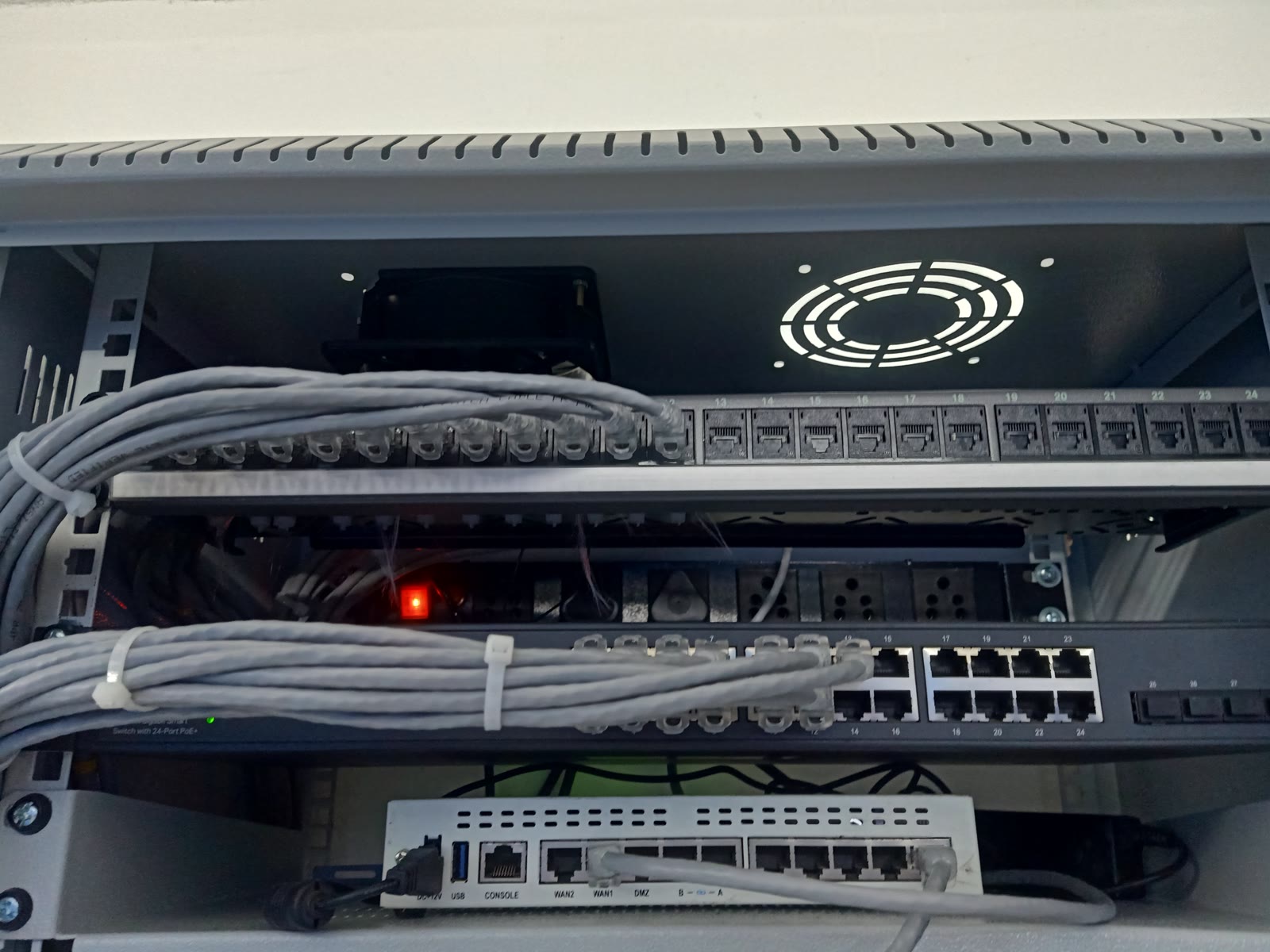
Image context: the cover uses a real photograph of a network rack. It is the right visual here because the article is about inference infrastructure rather than model theater. The story lives in deployment surfaces, engine compatibility, and distributed compute, not in benchmark slides.[6]
The product is the runtime, not the model card
Xinference's own public materials make that structure visible. The GitHub repository pitches the project around OpenAI-compatible RESTful APIs, RPC, CLI, WebUI, distributed deployment, and built-in integration with tools such as LangChain, LlamaIndex, Dify, and Chatbox.[1] The product page sharpens the same point in more operational language: heterogeneous hardware abstraction, model lifecycle management, autoscaling, multi-engine concurrent inference, and distributed deployment on top of the company's Xoscar distributed-computing foundation.[3]
The EMNLP 2024 system-demonstration paper explains why that design matters. The authors describe large-model serving as a three-part problem: inference engine, model specification, and endpoint or UI.[5] Xinference's value proposition is to compress those layers into something an operator can actually use without writing a fresh serving harness for every model family.[5] That is a narrower and more useful claim than “easy inference.” It says the runtime is supposed to stand between fast-moving model releases and the application team that just wants a stable top-layer API.
In AI-China terms, that makes Xinference less like a destination app and more like infrastructure. The models change. The runtime contract stays recognizable.
The release log shows what kind of layer this is
The fastest way to see the thesis is the release cadence. On the GitHub releases page, v2.5.0 was published on 2026-04-13 and added support for Qwen3.5 in SGLang plus multiple Qwen3-TTS variants, while also tightening worker-liveness behavior through a lightweight heartbeat mechanism.[2] Two weeks earlier, v2.4.0 on 2026-03-29 added OTEL, GPU load metrics, vLLM 0.18.0 support, and aarch64 image work.[2] Before that, v2.1.0 on 2026-02-14 added GLM-4.7, GLM-4.7-Flash, Qwen3-ASR variants, and a DeepSeek-V3.2 model update.[2]
Those are not random changelog items. They show what layer Xinference wants to own. It is not trying to win one benchmark conversation. It is trying to keep many model families runnable inside one serving surface while the underlying engine and hardware combinations keep shifting.[2]
That is why “switchboard” is the right metaphor. The release notes repeatedly connect three moving parts:
- new China-linked model families and variants
- new or updated engine support such as vLLM and SGLang
- operational controls around replicas, metrics, images, and worker health
When those three move together, the runtime becomes more important than any single model announcement. A serving layer that can ingest fast model turnover and still keep application behavior legible becomes an upstream piece of the stack.
v2.0 made dependency conflict part of the runtime problem
The clearest structural change appears in the official v2.0 release notes. From that version forward, model virtual environments are enabled by default, so each model can run inside an independent Python dependency space with its own inference-engine configuration.[4] The same milestone unified the official CUDA base image to 12.9 and added full support for Qwen3-VL Embedding and Qwen3-VL Reranker models.[4]
That change matters because open-model serving often fails at the layer just below the demo. Different families want different versions of transformers, vLLM, tokenizer behavior, CUDA stacks, or engine-specific dependencies. A runtime that treats dependency isolation as a first-class feature is doing more than exposing an API. It is trying to turn model volatility into something schedulable and survivable.[4]
In practice, that pushes Xinference away from the “one box, one engine, one model” pattern. The product page's multi-engine language already hinted at that direction.[3] The v2.0 release makes it explicit: the platform wants to let different models live under one roof without poisoning each other at import time.[4]
Why this belongs in AI-China
This is an ai-china story for two reasons. First, the project's public cadence is heavily shaped by Chinese and China-linked model families. The repository's current “Hot Topics” section explicitly highlights built-in support for Qwen3.5, GLM-5, MiniMax-M2.5, Kimi-K2.5, and Qwen3-TTS.[1] That is a practical index of where the runtime is spending attention.
Second, the EMNLP paper places the project inside a China-linked research and engineering context, with authors from Renmin University of China and Xorbits Inc..[5] That does not make Xinference the neutral standard for all of China's model-serving stack, and it should not be treated that way. It does show that one of the more active runtime layers around current Chinese model families is being built from inside that ecosystem rather than only being imported from outside it.[1][5]
The harder market point is this: many teams want the top half of the stack to look boring. They want OpenAI-style clients, stable integrations, and a familiar call pattern. The interesting competition is therefore moving below that interface, into engine breadth, model onboarding speed, isolation, hardware support, and cluster behavior.[1][2][3] Xinference matters because it is trying to own exactly that lower layer.
The boundary
There is still a real boundary on the thesis. Public materials show intention and release activity more clearly than they show durable operator habit. The enterprise site also makes clear that Xinference is not only an open community project; it is part of a broader commercial surface that includes enterprise management, performance claims, and tighter integration with Xagent.[1][3] So the right reading is not “Xinference has already become the serving standard.” The right reading is narrower: it is becoming a credible runtime aggregation layer for fast-moving China-model adoption.
That thesis weakens if new models keep appearing as JSON entries faster than the engine, dependency, and lifecycle layers mature around them. It strengthens if release notes continue to pair model onboarding with engine work, isolation work, observability, and distributed-failure handling.[2][4]
What to watch next
- Watch whether Xinference keeps shipping engine-and-runtime changes at the same pace as model support changes. If the model list grows but the runtime layer stalls, the switchboard thesis weakens.[2]
- Watch whether features such as OTEL, GPU metrics, worker-heartbeat logic, and distributed recovery turn into a more visible operations story rather than remaining scattered release-note items.[2]
- Watch whether the default virtualenv-per-model posture remains central as more multimodal, speech, OCR, and reranker models land. If it does, Xinference will look more like infrastructure and less like a one-size-fits-all server wrapper.[4]
The useful conclusion is therefore specific. In AI-China, Xinference matters because it is trying to make fast model turnover operational: one upper API, many engines, many model families, and a runtime layer that absorbs the uglier parts of self-hosted serving before they hit the app team.[1][2][3][4][5]
Sources
- xorbitsai/inference GitHub repository, README and current “Hot Topics” section (OpenAI-compatible API, integrations, distributed inference, and current support emphasis for Qwen3.5, GLM-5, MiniMax-M2.5, Kimi-K2.5, and Qwen3-TTS).
- xorbitsai/inference GitHub releases page (v2.5.0 on 2026-04-13; v2.4.0 on 2026-03-29; v2.1.0 on 2026-02-14; model-support, engine, metrics, and runtime changes).
- Xinference product page (unified OpenAI-compatible API, heterogeneous hardware abstraction, multi-engine concurrent inference, Xoscar-based distributed deployment, and enterprise/runtime positioning).
- Xinference v2.0.0 release notes (model virtual environments enabled by default, CUDA 12.9 baseline, and Qwen3-VL embedding/reranker support).
- Lu, Xiong, Zhang, Qin, and Chen, “Xinference: Making Large Model Serving Easy,” EMNLP 2024 System Demonstrations (problem framing, lifecycle-management thesis, and institutional affiliations).
- Wikimedia Commons, “File:Networking Rack.jpg” (source page for the real rack photograph used as the article cover).