As of 2026-04-26 UTC, the useful way to read Zhipu after its January 2026 Hong Kong listing is not simply "another Chinese foundation-model company with a bigger war chest." The sharper frame is compute bargaining power. On January 7, 2026, the company disclosed an offer price of HK$116.20 and net proceeds of HK$4.1734 billion from its global offering.[3] On February 4, 2026, the over-allotment option was fully exercised for 5,612,900 H shares at the same offer price.[4] By March 31, 2026, the company reported 2025 revenue of RMB724.3 million, up 131.9% year over year, but also R&D expense of RMB3.18 billion and a loss for the year of RMB4.72 billion.[2]
Those figures point to a narrower post-listing question. Zhipu does not mainly need one more benchmark headline. It needs enough capital, software-hardware leverage, and commercial pull to keep token supply expanding faster than the cost of building it.[2][3][4]
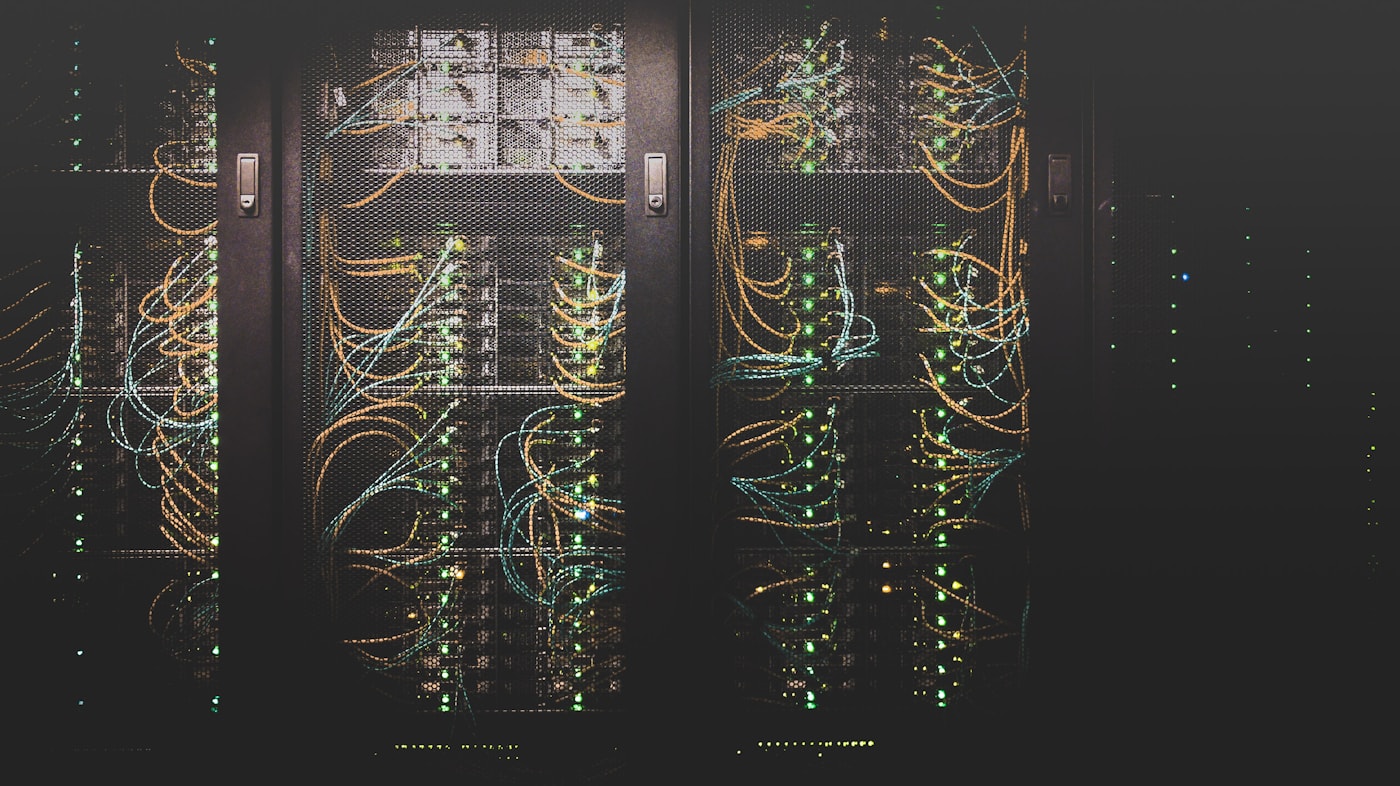
Image context: the cover uses a real data-center infrastructure photograph rather than a launch slide, logo wall, or synthetic model render. That is the right visual anchor because this article is about compute lanes and hardware pressure: the relevant story sits where capital, chips, and deployment capacity meet.
What the listing actually bought
The January listing mattered because it widened Zhipu's execution room before profitability arrived. The allotment-results filing shows 37,419,500 offer shares before any over-allotment exercise, HK$4.3481 billion in gross proceeds, and HK$4.1734 billion in net proceeds at the offer price.[3] The later stabilization notice then showed that the greenshoe did not stay theoretical: the sponsor exercised the over-allotment option in full, adding 5,612,900 H shares, equivalent to about 15% of the initial offer-share count.[4]
That does not prove permanent market confidence, and it should not be over-read as such. What it does show is that Zhipu entered 2026 with materially more financial flexibility than it had as a private company still funding an expensive model race through repeated financing rounds.[3][4] For a company whose own audited results still show multi-billion-renminbi annual losses, that flexibility is not cosmetic. It is operating oxygen.[2]
The prospectus helps explain why management wanted that oxygen. For the nine months ended September 30, 2025, Zhipu said it had over 12,000 institutional customers, and it also disclosed average daily token consumption volume of 4.2 trillion in November 2025.[7] Those are not profitability figures. They are scale figures. They suggest that the company was already dealing with a system-level problem: how to finance and provision a growing token business before the cost curve fully settles.[7]
Why chips matter more than another model headline
The most revealing lines in the annual-results announcement are not the slogans about AGI. They are the passages about compute. Zhipu wrote that, entering 2026, it faced a computing-power shortage that had outstripped supply since February 2026, and that it would continue investing in "Day 0" adaptation of domestic chips together with software-hardware optimization.[2] That is a concrete operating statement, not a generic patriotic flourish.
It also fits the company's longer public positioning. Zhipu's official about page says the GLM architecture has already been adapted to more than 40 domestic chips.[1] Read together, the two statements imply a progression:
- first, broad compatibility across domestic chips as a platform capability
- then, post-listing capital to keep pushing adaptation earlier in the cycle
- then, deeper co-design work as token demand rises faster than compute supply
That sequence matters because AI-China competition is no longer just about model quality. It is increasingly about who can secure enough inference capacity, lower enough unit cost, and ship enough optimization work across heterogeneous hardware to keep a commercial platform responsive under rising demand.[1][2]
The same annual-results document makes that connection explicit in management language. It says the company wants to push inference performance to the limit not for short-term profitability, but to support a rising curve of high-quality token consumption.[2] Investors may disagree with the pace, and they may also worry that this logic can justify permanently elevated spending. But the operational thesis is internally coherent: if token demand compounds first, chip adaptation becomes a revenue defense, not just an engineering side quest.[2]
The commercial surface is broader than one chatbot
Another reason this is a compute-and-capital story is that Zhipu's commercial surface is wider than a single assistant brand. The company positions BigModel.cn as a one-stop MaaS platform with model access, agent building, evaluation, fine-tuning, and OpenAI SDK compatibility.[5] That matters because a wider platform surface creates more places where compute bottlenecks can turn into product bottlenecks.
The annual-results release adds more scale color, though these are still company-reported operating metrics rather than independent audits of adoption quality. It says the GLM Coding Plan had reached over 242,000 paying developers, and that the MaaS platform had surpassed 4 million registered users as of March 2026.[2] Even if one discounts the promotional edge of those figures, the direction is clear enough: Zhipu is trying to monetize not only a flagship model family but a full stack of API, coding, agent, and enterprise services.[2][5]
That is why compute bargaining power is the cleaner market lens. A company with a narrow chatbot story can tolerate temporary latency, rationing, or capacity scarcity more easily. A company trying to serve developers, enterprise deployments, agents, and coding workloads at once has much less room to let compute become the choke point.[2][5]
The Intel signal is not about cars alone
The Intel event from September 10, 2024 is worth reading as a hardware-distribution signal rather than just an automotive press item. In that official write-up, Zhipu described itself as an important Intel partner, discussed edge-side inference efficiency on Intel dGPU, and framed the collaboration around real deployment in smart-cockpit scenarios.[6]
That does not mean automotive is suddenly the center of Zhipu's revenue mix. It does show something more modest and more useful: Zhipu has been publicly building relationships across different compute lanes, including domestic-chip adaptation on one side and Intel-linked edge deployment on another.[1][2][6] For a post-listing company, that optionality matters. It reduces dependence on any single hardware lane and gives management more ways to defend supply when demand spikes.
What to watch next
- Watch whether revenue keeps rising faster than R&D from here. In 2025, revenue more than doubled, but the loss line also widened materially.[2]
- Watch whether domestic-chip adaptation stays a real execution program rather than a rhetorical shield. The key evidence will be deployment speed, cost improvement, and capacity resilience, not a bigger count of partner logos.[1][2]
- Watch whether the platform keeps turning token demand into paying usage. The prospectus and annual report show scale signals, but scale only matters if it becomes durable gross profit and eventually operating leverage.[2][7]
- Watch whether post-listing capital changes the company's tempo. The clean question for 2026 is whether a better-funded Zhipu can shorten the path from model release to usable, affordable inference across multiple hardware environments.[2][3][4]
The conclusion is therefore specific. Zhipu's post-listing story is not best understood as prestige plus capital. It is better understood as capital deployed into compute bargaining power: more room to buy time, absorb losses, tune across chip lanes, and keep a token business growing while the rest of the market still fights over scarce inference supply.[1][2][3][4][5][6][7]
Sources
- Zhipu official about page (founded in 2019, GLM architecture, and adaptation to 40+ domestic chips).
- HKEX final-results announcement for the year ended December 31, 2025 (revenue, R&D, loss, compute-shortage, domestic-chip adaptation, paying developers, and registered-user figures).
- HKEX announcement of offer price and allotment results dated January 7, 2026 (offer price, share count, gross proceeds, and net proceeds).
- HKEX announcement on full exercise of the over-allotment option dated February 4, 2026 (5,612,900 H shares at HK$116.20).
- BigModel.cn platform introduction (one-stop MaaS positioning, agent-building, evaluation, fine-tuning, and OpenAI SDK compatibility).
- Zhipu official news post on its Intel collaboration event (September 10, 2024), used here as evidence for hardware-partnership and edge-deployment positioning.
- HKEX prospectus / global offering document dated December 30, 2025 (institutional-customer count, token-consumption figure, and pre-listing scale context).