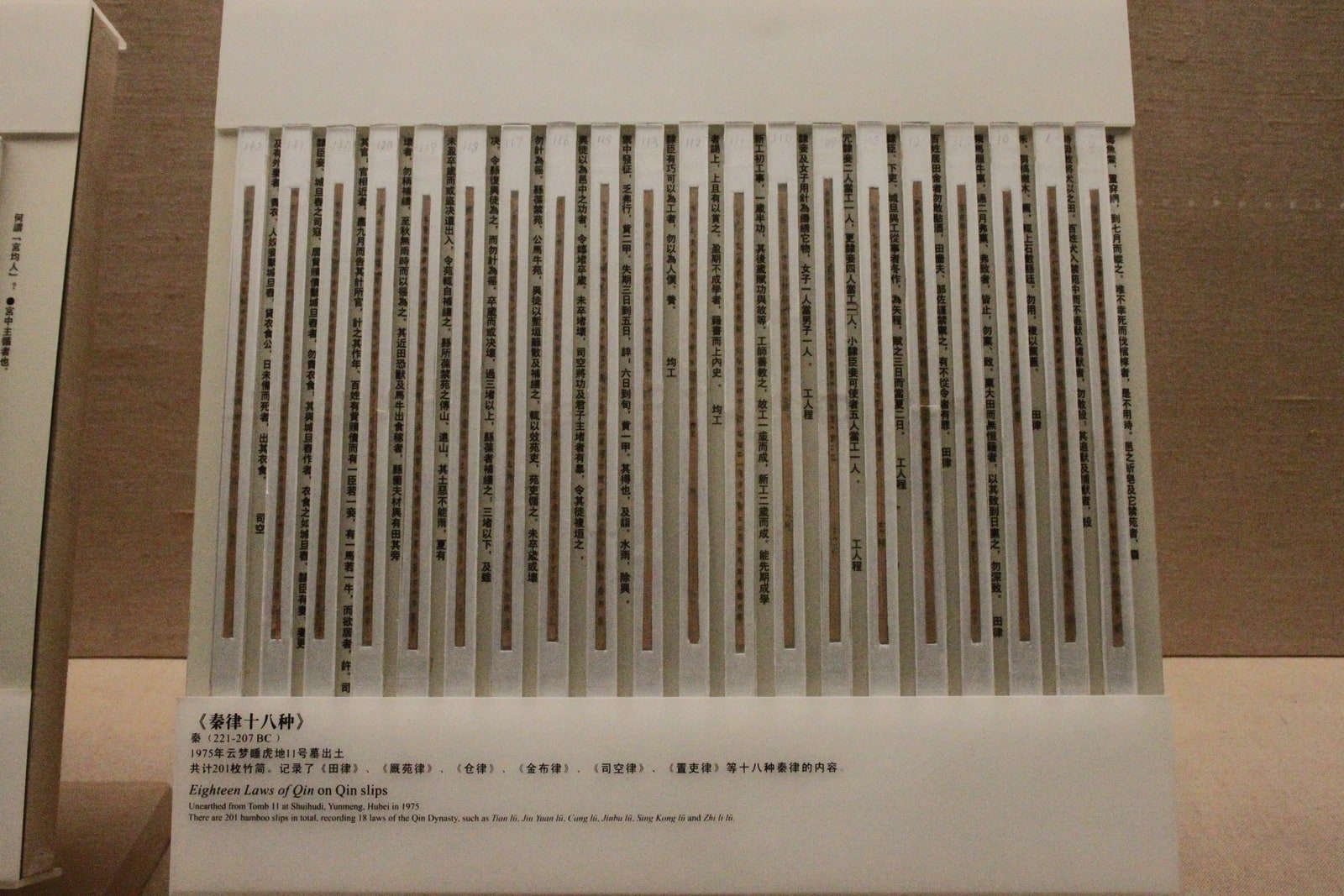
Before a scholar can read a broken bamboo manuscript, someone has to find which pieces belong together. WisePanda, described in Nature Communications on March 6, 2026, brings AI to that search. Its task is to rank possible joins between fragments, giving an expert a smaller set to examine.[1]
The distinction matters. A plausible continuation of a sentence and a convincing physical join answer different questions. For a manuscript assembled from scattered pieces, deciding where one fragment ends and another begins is itself an act of scholarship. A useful machine needs to make that decision easier to inspect.
Teach the model how bamboo breaks
Wuhan University’s March 23 Chinese-language account identifies a stubborn training problem: confirmed pairs are scarce because finding them already consumes the specialist labor the model is supposed to save. The team draws together AI researchers and scholars from the university’s Bamboo and Silk Research Center.[2]
Its solution starts with the material. The researchers simulate fracture propagation through bamboo fibers, then model how burial conditions degrade the broken edges. Those simulations produce paired examples for a network learning to distinguish likely matches from unrelated fragments. The university describes the output as ranked suggestions for manuscript specialists.[2]
Think of the simulation as a way to manufacture practice problems. The researchers can know that two synthetic edges started together, even after modeling their deterioration. That gives the learner something difficult to obtain at scale from an excavation: examples whose relationship is already known. The archaeological question remains whether lessons learned from those artificial breaks survive contact with real objects.
The institutional collaboration is part of the method. Wuhan’s account credits manuscript specialists’ experience with fragmentary collections and their close observation of artifacts with informing the work on fracture mechanics.[2] In this use case, domain expertise helps determine what the training examples should look like before anyone evaluates the resulting model.
The useful output is a shortlist
The public repository makes the intended workflow concrete. A target fragment is compared with candidate fragments; the interface presents a ranking, typically containing 50 suggestions, for expert verification. The software offers selection, comparison and verification, alongside a sample-data import workflow.[3]
That is a practical design choice. Imagine that a promising counterpart appears fifth in the list. A specialist can compare it with the target and reject the four preceding suggestions without discarding the whole tool. The value comes from the ordering of the search, provided the ranking brings enough genuine possibilities into view.
It also changes what success should mean. A system that helps find a counterpart after several inspections may be useful even when its first suggestion is wrong. Conversely, producing an attractive first suggestion says little unless the correct counterpart was among the available candidates and a scholar can verify the join. The repository’s emphasis on comparison gives the human user somewhere to exercise that judgment.[3]
A crowded tray changes the result
The journal paper’s Bamboo236 test contains 118 expert-verified pairs from Han-period material excavated at Shuihudi’s Tomb 77. WisePanda achieves 91.81% Top-50 accuracy. Adding 1,114 distractor fragments creates Bamboo1350; the reported Top-50 result falls to 52.54%. These are retrieval results for specified candidate pools: the correct counterpart must appear somewhere in the first 50 suggestions.[1]
Neither percentage is an automatic restoration rate. Adding competitors leaves the verified joins intact but makes them harder to retrieve. The practical question is how much inspection the ranking saves in the actual collection.
The paper also identifies relatively straight, flat broken edges as difficult because their geometry offers few distinguishing features. Its main component addresses transverse fractures; character continuity and other signals remain important directions for extending the approach.[1]
From a join to a reading
A January 2026 position paper by Yiran Rex Ma places fragment rejoining within a wider sequence that includes image restoration, character recognition, dating and interpretation. It argues that progress on individual computational tasks still leaves a gap between AI capabilities and the integrated questions scholars ask. This is a research agenda, rather than an independent validation of WisePanda.[4]
The distinction suggests a useful next test: follow suggested joins through expert acceptance and into documented manuscript reconstructions. Record rejected suggestions as well as accepted ones, and measure the time spent reaching each decision. That would connect a retrieval score to the work the system is meant to improve.
WisePanda’s contribution is clearest at that working scale. It offers a way to spend less of a scholar’s attention searching an entire collection and more of it examining plausible neighbors. The historical reading begins with those neighbors, but still has to be argued.
Sources
- Jinchi Zhu and colleagues, “Rejoining fragmented ancient bamboo slips with physics-driven deep learning,” Nature Communications 17, 3550 (March 6, 2026). Published evaluation, artifact provenance, and limitations.
- Wuhan University, “An interdisciplinary team makes progress in the digital protection of cultural heritage” (March 23, 2026; Chinese-language first-hand report). Training-data method and collaboration with manuscript scholars.
- Jinchi Zhu, WisePanda public repository. README and software workflow, consulted September 27, 2026.
- Yiran Rex Ma, “Towards Computational Chinese Paleography,” arXiv:2601.06753v2 (January 29, 2026). Position paper on the relationship between computational tasks and scholarly research.
- Gary Todd, “Eighteen Laws of Qin on Qin Bamboo Slips,” photographed December 3, 2010, Hubei Provincial Museum. Wikimedia Commons photograph record; CC0.