As of 2026-05-06 UTC, the useful way to read PaddleX is not as one more toolkit sitting beside PaddleOCR, PaddleDetection, or the broader Paddle model library. The sharper ai-china signal is that PaddleX is turning the document-and-vision side of the Paddle ecosystem into a pipeline workbench.[1][2][3] That distinction matters because a lot of Chinese AI coverage still spends too much time on isolated model launches. Production teams usually fail one layer lower. They do not fail because a model cannot score well once. They fail because scanning, layout recovery, extraction, serving, hardware adaptation, and version movement do not hold together as one repeatable system.
The official materials show PaddleX trying to solve exactly that lower-layer problem. The 2025-05-20 v3.0.0 changelog describes a package with 270+ models and calls out production-ready solutions for general document parsing, key information extraction, document understanding, table recognition, and general image recognition.[1] The current PaddleOCR/PaddleX overview then makes the packaging logic more explicit: 48 models for text-image intelligence are grouped into 10 pipelines, the same command surface extends to 200+ more models across other vision and time-series tasks, and the system is presented through both unified commands and GUI paths rather than through a research-demo framing alone.[2] My reading is straightforward: PaddleX is being positioned as the operator layer where models stop being shelves and start becoming workflows.
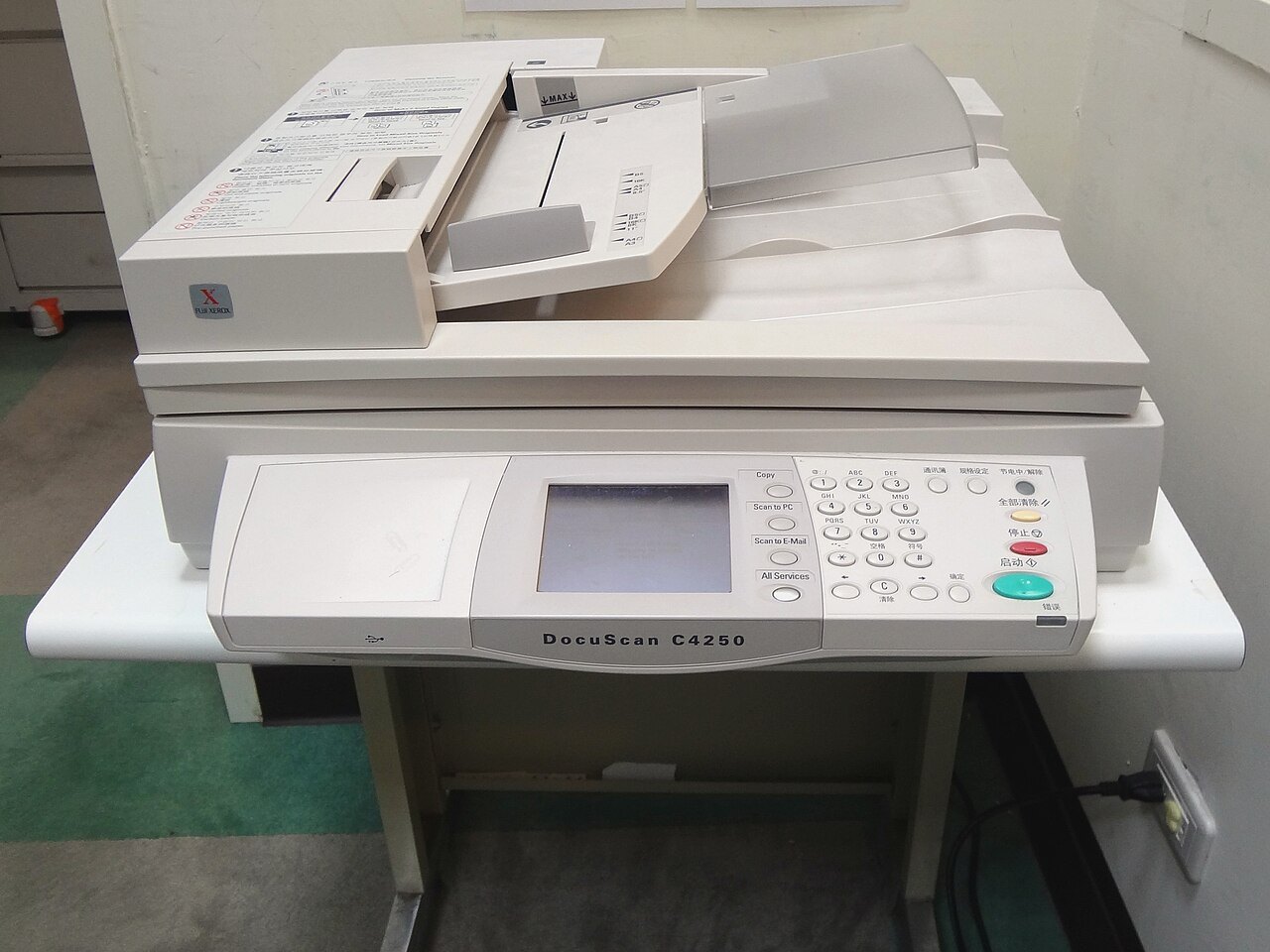
Image context: the cover uses a real documentary photograph of a contractor scanning paper records for digital conversion. That is the right visual anchor because PaddleX's current value sits in the passage from paper and images into a managed pipeline, not in abstract AI iconography.[7]
The product boundary is the pipeline, not the single model
The most important sentence in the official overview is easy to overlook. PaddleX says it is committed to pipeline-level model training, inference, and deployment, and defines a model pipeline as a predefined development process for a specific AI task rather than as one isolated checkpoint.[2] That is the core architectural clue.
Once you read the project through that lens, several scattered features line up. The same overview says all 6 OCR-related pipelines support local inference, some support online experience, and each pipeline can move from pre-trained trial into high-performance inference, service-oriented deployment, or edge deployment if the out-of-the-box result is good enough.[2] If it is not good enough, the same pipeline surface exposes custom development paths instead of forcing a team to leave the workflow and rebuild the stack from scratch.[2] That is much closer to a workbench than a model zoo. The model zoo gives you artifacts. A workbench gives you a development route.
This matters especially in document AI, where "one model" usually hides several separate jobs. A serious document flow may need preprocessing, OCR, layout parsing, table recovery, formula recognition, seal recognition, and finally document-scene extraction or question answering. PaddleX's overview does not pretend these are one primitive.[2] It lists them as separate but connectable pipelines, including Document Image Preprocessing, OCR, Table Recognition, Table Recognition v2, Layout Parsing, Layout Parsing v2, Formula Recognition, Seal Recognition, PP-ChatOCRv3-doc, and PP-ChatOCRv4-doc.[2] The engineering signal is that the Paddle stack is no longer only saying "here is a strong parser." It is saying "here is a route through a document system."
The recent releases show packaging discipline, not only model churn
The release trail reinforces that interpretation. In PaddleX v3.4.0 on 2026-01-29, the project did not merely publish another model card. It released the PaddleOCR-VL-1.5 complex document parsing solution, tied to 94.5% on OmniDocBench v1.5, while also foregrounding irregular-shaped bounding box localization and robustness in scanning, skew, warping, screen photography, and complex illumination.[5] Those details are important, but the key phrase is "solution." PaddleX was packaging the model as a pipeline entry point for ugly document reality rather than leaving it as a lab-only capability claim.
Then v3.5.0 on 2026-04-17 pushed the workbench logic one step further. The release notes say PaddleX now supports switching the underlying inference engine, with options including the PaddlePaddle framework and Transformers, and that pipelines such as PaddleOCR-VL and PP-StructureV3 can return DOCX documents directly from parsing results.[4] Those two additions look mundane next to a benchmark number, but they are exactly the kind of additions that make a pipeline usable. Engine switching reduces framework lock friction. DOCX output moves the system one step closer to the business artifact people actually hand around.
The older v3.0.0 changelog points in the same direction. It emphasizes mature solutions rather than only architectures, and even the PP-ChatOCRv4 note is framed around a workflow outcome: integration with PP-DocBee2 and ERNIE 4.5Turbo, with a reported 15.7 percentage-point key-information-extraction gain over the previous generation.[1] That does not prove universal field performance, so it should still be treated as an official claim rather than a neutral endpoint.[1] But it does tell us how the team wants PaddleX to be understood: as a place where models are already wired into solution forms.
The hardware and deployment story is what makes PaddleX travel
The other reason PaddleX matters in AI-China is that the project tries to reduce fragmentation across deployment environments. The current overview says models can move across high-performance inference, service deployment, and edge deployment, while also supporting seamless development across NVIDIA GPU, Kunlunxin XPU, Ascend NPU, Cambricon MLU, and Haiguang DCU lanes.[2] In the same document, PaddleX presents support tables for those domestic-hardware paths rather than treating them as footnotes.[2]
That hardware breadth becomes more credible when placed next to the upstream framework story. PaddlePaddle's 3.0 release, published on 2025-03-31, frames the base framework around train-infer integration, automatic parallelism, and multi-hardware adaptation, explicitly describing a stack meant to support large-model development, compression, inference, and deployment as one flow.[6] PaddleX benefits from that inheritance. It is not inventing its own low-level compute substrate. It is sitting on top of a framework that already wants training and deployment to stay inside one family.
The serving guide makes the operator surface concrete. PaddleX documents a simple paddlex --serve --pipeline ... path, says --pipeline can point either to an official pipeline name or to a local pipeline configuration file, and shows a default service boot on 0.0.0.0:8080 via Uvicorn.[3] The same guide also describes a high-performance inference plugin for cases with stricter latency targets.[3] This is the sort of detail that clarifies what PaddleX is for. The project is not asking only to be read. It is asking to be run as a service boundary.
Why this matters in AI-China
The broader lesson is narrower than "PaddleX wins document AI." The official sources do not prove that, and the article does not need to claim it. The stronger conclusion is that PaddleX is solving a strategically important packaging problem inside China's AI stack.[1][2][3][4][5][6] Many Chinese model ecosystems now have credible base models, OCR models, and multimodal parsers. Fewer have a public operator surface that ties trial, local inference, customization, service deployment, edge deployment, output formatting, engine choice, and domestic-hardware adaptation into one route a production team can actually follow.
That is why PaddleX is worth tracking now. It shifts attention from the one-model headline to the pipeline contract underneath it. In ai-china, that contract is increasingly where real adoption is decided.
Sources
- PaddleX Documentation, "CHANGELOG" (
v3.0.0dated 2025-05-20; 270+ models, production-ready document and image solutions, and PP-ChatOCRv4 integration with PP-DocBee2 and ERNIE 4.5Turbo). - PaddleOCR / PaddleX Documentation, "PaddleX Overview" (pipeline-level training/inference/deployment, 48 document-related models in 10 pipelines, GUI and unified-command workflow, local inference, deployment routes, and domestic-hardware support tables).
- PaddleX Documentation, "PaddleX Serving Guide" (
paddlex --serve --pipeline ..., Uvicorn service path, official-pipeline or local-config deployment, and the high-performance inference plugin). - PaddlePaddle / PaddleX GitHub release
v3.5.0(2026-04-17; inference-engine switching between PaddlePaddle framework and Transformers, plus DOCX output support for PaddleOCR-VL and PP-StructureV3 pipelines). - PaddlePaddle / PaddleX GitHub release
v3.4.0(2026-01-29; PaddleOCR-VL-1.5 complex document parsing solution, 94.5% OmniDocBench v1.5 result, irregular-shaped boxes, and robustness under scanning, skew, warping, screen photography, and illumination). - PaddlePaddle, "飞桨框架 3.0 正式版发布——加速大模型时代的技术创新与产业应用" (official 2025-03-31 framework release covering train-infer integration, auto-parallel training, and multi-hardware adaptation).
- Wikimedia Commons, "File:Scanning documents (8656437086).jpg" (source page for the real documentary photograph used as the article image).