As of 2026-06-18 UTC, the useful way to read Shengshu Technology's Vidu is not as one more Chinese Sora rival with better sample clips. The sharper AI-China signal is that Vidu is being packaged as a production lane: reference assets go in, short scenes come out with motion, camera changes, audio, pricing, and API delivery attached. That matters because AI video competition is moving away from isolated text-to-video spectacle and toward repeatable creative operations.
Shengshu's April 2026 Vidu Q3 Reference-to-Video launch makes the company thesis unusually visible. The announcement says Q3 supports up to 16 seconds of synchronized audio-video generation, multi-shot composition, camera control, background music and sound effects, and multilingual dialogue; it also says Vidu is available globally through both MaaS/API and SaaS offerings, and has been integrated into Alibaba Cloud Model Studio for text-to-video, image-to-video, and reference-to-video generation.[1] Those details are more important than the ranking language around the launch. They show where Shengshu wants the product to sit: not only in a demo feed, but inside a workflow where creators, agencies, studios, and enterprises need reusable subject consistency.
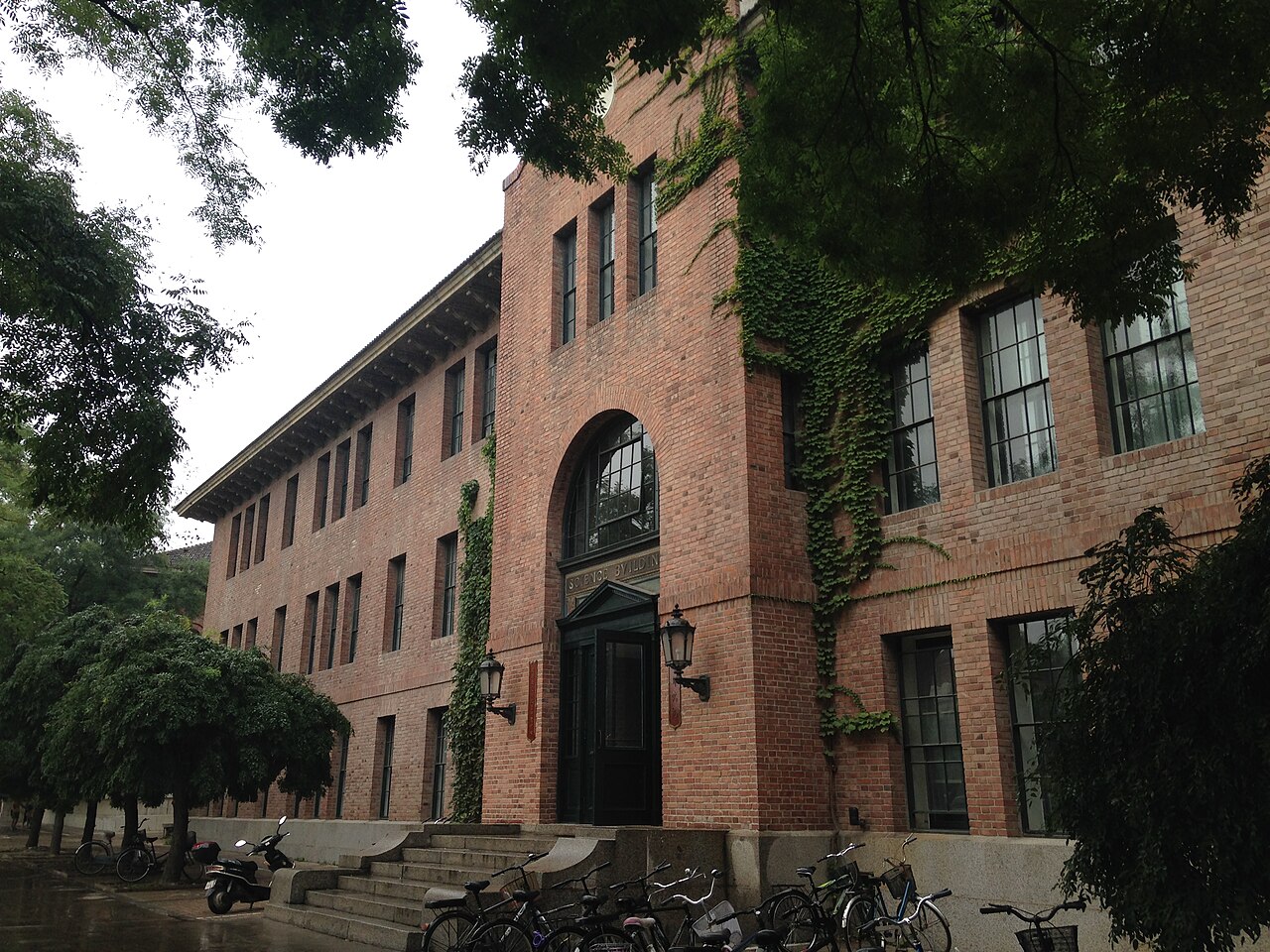
Image context: the cover uses a real Wikimedia Commons photograph of Tsinghua University's Science Building in Beijing. It is a photographic image, not a generated visual, diagram, benchmark chart, or product render. The connection is institutional rather than decorative: Vidu was publicly described as a model developed by Shengshu Technology and Tsinghua University, and later acceleration work around TurboDiffusion was also presented as a Shengshu-Tsinghua collaboration.[5][6][7]
The company signal is reference control
Vidu's current API documentation reads like a map of the control problems that AI video vendors are trying to solve. The Reference-to-Video endpoint accepts model variants including viduq3-mix, viduq3-turbo, viduq3, viduq2-pro, viduq2, viduq1, and vidu2.0; the Q3 variants emphasize intelligent scene or camera switching, simultaneous audio-video output, and consistency across camera positions.[2] The same documentation says reference images can be supplied so the model generates video with consistent subjects, and that several current variants accept 1 to 7 images in PNG, JPEG, JPG, or WebP form.[2]
That is the dossier's core. A generic text-to-video box asks the user to describe a scene and hope the model keeps identity, costume, object shape, and visual style stable. Reference-to-video changes the contract. It lets a workflow begin from assets that already exist: a character sheet, a product shot, a campaign visual, a prop, a location reference, or a brand style. The model still has to invent motion, timing, lighting, camera path, and scene continuity, but it is no longer starting from pure language.
This matters in China AI because the strongest commercial wedge for video generation is probably not "make a beautiful clip from nothing." It is "make many usable clips from known materials." Advertising, short drama, game previsualization, animation tests, education content, and tourism campaigns all begin with constraints. They need the same face to survive another angle, the same product to remain recognizable, or the same object to move without losing its identity. Vidu's reference workflow is therefore an enterprise signal as much as a model signal.[1][2]
Audio turns clips into scenes
The second signal is audio. Shengshu's Q3 release highlights synchronized audio and video, background music, sound effects, and multilingual dialogue.[1] The API update page shows the same direction as a product cadence rather than a one-day announcement. On November 13, 2025, Vidu added direct audio-video output for Reference-to-Video and Image-to-Video, including parameters for subjects and spoken lines; it also added digital-human capability that combines an uploaded human image with text or voice input.[3]
This is a bigger move than it first appears. Silent AI video can be useful for mood boards, moving thumbnails, and short social assets, but it leaves the editorial burden outside the model. Once voice, sound effects, and subject-specific lines enter the same generation path, the product moves closer to scene production. It can support ad variants, character clips, talking avatars, multilingual campaign versions, and previsualized dialogue. The risk is that generated audio can also amplify errors: bad speaker assignment, unnatural pacing, language mismatch, or audio that makes an otherwise plausible clip feel synthetic. But the strategic direction is clear. Shengshu is not only chasing prettier frames. It is trying to bind visual continuity and sonic continuity into one generation job.[1][3]
Pricing makes the workflow legible
The third signal is pricing. The Vidu pricing page still exposes older Q1 and Q2 ladders, and that is useful because it shows how the company thinks about video as metered production work. For example, Q1 1080p reference-to-video is listed at $0.4 for a 5-second job, while Q2 reference-to-video at 540p starts at $0.075 plus $0.025/sec, 720p starts at $0.125 plus $0.025/sec, and 1080p starts at $0.375 plus $0.05/sec.[4] Q2-Pro reference-to-video then steps higher, with 1080p starting at $0.425 plus $0.05/sec.[4]
Those numbers will change, and Q3 economics may be routed through different partner surfaces. Still, the structure matters. It teaches buyers that AI video is not simply a subscription toy or a magical unlimited generator. It is a costed operation where duration, resolution, quality tier, and reference complexity become budget variables. For an enterprise team, that is a practical adoption boundary. A model can look excellent in a launch reel and still fail procurement if cost per usable second is unpredictable. Vidu's public pricing surface makes the tradeoff easier to inspect.
Distribution is part of the model story
Vidu's early public story was already global. A 2024 World Internet Conference/Xinhua item described Vidu, developed by Shengshu Technology and Tsinghua University, becoming accessible worldwide with text-to-video and image-to-video functions; it also cited four-second and eight-second 1080p generation as the accessible product shape at that point.[5] By the 2026 Q3 launch, the company was no longer talking only about access. It was talking about global creators, enterprises, API delivery, SaaS, MaaS, and Alibaba Cloud Model Studio integration.[1]
That shift is the important company dossier point. Shengshu does not have Kuaishou's owned social traffic or ByteDance's global app and cloud bundle. Its visible strategy is therefore more channel-dependent: publish a strong product surface, keep the API legible, partner into cloud and creator platforms, and make Vidu easy to buy where production teams already operate. Alibaba Cloud integration is especially relevant because it places Vidu inside a broader Chinese model marketplace rather than forcing every buyer to discover Shengshu directly.[1]
The Tsinghua link adds another layer. Shengshu and Tsinghua's TurboDiffusion announcement framed acceleration as a way to improve efficiency, reduce creation and deployment costs, and push real-world adoption of generative AI; the release also says Shengshu was founded in March 2023 and that Vidu had reached more than 200 countries and regions.[6] Whether every performance claim survives independent benchmarking is less important than the operational intent. Shengshu is trying to compete on time-to-output and cost-to-output, not only on image quality.
The boundary
The obvious counterweight is that AI video remains brittle. Reference images can preserve identity in one scene and fail under another camera angle. Audio can make a clip feel more complete or expose timing errors more brutally. Short duration can work for ads and social scenes but remain too thin for long narrative continuity. Public launch claims and rankings also need careful treatment because prompt choice, sampling settings, moderation filters, and cherry-picked examples can change perceived quality.
So the falsifier is straightforward. If Vidu's reference workflow remains mostly a gallery feature for impressive one-offs, this dossier is too generous. If, instead, teams can repeatedly turn known assets into controllable 8- to 16-second scenes with predictable costs, reusable audio behavior, and API-level integration, then Shengshu has a real position in AI-China's video stack. It will not be winning only because a model made a prettier clip. It will be winning because it made reference-controlled video production feel like a tool buyers can plan around.[1][2][3][4]
Sources
- Shengshu Technology, "ShengShu Launches Vidu Q3 Reference-to-Video with Expanded Visual and Audio Capabilities" (April 2026; Q3 Reference-to-Video, 16-second synchronized audio-video, camera control, multilingual dialogue, SaaS/MaaS, and Alibaba Cloud Model Studio integration).
- Vidu API, "Reference to Video" documentation (model variants, Q3 camera/audio behavior, reference-image inputs, supported image formats, and consistency framing).
- Vidu API, "Update Notice" (2025 update cadence including audio-video direct output, subject spoken-line parameters, digital-human capability, multi-frame API, video replacement, and longer Q2 durations).
- Vidu API, "Pricing" (public credit and dollar pricing ladders for image-to-video, text-to-video, reference-to-video, and video extension across Q1/Q2 tiers).
- World Internet Conference/Xinhua, "Chinese companies develop AI video generation technology" (August 2024; Vidu global availability, Shengshu-Tsinghua origin, text/image-to-video functions, and early 1080p duration framing).
- Shengshu Technology and Tsinghua University, "Unveil TurboDiffusion" (January 2026; Shengshu-Tsinghua acceleration work, efficiency/cost framing, company founding date, Vidu reach, and Vidu API availability).
- Wikimedia Commons, "File:Science Building of Tsinghua University.JPG" by Soramimi (source page for the real 2015 Tsinghua University photograph used as the article image).