As of 2026-06-05T02:31:52Z UTC, the useful AI-China signal in ByteDance's Seed3D 2.0 is not that a model can make attractive 3D objects from prompts or images. The sharper stack read is that ByteDance Seed is trying to move generated 3D content from demo output into infrastructure: assets that can carry geometry, materials, part boundaries, articulation, scene layout, and physics-engine compatibility into downstream simulation and production workflows.[1][2]
That matters because China's AI race is no longer only a contest over chat models, token prices, or vision-language benchmarks. The next bottleneck is increasingly about the data and environments needed to train agents that act in software, factories, robots, games, industrial design tools, and embodied-AI simulators. If a lab can generate large numbers of usable 3D assets with physically meaningful materials and interaction structure, it is not just making a creative tool. It is lowering the cost of building synthetic worlds where other AI systems can be trained and evaluated.
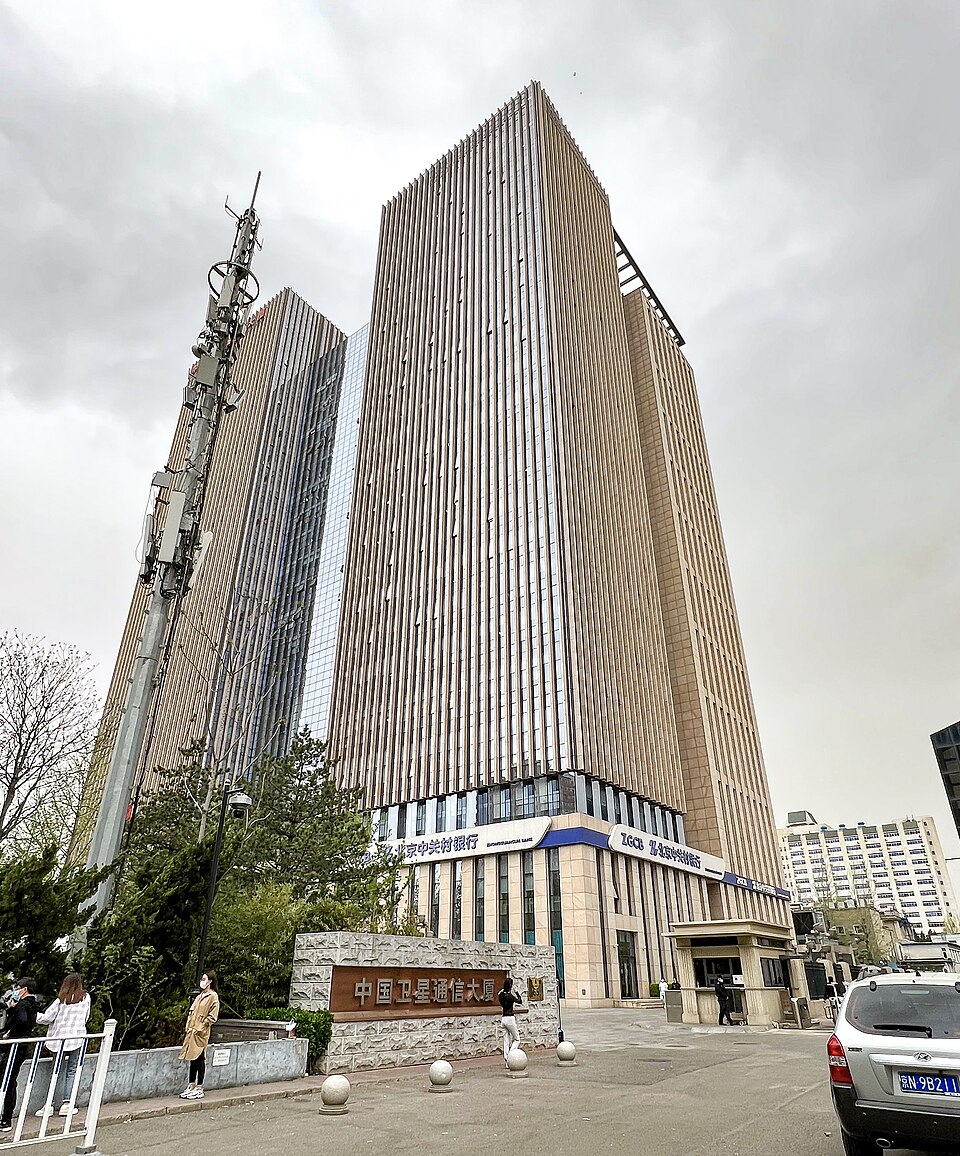
Image context: the cover uses a real street-level photograph of a Beijing office building identified by Wikimedia Commons as also an office of ByteDance.[5] It is not a generated visual, chart, diagram, or abstract AI metaphor.
The release is really about asset readiness
ByteDance Seed announced Seed3D 2.0 on April 23, 2026, describing it as a next-generation 3D generative model focused on higher precision and downstream usability.[1] The official post frames the pressure clearly: large-scale 3D content is becoming important infrastructure for embodied AI and industrial manufacturing, but previous generated 3D assets often fall short on geometric precision and material realism.[1] That is the right problem statement. A beautiful render is not the same thing as an asset that can survive inspection in a renderer, a game engine, a simulation environment, or a robot training loop.
The technical report, submitted to arXiv on April 22, 2026, makes the same point more concretely. Seed3D 2.0 builds on Seed3D 1.0 and claims improvements across generation fidelity, simulation-ready capability, and application coverage.[2] The important phrase is "simulation-ready." It implies that the asset is not only visible. It should carry enough structured 3D and material information for tools to reason about shape, lighting, object parts, and interaction.
That is why the headline feature is not one model score. It is a chain of asset properties. For geometry, Seed3D 2.0 uses a coarse-to-fine two-stage pipeline that separates global structure from high-frequency detail recovery.[2] In product terms, ByteDance is trying to prevent the usual 3D-generation failure where an object looks plausible from one angle but collapses at edges, thin walls, handles, holes, or complex topology. For production, those small failures are not cosmetic. They are exactly where a generated asset stops being useful.
Geometry and materials are two different bottlenecks
The geometry upgrade matters because 3D generation has to satisfy stricter constraints than image generation. A chair leg, a pot handle, a phone case edge, or a gripper contact surface cannot merely look convincing in a single view. It needs spatial continuity. ByteDance's release says Seed3D 2.0 uses a first stage to generate coarse structure and a second stage to recover detail using local-aware priors and voxelized positional encodings.[1] The arXiv abstract summarizes this as decoupling global structure learning from high-frequency detail recovery, with a locality-aware VAE for compression and decoding.[2]
The material side is a separate gate. Seed3D 1.0 already presented a pipeline for simulation-ready assets with accurate geometry, aligned textures, and physically based materials, and it described outputs that could be integrated into physics engines with minimal configuration.[3] Seed3D 2.0's change is to replace the earlier cascaded material workflow with a unified PBR model that directly generates multi-view albedo plus metallic-roughness maps, supported by Mixture-of-Experts scaling and VLM-based semantic conditioning.[2]
That sounds technical, but the product consequence is straightforward. A model that only paints RGB texture can make a metal pot look shiny in one lighting setup and wrong in another. A model that carries PBR material maps is closer to the way modern rendering and simulation workflows describe objects. It can distinguish color from roughness, metalness, and lighting response. That is the difference between a one-off visual and an asset that can move across engines, cameras, and scenes.
The numerical claim to treat carefully is the human preference result. The Seed3D 2.0 paper reports win rates of 69.0% to 89.9% in textured 3D asset generation against five recent commercial models.[2] That is useful as a directional provider-side benchmark, not as a final market ranking. The evaluation boundary still matters: test cases, model versions, judge selection, prompt distribution, export formats, cleanup requirements, and engine integration can all shift the practical result.
The supply-chain layer is part-level structure
The most interesting Seed3D 2.0 feature is not just better surfaces. It is part-level generation and articulation. The official release describes a workflow that decomposes generated 3D content into functional components, then completes the full shape of each part. It gives the examples of chairs split into seat, backrest, and base, and robots separated into body parts for structural analysis.[1] The paper describes a broader suite for scene layout planning, part-aware decomposition, and training-free articulation generation across physics and graphics engines.[2]
This is where the article's stack-and-supply-chain reading becomes important. A 3D asset supply chain does not end at "make mesh." It continues through segmentation, naming, export, rigging, articulation, collision behavior, scene assembly, and engine compatibility. If those steps remain manual, then generation shifts work from artists to technical artists and simulation engineers rather than removing the bottleneck. If the model starts to emit usable part structure and motion constraints, it gets closer to being infrastructure.
The arXiv paper's claim that Seed3D 2.0 supports coherent scene construction and part-level physical interaction is therefore more strategically important than the prettiest demo image.[2] For embodied AI, an object that can be decomposed, placed, moved, and tested is more valuable than one that only photographs well. For industrial use, the same logic applies to product visualization, synthetic data, assembly simulation, and training environments where physical plausibility is part of the task.
Volcano Engine makes this a deployment signal
The distribution path also matters. ByteDance's Seed3D 2.0 announcement says the technical report is published and the API is live on Volcano Engine, with an access path through the Volcano Ark Experience Center under "Vision Model" and "3D Generation" for Doubao-Seed3D-2.0.[1] Seed2.0's February 2026 launch post used a similar production framing for the broader Seed family, saying the Seed2.0 full-series API is available on Volcano Engine and describing Pro, Lite, Mini, and Code variants for different enterprise and developer scenarios.[4]
That turns Seed3D 2.0 from a lab artifact into a cloud-stack signal. ByteDance is not only publishing a paper. It is placing 3D generation inside the same commercial infrastructure story as Doubao, Volcano Ark, TRAE, and its broader agent-facing model family. In AI-China terms, that matters because the domestic advantage is often not a single benchmark. It is the ability to bind models to cloud accounts, developer tools, app surfaces, enterprise sales, and China-accessible documentation.
The deployment implication is narrow but important: 3D generation is being packaged as a selectable cloud capability, not just a research demo. That makes it easier for product teams to test whether generated assets can enter a pipeline without negotiating a custom research relationship. It also creates pressure on competitors. If Alibaba, Tencent, Baidu, Kuaishou, MiniMax, or specialist 3D vendors want comparable infrastructure credibility, they need more than videos of attractive outputs. They need export behavior, material fidelity, part semantics, API paths, pricing, stability, and integration examples.
What to believe, and what to watch
The credible claim is that ByteDance Seed3D 2.0 is aiming at a real infrastructure gap: scalable 3D assets for simulation, embodied AI, industrial design, and content production. The official release, arXiv report, and Seed3D 1.0 baseline all point to the same progression from single-image asset generation toward higher-fidelity geometry, unified PBR materials, part decomposition, articulation, and scene construction.[1][2][3]
The claim to withhold is that this already solves production-grade 3D. The release itself acknowledges long-term challenges around detail precision, generalization, texture occlusion, mapping errors, and inference efficiency.[1] Those caveats are not minor. A generated asset can fail because UVs are messy, topology is hard to edit, joints are wrong, collision meshes are bad, scale is inconsistent, or material maps do not behave under real lighting. The actual adoption test is whether teams can use the output after ordinary cleanup, not whether the demo page looks convincing.
The first watch item is export discipline. Do users get formats, part hierarchies, material maps, scale conventions, and articulation metadata that fit common engines and simulation tools, or do they get a model-specific output that still needs a specialized bridge?
The second watch item is cost and latency. The release pitch is about scalable 3D content, but scalable for whom? A game studio, robot lab, industrial-design team, and education product have different tolerance for generation time, revision cycles, quality thresholds, and manual cleanup.
The third watch item is whether Seed3D becomes part of ByteDance's broader agent stack. If 3D assets can be generated, placed into scenes, decomposed into parts, and used in simulated interaction loops, then Seed3D is adjacent to world models and embodied-agent training, not only creative tooling.
The practical conclusion is that Seed3D 2.0 should be read as infrastructure pressure. It asks whether China-origin model platforms can turn physical-world representation into a repeatable cloud capability. If the answer is yes, the next AI-China frontier will include not only text, image, audio, and video models, but also the asset factories that make simulated worlds cheap enough to use.
Sources
- ByteDance Seed, "Seed3D 2.0 Released: Higher Precision and Greater Usability" (April 23, 2026) - official release note covering geometry, PBR materials, part-level generation, articulated modeling, scene generation, and Volcano Engine access.
- Diandian Gu et al., "Seed3D 2.0: Advancing High-Fidelity Simulation-Ready 3D Content Generation," arXiv:2605.13862 (submitted April 22, 2026) - technical report abstract and evaluation envelope.
- ByteDance Seed, "Seed3D 1.0: From Images to High-Fidelity Simulation-Ready 3D Assets" - baseline technical report for the earlier image-to-3D asset system, PBR materials, physics-engine integration, and scene composition.
- ByteDance Seed, "Seed 2.0 Official Launch" (February 14, 2026) - broader Seed family context, production deployment framing, model variants, and Volcano Engine availability.
- Wikimedia Commons, "File:China Satcom headquarters (20220411151625).jpg" - source page for the real photographic image used as this article's cover, identified as also an office of ByteDance.