As of 2026-06-09 UTC, the interesting AI-China signal in Alibaba's Model Studio CLI is not that another Chinese cloud platform has added a command-line wrapper. The sharper signal is distribution: Alibaba is trying to make Qwen-era agents less dependent on one chat surface by giving terminal agents a shared toolbox for text, image, video, audio, search, memory, app calls, and model selection.[1][2]
That makes the release a practical use-case story. A coding agent that can edit files is useful; a coding agent that can call a model platform's media, retrieval, and workflow primitives from the same terminal begins to look like an operating desk. Alibaba's June 8 launch note says Model Studio's official CLI lets AI agents access more than 150 multimodal models across text, image, video, and audio, works with tools including Claude Code, OpenCode, Cursor, OpenClaw, Cline, Qoder, and Qwen Code, and needs only a terminal command plus a Model Studio API key once configured.[1] The GitHub repository frames the same idea more directly: it is built for agent frameworks, exposing Model Studio capabilities as structured tool calls.[2]
That language matters because China's model race is crowded. Qwen, Kimi, GLM, DeepSeek, ERNIE, Hunyuan, MiniMax, and other lines can all produce impressive release notes. What is harder is making those models usable inside a repeated workflow without asking every team to build the same glue. Model Studio CLI is Alibaba's answer to that glue problem: not a new foundation model by itself, but a way for agents to reach the platform's capabilities without leaving the developer's working context.[1][2][3]
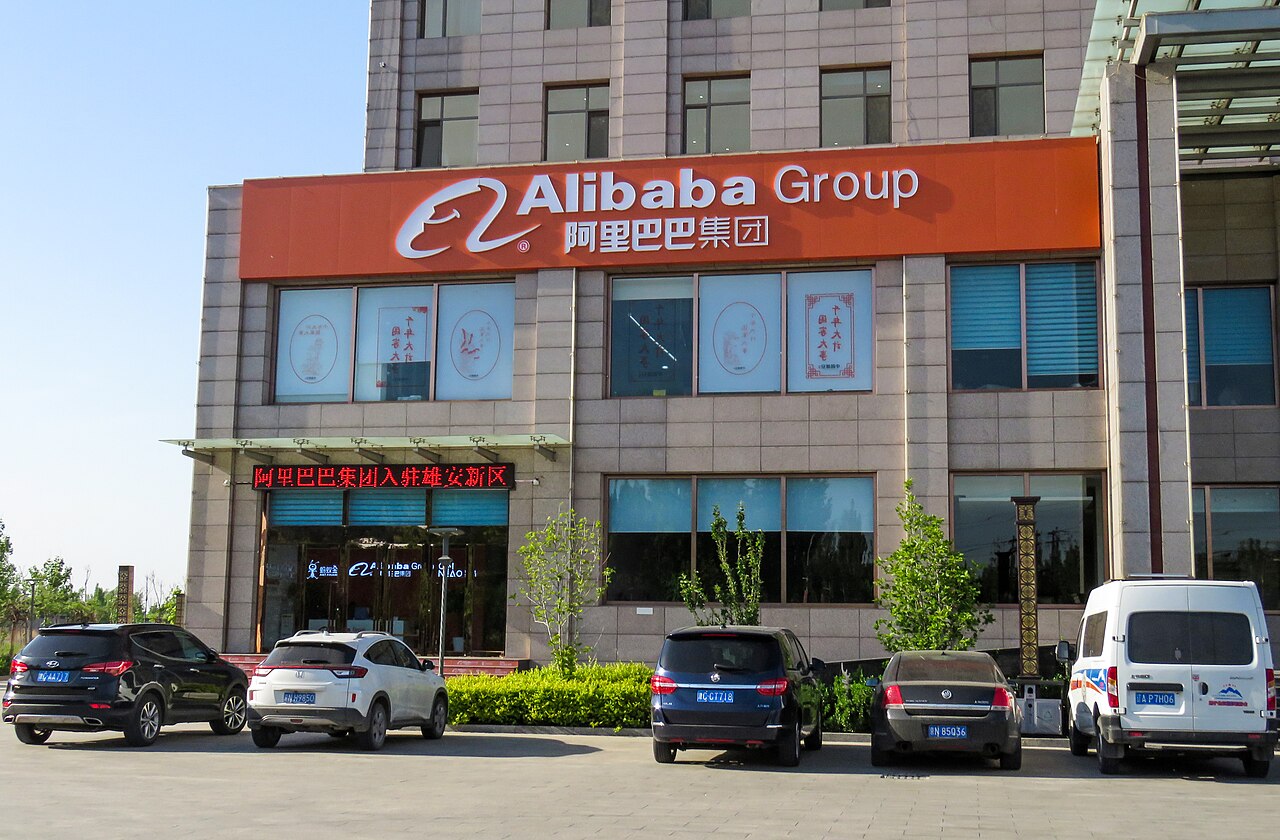
Image context: the cover is a real 2018 photograph of Alibaba Group's provisional office in Xiong'an, not a generated visual, diagram, chart, or conceptual AI collage. It is used because this article is about Alibaba's platform packaging and enterprise-facing agent distribution rather than a purely abstract model capability.[7]
The Use Case Is Tool Access, Not Chat
The cleanest way to understand Model Studio CLI is to start with the thing it avoids. In a normal AI coding flow, the agent can inspect a repository, propose a patch, and run commands. The moment the task needs a generated image, speech synthesis, video generation, visual understanding, a platform app, a knowledge-base lookup, or model comparison, the workflow often breaks into side tabs and manual uploads. Alibaba is trying to collapse that gap into a command surface the agent can call directly.[1][2]
The repository lists the relevant primitives: speech synthesis and recognition through CosyVoice and FunAudio-ASR, image and video understanding through Qwen-VL, multimodal RAG retrieval and cross-session memory, app calls for agents and workflows published on Model Studio, MCP integration, web search, model recommendation, free-tier usage checks, and local file auto-upload with temporary storage.[2] That is not one capability. It is a platform menu exposed in a way an agent can script.
The demo framing reinforces the point. The Model Studio CLI page shows a one-sentence video workflow where Qwen Code interprets a request, a skill decomposes the story into shots, the CLI dispatches video generation in parallel, and the result is stitched into a deliverable.[2] The example is content-heavy, but the general pattern applies outside marketing: an agent reads a goal, decomposes the task, selects tools, calls platform services, checks outputs, and returns artifacts. The model is only one part of the loop.
Why Qwen Code Is the Natural Front Door
Qwen Code gives Alibaba a terminal front door for that loop. Its documentation describes it as a command-line AI agent optimized for Qwen3-Coder, installed through a shell script, npm, or Homebrew, with authentication through Alibaba Cloud Coding Plan or a Model Studio API key.[3][4] The GitHub README adds the ecosystem detail: Qwen Code is open source, terminal-first, IDE-friendly, and supports multiple providers through OpenAI-, Anthropic-, and Gemini-compatible APIs, plus Alibaba Cloud Coding Plan, OpenRouter, Fireworks AI, or a user's own key.[4]
That provider flexibility is important. Alibaba is not only saying, "Use our model." It is saying, "Make this the agent shell, then route models and tools through it." The Model Studio Qwen Code guide even names non-Qwen options such as DeepSeek, Kimi, and GLM in its configuration reference, while still emphasizing Qwen3-Coder as the optimized path.[3] This is a distribution strategy: keep the terminal habit, make authentication and model routing explicit, and let Model Studio become the paid/control-plane layer when free or consumer-style access is not enough.
There is also a governance signal in the authentication history. Qwen Code's README says the Qwen OAuth free tier was adjusted in April 2026 and then discontinued on 2026-04-15, directing users toward Alibaba Cloud Coding Plan, OpenRouter, Fireworks AI, or bring-your-own API key.[4] For hobby users, that may feel like friction. For enterprise users, it is a sign that Alibaba wants agent usage to move into auditable billing, workspace, and provider configuration rather than remain a loose consumer-login perk.
The Multimodal Agent Claim Needs Packaging
Qwen3.7-Plus supplies the model-side ambition behind the toolchain. Alibaba's June 3 Qwen3.7-Plus note describes a multimodal interactive hybrid agent that blends GUI and CLI operation, reads screens, operates graphical interfaces, writes code from visual references, navigates mobile apps, and handles productivity workflows with full-modality input.[5] The same post shows why a CLI layer matters: Qwen3.7-Plus can be called through Model Studio, configured for OpenAI-compatible chat completions, connected to OpenClaw through Model Studio, and used through Qwen Code.[5]
The implication is simple: a multimodal agent model still needs a place to stand. If the model can understand a screenshot but the runtime cannot upload local files cleanly, invoke a video generator, call a retrieval base, inspect tool definitions, or return a durable artifact, the impressive capability turns into a demo. Model Studio CLI is one attempt to give the model a workbench that is close to the files, commands, credentials, and artifacts developers already use.[1][2][5]
That does not make the setup automatically safe. A terminal-native toolbox increases blast radius. A good deployment has to decide which commands can run automatically, which file paths may be uploaded, which Model Studio apps are callable, where API keys are stored, what MCP servers are allowed, and how generated assets are reviewed before they enter production. The CLI shape makes those questions visible; it does not answer them by itself.[2][3][4]
The Competitive Context Is Long-Horizon Work
Alibaba is not alone in framing agents around sustained execution. Z.AI's GLM-5.1 documentation says the model is designed for long-horizon tasks, with a 200K context length, 128K maximum output tokens, function calling, MCP, context caching, and an asserted ability to work autonomously on a single task for up to 8 hours.[6] That is a model-side claim about persistence, tool use, and engineering delivery.
Model Studio CLI points at a complementary layer. Instead of claiming that one model can work longer, it asks how a platform can give agents more reliable tools to call. Those are different bets, and mature teams will need both. A strong long-horizon model without disciplined tool access can wander. A capable toolbench without a model that can plan, recover, and verify will produce shallow automation. The next AI-China adoption question is therefore not only "which Chinese model scored highest?" It is "which stack gives an agent enough model quality, tool surface, permission control, and artifact handling to be trusted with repeated work?"
That is why the Model Studio CLI release is worth tracking even if its first examples feel like content production. It turns Alibaba's cloud AI inventory into command-line capabilities that Qwen Code and adjacent agents can compose. If the pattern holds, the product boundary moves from standalone chat to workflow packaging: a terminal agent, a model control plane, multimodal services, retrieval and memory, MCP, and skills that encode repeatable procedures.[1][2][3]
The falsifier is operational adoption. If developers treat Model Studio CLI as a novelty for media generation, the release will remain a useful wrapper. If teams begin publishing durable skills, internal runbooks, and controlled agent workflows around it, Alibaba will have something more valuable: a practical route for Qwen and Model Studio to sit inside daily engineering and content operations without asking users to rebuild the platform layer from scratch.
Sources
- Alibaba Cloud Community, "Alibaba Launches Qwen3.7-Plus, AI Swine Diagnosis Assistant and Model Studio CLI" (June 8, 2026).
- modelstudioai, "cli" GitHub repository README (official Model Studio CLI, tool surface, examples, installation, and authentication).
- Alibaba Cloud Model Studio, "Qwen Code" documentation (install, API-key setup, model-provider configuration, commands, and quota notes).
- QwenLM, "qwen-code" GitHub repository README (terminal agent positioning, provider options, installation, and April 2026 OAuth/free-tier changes).
- Qwen Team, "Qwen3.7-Plus: Multimodal Agent Intelligence" (June 3, 2026).
- Z.AI Developer Document, "GLM-5.1" (model overview, long-horizon task claims, 200K context, tool capabilities, and usage examples).
- N509FZ, "Alibaba Group provisional office at Xiong'an (20180503164635).jpg," Wikimedia Commons, photographed May 3, 2018 (article image source).