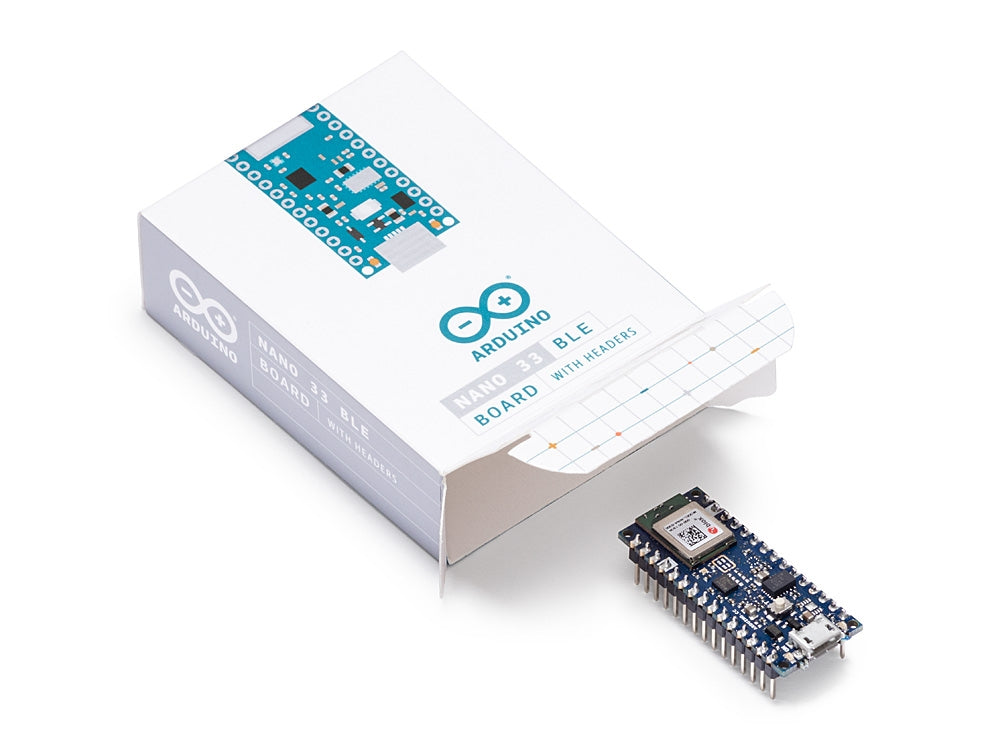
The computation takes about an eighth of a second. On an Arduino Nano 33 running at 64 MHz, MCU-Quake can examine seismic data quickly enough to update its inference every second, according to the research team's 2025 demonstration.[3] The striking part is where that judgment fits: on a small microcontroller, close to the instrument collecting the signal.
Developed by Zhi Geng and colleagues at the Chinese Academy of Sciences' Institute of Geology and Geophysics, MCU-Quake learns to distinguish ambient noise, quarry blasts, and natural earthquakes. The institute's February 17, 2025 account describes a network with just 2,693 parameters, trained using Utah seismic records.[2] Its contribution to China's scientific AI is a carefully narrowed task that can travel onto modest hardware.
Make the question small enough
A seismic instrument records motion; identifying its source requires interpretation. MCU-Quake asks what kind of signal has arrived. That is useful even before anyone attempts a fuller account of an event.
The paper, published on January 31, 2025, uses a rolling seven-second window from the vertical component of a waveform. Its architecture search balances prediction error, model size, and inference time. Rather than choosing the most accurate candidate regardless of cost, the researchers search for useful compromises among those competing requirements.[1]
This makes the hardware constraint part of the scientific design. If a model cannot finish before the next scheduled update, its queue grows. If it needs more memory than the board possesses, an attractive accuracy score cannot put it into service. The question becomes: how much discrimination can survive inside the available time and space?
The photographed Nano 33 BLE makes those limits tangible. Arduino specifies a board measuring 45 by 18 millimetres, with 256 KB of SRAM and a 64 MHz processor.[5] The product photo establishes the scale of the computing platform. It does not establish the sensitivity of a complete seismic instrument, which also needs appropriate sensing and acquisition hardware.
A number with a learned meaning
MCU-Quake's unusual move is to compress the input into one numerical representation, or embedding. The institute reports typical values near −5 for noise, 2 for blasts, and 1 for earthquakes in the Utah data.[2] Those values are coordinates learned by the network. An output near 1 is not an earthquake magnitude or a statement of 100 percent confidence.
Think of placing unfamiliar sounds along a ruler whose markings were learned from examples. Similar examples should land nearby; different kinds should separate. The ruler is useful because of the arrangement it produces, not because a particular printed number has a physical meaning.
The subsequent decision uses the distributions of those learned values to assess a signal's likely source. The paper explicitly shows overlap between earthquake and explosion representations, especially for weak signals.[1] Compressing the representation therefore makes a decision easier to inspect without making every event unambiguous.
That distinction matters for interpretability. A reviewer can examine where a new signal lands relative to known examples. The scalar alone cannot explain every feature of the original waveform, and overlapping classes still demand judgment. A compact answer can expose uncertainty as well as hide it; the surrounding software decides which of those happens.
What the small-board test establishes
In his March 9, 2025 account, Geng describes using distributed cloud computation to evolve the lightweight models. He also reports approximately 128 milliseconds per inference on the 64 MHz Arduino.[3] The expensive search and the cheap repeated calculation occupy different places in the workflow.
That is the practical attraction: a research team can spend substantial computation designing a model, then distribute a small result. The deployed board need not repeat the architecture search each time the ground moves. Conversely, a fast inference measurement says nothing by itself about the cost of collecting training examples or maintaining the system.
The 128 milliseconds also measures computation after an input window is available. It cannot be read as the time from a rupture to a public warning. Acquisition, event detection, communications, and any further verification have their own timing. The demonstrated advance is that this particular inference can keep pace with its scheduled updates.[1][3]
The quiet hours change the test
The team tested transfer beyond Utah using STEAD, a global seismic dataset.[2] STEAD's documentation separates earthquake and noise records and supplies metadata for selecting examples by properties such as magnitude and source distance.[4] That makes it possible to ask which signals a reported result actually covers, rather than treating “global” as a guarantee about every station.
The MCU-Quake paper's comparison datasets balance noise and seismic waveforms.[1] A working station can spend far more time recording ordinary background activity. This changes what an operator experiences even when the classifier's conditional error rates stay fixed.
Consider an illustrative test with 100 event windows and 9,900 noise windows. A hypothetical classifier that catches 99 percent of events and mistakenly flags 1 percent of noise produces 99 true detections and 99 false ones. Half its flags are wrong. These are explanatory numbers, not measured MCU-Quake results; they show why a balanced benchmark cannot supply an operational false-alarm rate on its own.
My reading is that the most revealing next experiment would leave the model running through long, uneventful station records, then report false triggers per day alongside missed events. That would connect the tiny chip's demonstrated speed to the workload it creates for the next stage of analysis. MCU-Quake makes the first judgment inexpensive enough to place near a sensor. The lasting value depends on how often that judgment deserves further attention.
Sources
- Zhi Geng et al., “Real-time discrimination of earthquake signals by integrating artificial intelligence technology into IoT devices,” Communications Earth & Environment, January 31, 2025; input windows, representation, hardware experiments, and evaluation design.
- Institute of Geology and Geophysics, Chinese Academy of Sciences, “AI empowers edge computing: real-time seismic-source discrimination on microcontrollers,” February 17, 2025; first-hand Chinese-language account, model size, learned values, and datasets.
- Zhi Geng, “Fusing AI and Edge Computing: Next-Generation Sensing Networks in Earth Science,” Springer Nature Research Communities, March 9, 2025; author's account of model search and the microcontroller demonstration.
- S. Mostafa Mousavi and collaborators, STanford EArthquake Dataset (STEAD), official repository documentation; earthquake/noise records and metadata-based selection, accessed September 23, 2026.
- Arduino, “Arduino Nano 33 BLE with headers,” official hardware specifications and product photography; photograph ABX00034_02.unbox, accessed September 23, 2026.