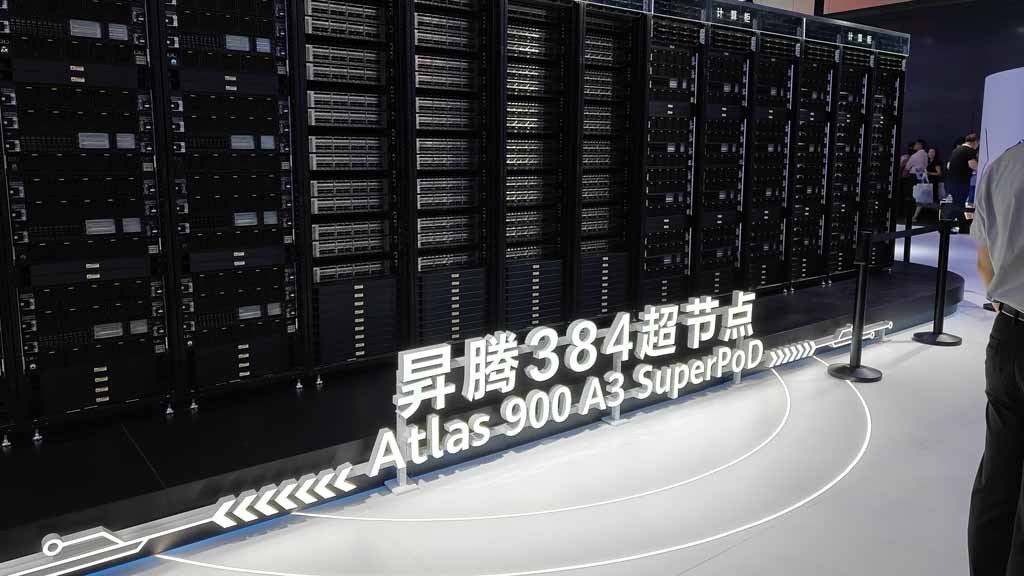
As of 2026-05-31 UTC, China's latest AI-chip signal is not a new benchmark claim. It is a list. On May 26, 2026, the China Information Technology Security Evaluation Centre and the National Secrecy Science and Technology Evaluation Centre published the 2026 No. 2 secure-and-reliable assessment results, adding a new category for AI training and inference chips and giving nine domestic products a three-year validity window.[1]
That sounds administrative, which is exactly why it matters. The market already knew China wanted domestic alternatives to Nvidia hardware. What changed is that the state procurement surface now has a more concrete buying gate: if a government body, state-linked enterprise, financial institution, energy operator, or other sensitive buyer needs AI accelerators, the first question can become less "who has the loudest roadmap?" and more "which chips have already cleared the official assessment list?"
The approved AI-chip entries are Ascend 310 and Ascend 910 from HiSilicon, Zhenwu M530 and Zhenwu M890 from Alibaba's T-Head unit, Bili 166 from Biren, DCU-3G from Hygon, KCC-V100X from Iluvatar CoreX, MXC600 from MetaX, and PH100 from Moore Threads. All nine were listed at Level I, and the notice says the results are valid for three years from publication.[1] South China Morning Post and Tom's Hardware both framed the move as the first time AI chips had been included in this secure-technology assessment lane, with the noticeable absence of some well-known Chinese accelerator names such as Cambricon and Baidu-backed Kunlunxin.[2][3]
Priced: China needs domestic compute
The priced-in story is familiar. US export controls have made top-end Nvidia access uncertain for Chinese buyers, and the domestic accelerator stack has been trying to close the gap through Ascend clusters, Alibaba cloud-chip integration, Biren and Moore Threads cards, Hygon DCUs, and a growing layer of framework adaptation. Alibaba's recent Zhenwu M890 announcement, reported by AFP and Chinese state media, fits that context: a training-and-inference chip positioned as part of a domestic alternative path while export restrictions keep raising the cost of dependence on US hardware.[4][5]
The new part is not that these vendors exist. It is that official assessment converts the chip race into procurement grammar. A bank or provincial platform can tolerate some uncertainty around performance tuning if the equipment has a compliance credential that helps it survive review. A domestic cloud can package a model service around chips that have already passed an official security-and-reliability test. A systems integrator can build tenders around named products rather than generic slogans about self-reliance.
That does not make the listed chips equal. It does make them more legible to buyers who operate inside approval chains.
New: the bottleneck moves from access to execution
The certification list solves one problem before it solves the harder one. It says these chips passed a formal security-and-reliability assessment. It does not say they match Nvidia H100 or Blackwell clusters in developer productivity, CUDA compatibility, interconnect maturity, memory behavior, failure rates, driver stability, or total cost per useful token.[1][3]
That distinction is the investment and infrastructure point. Once a chip is procurement-eligible, the next bottleneck moves into the execution layer: how quickly can buyers get working systems, how much engineering help do they need, which model frameworks run well, how painful is migration from CUDA-centric code, and whether multi-card clusters stay stable under real training and inference loads.
The three-year validity period is therefore a clock. Vendors have time to convert eligibility into reference deployments. Buyers have a clearer list for pilots. But software maturity, framework coverage, and operator confidence still have to compound. A chip that clears the gate but requires bespoke heroic tuning will remain a policy win before it becomes an economic win.
Why the omissions matter
The list is also useful because of who is not on it. Reporting by SCMP and Tom's Hardware highlighted the absence of Cambricon and Kunlunxin from this batch.[2][3] That should not be overread as a permanent exclusion; assessment cycles can be staggered, and companies may submit at different times. But it matters for market structure.
If procurement officers begin treating the assessed list as a practical shortlist, early inclusion can create a distribution advantage. It gives HiSilicon, T-Head, Biren, Hygon, Iluvatar, MetaX, and Moore Threads a cleaner compliance story in sensitive accounts. Late inclusion can still work, especially for vendors with strong performance or existing deployments, but it raises the burden of explanation during the next procurement window.
This is how domestic substitution often becomes real: not through one dramatic replacement event, but through checkboxes that change what buyers are allowed to buy without escalation.
The counterweight
The strongest counterargument is that assessment status can be mistaken for capability. Secure-and-reliable certification is not a benchmark suite. It does not tell a model team whether distributed training will converge on schedule, whether a serving stack can hit latency targets, or whether engineers can debug kernel-level failures without vendor intervention.
That risk cuts both ways. Bulls can overstate the list as proof that China has replaced Nvidia. Bears can understate it because it looks bureaucratic. The more balanced reading is that China is building the non-performance infrastructure around domestic AI chips: assessment, procurement legitimacy, vendor shortlists, model adaptation, cloud packaging, and state-sector demand. Those pieces do not guarantee performance parity, but they reduce the commercial friction that keeps an imperfect domestic product out of deployment.
For enterprises, the practical question is not "is every listed chip globally best in class?" It is "which workloads can move first?" Inference, private fine-tuning, smaller multimodal workloads, and sector-specific model services may tolerate more migration work than frontier-scale training. The list gives those less glamorous workloads a compliance path.
Watch items
First, watch whether the next assessment batches add Cambricon, Kunlunxin, newer Ascend parts, or additional database-and-chip pairings. If the list broadens quickly, it becomes a market-wide procurement channel. If it stays narrow, early vendors gain scarcity value.
Second, watch cloud packaging. Alibaba's Zhenwu push matters because T-Head sits inside a group with models, cloud services, and enterprise accounts.[4][5] Huawei's advantage is similar but broader: Ascend is sold as infrastructure, not just silicon. The vendors that pair assessed chips with working model services will turn the credential into revenue faster.
Third, watch migration evidence, not only press releases. Useful proof will look plain: published compatibility matrices, framework patches, cluster case studies, uptime data, cost-per-token comparisons, and model families that run without constant vendor engineering.
The falsifier is clear. If official assessment status does not translate into tenders, production deployments, and credible workload migration during the next twelve months, then the list will have been more symbolic than structural. If it does translate, the AI-China chip story will have crossed an important boundary: domestic accelerators will no longer be only a response to export controls. They will be procurement-normal infrastructure with policy, compliance, and buyer habits forming around them.
Sources
- China Information Technology Security Evaluation Centre, "Secure and reliable assessment results announcement (2026 No. 2)" (May 26, 2026; official list of nine AI training and inference chips, Level I assessment results, and three-year validity note).
- South China Morning Post, "China adds AI chips to secure technology assessment list amid US curbs" (May 27, 2026; context on first AI-chip inclusion, listed vendors, and absent vendors).
- Tom's Hardware, "China adds homegrown AI chips to 'secure and reliable' procurement list for the first time" (May 27, 2026; English summary of the assessment list, procurement framing, vendor names, and omissions).
- AFP via Tech Xplore, "Alibaba unveils new AI chip as Nvidia access remains stalled" (May 20, 2026; Zhenwu M890 launch, export-control context, shipment/customer claims, and performance caveat).
- China Daily, "Alibaba unveils new AI chip" (May 20, 2026; Zhenwu M890 positioning, training-and-inference use, and named customer context).
- Huawei Central, "Huawei Atlas 900 A3 SuperPoD" product photograph - hardware-focused source used for the article image.