Play a bass chord, press the sustain pedal, then lift your hand. You can reach the other end of the keyboard while the bass is still ringing. Someone listening from the next room could pick out the pitches and miss the instant your hand came free. A researcher transcribing a recording faces much the same problem. Even a perfectly identified chord leaves open a question about what the pianist did.
In 2020, Qiuqiang Kong and colleagues at ByteDance described a way to transcribe both piano notes and sustain-pedal changes from audio. They subsequently used the system to build GiantMIDI-Piano, a collection of more than ten thousand machine-readable performances. With those files a listener can ask where a pianist spread the notes of a chord or changed pedal as a new harmony arrived. How closely one can read the answer depends on where the timestamps came from. [1][2]
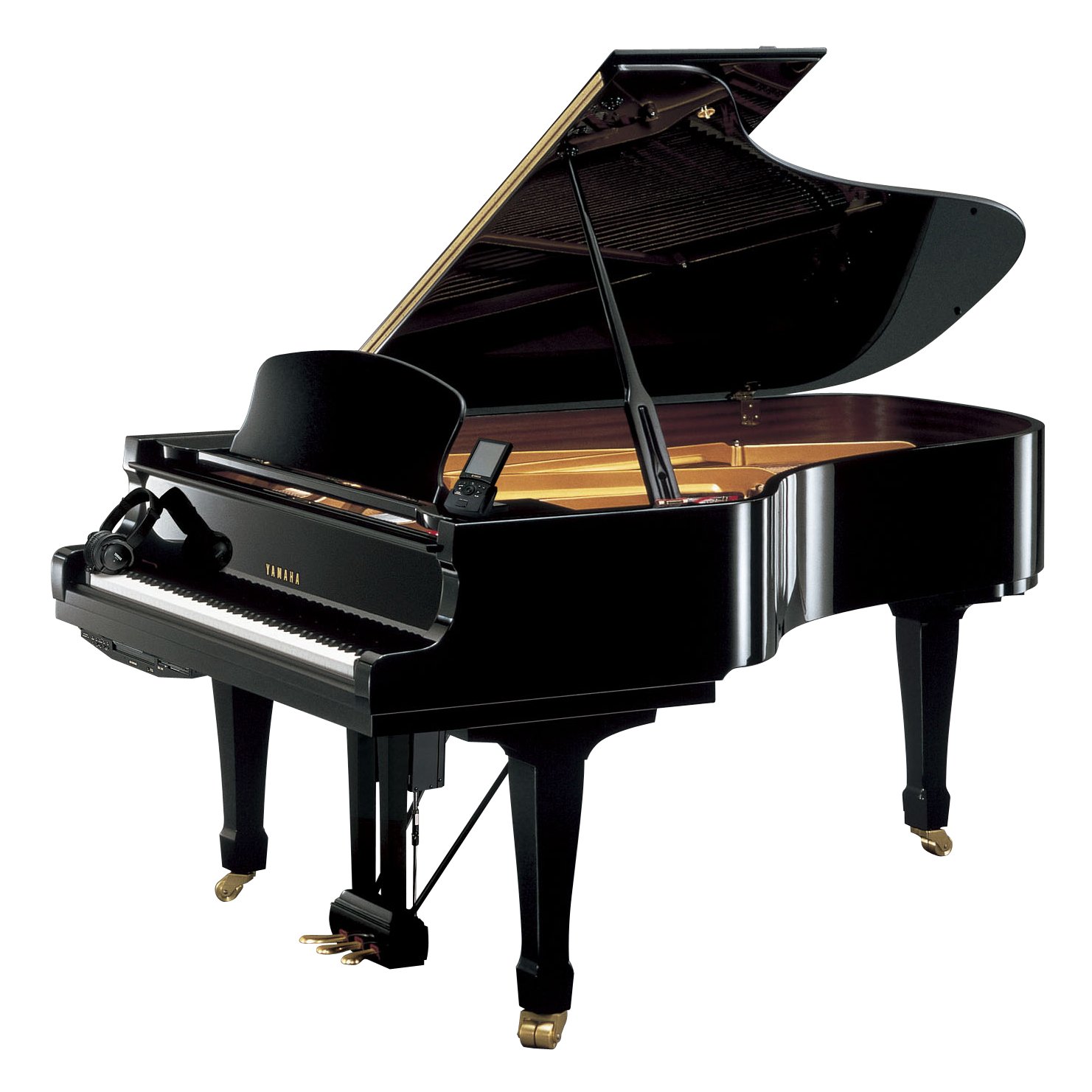
A piano that keeps its own record
The researchers had a rare advantage during training. At the International Piano-e-Competition, contestants played Yamaha Disklaviers. A microphone could capture the music while the instrument itself recorded the keystrokes and pedal movements as MIDI events. The competition used that capability for remote auditions. A second Disklavier could reproduce a contestant’s playing for judges elsewhere. The MAESTRO dataset paired the two records of each performance, aligning sound and events to within roughly three milliseconds. [3]
That pairing let the ByteDance team practice on a question with a known answer. They divided the sound into short, overlapping windows. A system that assigns an attack to the nearest frame will give two slightly staggered notes the same timestamp if both fall close enough to its center. Kong’s team trained their model to estimate how close each frame lay to an attack. When an attack fell between frames, the strengths of the neighboring predictions helped locate it. The project also released the code and trained weights for combining note and pedal estimates into one transcription. [1][5]
The difference matters if you want to measure a pianist’s touch. On held-out performances in MAESTRO version 2, the model scored 96.72 percent on onset F1, a measure that allows for both missed notes and spurious ones, when an attack could land within 50 milliseconds of its reference time. Tighten that allowance to five milliseconds and the score fell to 65.32 percent. Both figures describe the same set of predictions. A file that identifies the notes of a chord can still leave considerable doubt about which finger landed first. [1]
When the instrument kept no log
GiantMIDI-Piano took that trained ear to recordings found on YouTube. The project lists 10,855 MIDI files. Its curated subset keeps 7,236 whose video titles contain the composer’s surname. That check narrows one source of error when matching a recording to a piece. A surname in a video title can do little to settle when, partway through the performance, a pedal came up. For the competition recordings the instrument supplied an independent record of such movements. For the online collection the software inferred them from sound. [2][3]
Imagine comparing how two pianists handle the return of the bass chord. The MIDI files give you a place to start listening in each recording. You might hear one pianist clear the old harmony just before striking the chord, while the other lets it bleed into the attack. That is a difference you can describe and point someone else toward. A claim that the second pianist delayed by precisely five milliseconds would ask much more of the transcription. The collection’s great convenience is that you can search thousands of performances for that one passage, then put your headphones on.
Sources
- Qiuqiang Kong and colleagues, “High-resolution Piano Transcription with Pedals by Regressing Onset and Offset Times,” especially Table IV.
- ByteDance, GiantMIDI-Piano collection, recording selection and curated subset.
- Magenta, The MAESTRO Dataset, competition instruments, alignment and repertoire.
- Yamaha Music (Russia) LLC, Disklavier DS6M4PRO PE photograph, Wikimedia Commons.
- ByteDance, piano transcription training and inference code.