A molecular model has two journeys to make. First it must learn useful relationships between atomic arrangements, energies, and forces. Then its saved parameters must reach the software that actually moves atoms through a simulation. DeePMD-kit’s recent engineering work concentrates on that second journey: giving researchers more ways to carry a model from training into use.
The August 19, 2026 release, v3.2.0, expands its exportable PyTorch, JAX, and TensorFlow 2 paths. Alongside new model families, the release advances training, export, and deployment into LAMMPS, a molecular-dynamics engine.[1] The consequential change is the growing number of connections a researcher can use without rebuilding an entire workflow around one machine-learning framework.
This is a useful view of China’s AI-for-science progress because it makes the maintenance work visible. Jinzhe Zeng, first author of the v3 paper, joined the University of Science and Technology of China in February 2025; the university’s Chinese-language profile identifies DeePMD-kit design and development among his responsibilities.[2][3] The project connects that Chinese research base with an international software community. Its contribution is an increasingly reusable scientific instrument.
Keep the simulator, change the engine
The architectural turning point predates this summer’s release. The February 2025 v3 paper describes how DeePMD-kit moved beyond its earlier TensorFlow implementation to support several machine-learning backends. Version 3 preserved the Python and C/C++ interfaces already used by simulation packages, while putting the choice of backend behind them.[2]
Think of the backend as the machinery that evaluates the neural network. The molecular simulator still needs energies and forces; it should not have to acquire an entirely new personality every time that machinery changes. Keeping the outward interface stable lets existing integrations survive internal development.
The authors compare outputs across backends to check consistency. Serialization—saving a model so another implementation can reconstruct it—provides the basis for conversion.[2] This is the central engineering bargain: more freedom underneath, less disruption at the point where researchers already work.
A model file still carries conditions
The versioned backend documentation states the conversion rule plainly: both backends must support the model. A shared command does not make every architecture transferable. It also distinguishes training checkpoints from exported models; those files serve different purposes even when they belong to the same framework.[4]
One especially revealing example is .pt2, an export format used by the newer PyTorch path. Its suffix identifies an AOTInductor package, but does not fully specify the inputs the model expects. The runtime reads metadata to choose the appropriate input representation. A filename therefore answers only part of the deployment question.[4]
That detail has a practical consequence. A researcher handing a model to another group should preserve the export route and its requirements alongside the file. Otherwise, “we both use PyTorch” can conceal two different expectations about what data enters the computation.
The August release strengthens this part of the stack: its notes describe a more complete exportable-PyTorch route into compiled execution and LAMMPS, broader JAX training and export, and an expanded TensorFlow 2 workflow.[1] These are specific additions to an evolving system. They should be read against the named version, because an older tutorial can describe a capability boundary that has since moved.
Outside models can use the same plumbing
Portability also runs across model families. DeePMD-GNN, a separate plugin, integrates MACE and NequIP architectures into DeePMD workflows. Its documentation makes the remaining asymmetry visible: MACE has an exportable-PyTorch route, while NequIP uses the regular PyTorch backend.[5]
The distinction matters when simulations are distributed across processes. Nearby atoms may lie on another process, so the neural network needs information exchanged across that boundary. The plugin documents a communication operation, border_op, for the LAMMPS/PyTorch path. Its serial fallback is not a replacement for that interprocess communication.[5]
This makes an apparently modest plugin strategically interesting. Researchers can bring different models into shared simulation infrastructure, while retaining explicit requirements for how each one runs. The benefit is less duplicated integration work. It does not imply that an arbitrary checkpoint from another project will load unchanged.
The compiler remains part of the instrument
The installation guide supplies another constraint. If multiple backends are enabled together, their compiled libraries must be compatible. It gives the _GLIBCXX_USE_CXX11_ABI setting as an example: libraries need compatible conventions for exchanging C++ objects.[6]
This is a different issue from the model-input metadata inside an exported file. One concerns what the model expects to receive; the other concerns whether the surrounding compiled software can work together. Either can interrupt the journey from a successful training run to a useful simulation.
The guide also documents a backend-neutral C/C++ build, with backend plugins supplied at runtime.[6] That separation gives maintainers another way to package the system, but the required plugin still has to be available. Removing a direct dependency from one component does not remove it from the whole application.
What a successful transfer proves
The implication is encouraging and bounded. DeePMD-kit is reducing how tightly a scientific model must be attached to one implementation. More researchers can potentially reuse the training, export, and simulation work already done by others.
There are still two separate questions to answer. Does the transferred model reproduce the intended computation in the target environment? And does that computation describe the chemistry or material under study well enough? Agreement across software implementations addresses the first question. It cannot, by itself, answer the second.
A convincing next demonstration would follow a named model through export into a specified simulator and hardware setup, check its outputs, and then evaluate a physical property against an appropriate reference. The software’s growing reach makes that experiment easier to assemble. The scientific result still has to earn its place.
Sources
- DeepModeling, DeePMD-kit v3.2.0 release, August 19, 2026—backend, export, and simulation-deployment changes.
- Jinzhe Zeng et al., “DeePMD-kit v3: A Multiple-Backend Framework for Machine Learning Potentials,” February 2025 preprint, sections 1–2—architecture, preserved interfaces, serialization, and consistency tests.
- USTC School of Artificial Intelligence and Data Science, Jinzhe Zeng faculty profile, March 23, 2026—Chinese firsthand account of his appointment, software work, and v3 authorship.
- DeepModeling, “Backend,” DeePMD-kit v3.2.0 documentation—conversion conditions, checkpoint distinctions, and exported-model input metadata.
- DeepModeling, DeePMD-GNN project documentation, accessed October 9, 2026—MACE and NequIP integration, backend differences, and LAMMPS communication requirements.
- DeepModeling, “Install from source code,” DeePMD-kit v3.2.0 documentation—C/C++ library compatibility and backend-plugin installation.
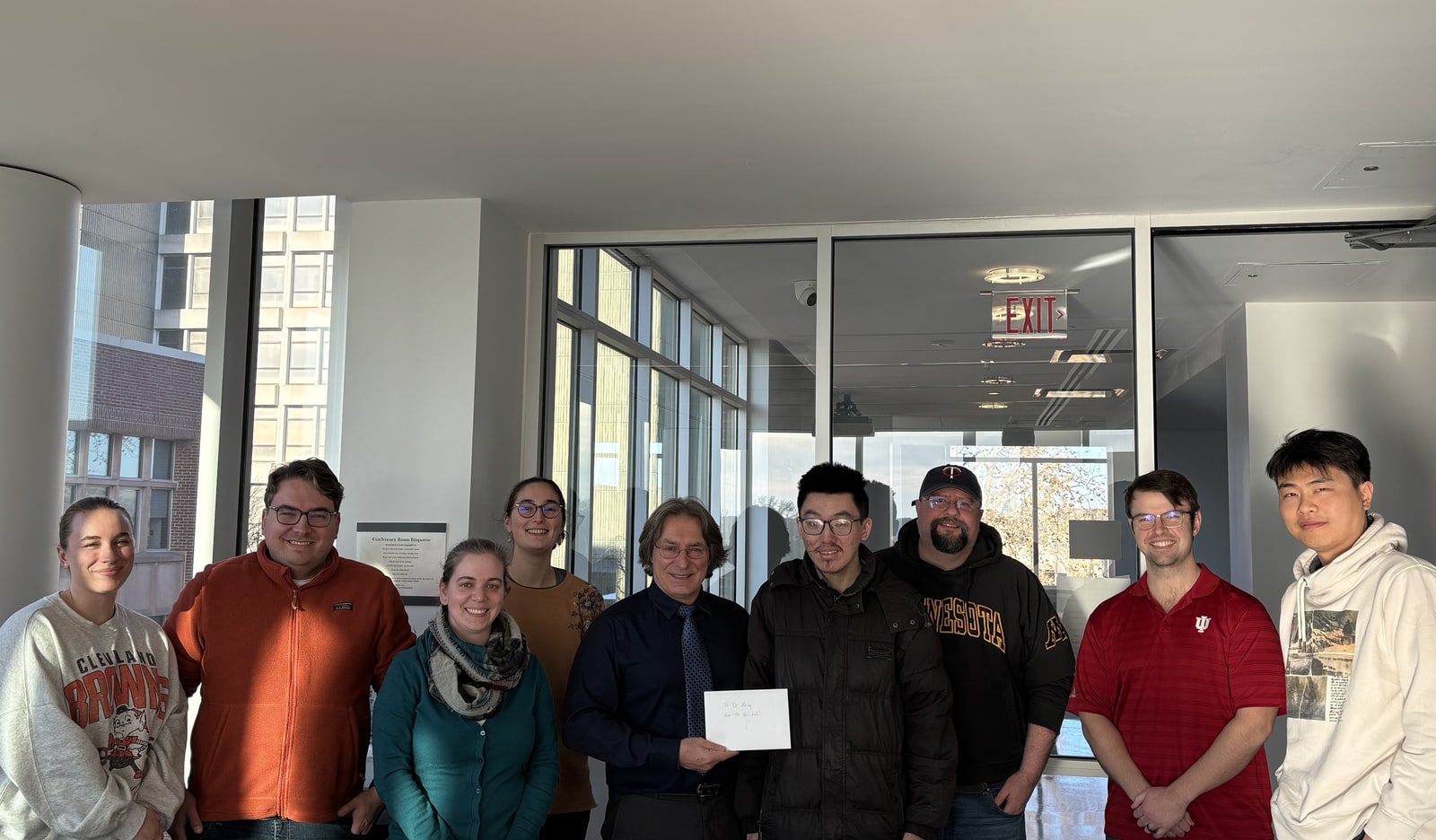
- Rutgers York Lab, “Jinzhe successfully defends PhD thesis. Congrats Dr. Zeng!”, December 16, 2024—source and event context for the photograph.