
In February 2016, Baidu published a compact film with a maximal claim in its title: Deep Speech: Recognizing Both English and Mandarin with a Single Algorithm. A decade later, the easiest way to misread it is to hear “single algorithm” as a claim about one bilingual model that could freely switch languages. That was not the result. Baidu trained separate English and Mandarin recognizers on separate corpora. What traveled was the architecture and training method—a distinction less theatrical than instant bilingualism and far more consequential for engineering.[1][2]
The timing matters. In June 2015, Baidu researcher Awni Hannun still introduced speech recognition as an unsolved problem, especially for noisy, accented, natural speech. He described the first Deep Speech system as a simpler alternative to the layered acoustic models, pronunciation dictionaries, and alignment procedures of conventional automatic speech recognition.[5] By December 2015, the Deep Speech 2 paper had extended that approach to Mandarin; the official video followed on February 9, 2016. IEEE Spectrum reported three days later that the system was beginning to roll out to some users in Beijing.[1][2][4]
That is why this short video remains worth watching. Its most durable idea is not that a machine had generically surpassed human hearing. It is that a team could move between two structurally different languages without rebuilding the recognizer's conceptual machinery from the ground up. The film compresses that argument into a clean before-and-after. The written record supplies the necessary limits.
Around 0:16, “One Algorithm” Means A Reusable Pipeline
When the film reaches its background section, keep one diagram from Baidu's companion technical note in mind. The English recognizer produced an alphabet of 29 symbols; the Mandarin version expanded the output layer to roughly 6,000 commonly used simplified Chinese characters. The rest of the high-level architecture could remain substantially the same.[3] That is a striking reduction in language-specific redesign, but it is not the absence of language-specific work.
The shared core began with spectrograms rather than hand-designed features tailored to English phonetics. A recurrent neural network trained with connectionist temporal classification, or CTC, learned to map sequences of acoustic input directly to character sequences without a hand-built phoneme lexicon or frame-by-frame phoneme alignment.[2][3] For Mandarin, direct character output also avoided requiring a universal definition of where one word ends and the next begins in text that normally contains no spaces.[3]
Yet the system still used a character-level language model during decoding, and it still required Mandarin speech paired with Mandarin transcripts. The paper reports 9,400 hours and 11 million utterances for Mandarin training, alongside 11,940 hours and 8 million utterances for English.[2] “End to end” therefore removed several handcrafted interfaces; it did not remove data acquisition, decoding, evaluation, or application adaptation. The portability achievement was a reusable learning stack, not a language-free machine.
This distinction is the film's first useful lesson for current model releases. An architecture can be general while its weights, data, output vocabulary, and deployment tuning remain local. Calling both things “the model” hides the actual boundary that moved.
Around 1:15, The Human Comparison Needs Its Test Key
The results section supplies the clip's headline moment: on selected Mandarin test data, Deep Speech 2 beat human transcribers. The companion note gives the exact boundary. On 100 randomly selected, short, voice-query-like utterances, a committee of five Chinese speakers recorded a 4.0 percent character error rate, while the system recorded 3.7 percent. On a separate set of 250 utterances, one human transcriber recorded 9.7 percent and the system 5.7 percent.[2][3]
Those numbers are meaningful evidence for that task. They are not proof that the recognizer understood Mandarin better than people in open conditions. The test samples came from Baidu's internal corpora, the sets were small, and the metric counted character errors rather than comprehension. Baidu's own technical note explicitly warned that humans would “almost certainly” do better on a broader range of speech, especially when they could use contextual information.[3]
The English results in the same paper make the boundary visible from another direction. Deep Speech 2 was competitive with crowdsourced workers on clean read-speech sets, but people remained notably better across most accented and noisy-speech evaluations.[2] Human parity was not a property the model possessed everywhere. It was an outcome produced by a particular dataset, noise profile, transcription protocol, unit of error, and comparison group.
That evaluation discipline matters well beyond speech recognition. A benchmark lead is most informative when its task geometry travels with the score. Remove the geometry and a local result turns into a universal slogan.
The Systems Work Is Mostly Offscreen
The film's simplicity also hides the industrial work that made the research usable. Deep Speech 2 was not only a recurrent network. The team optimized multi-GPU training, wrote a faster GPU implementation of CTC, distributed synchronous training across accelerators, and built a Batch Dispatch scheduler that grouped live requests to balance throughput against latency.[2] The paper reports 44-millisecond median latency under a ten-stream test load on one specified GPU, but that figure describes the neural-network evaluation path under that setup—not an unconditional end-to-end product latency promise.[2]
Production also reintroduced locality. The researchers found that adding 500 hours of application-specific speech could materially improve a system already trained on more than 10,000 hours of Mandarin. They still needed application-specific language models and post-processing for conventions such as digit formatting.[2] The system had collapsed part of the old pipeline, not abolished the surrounding product.
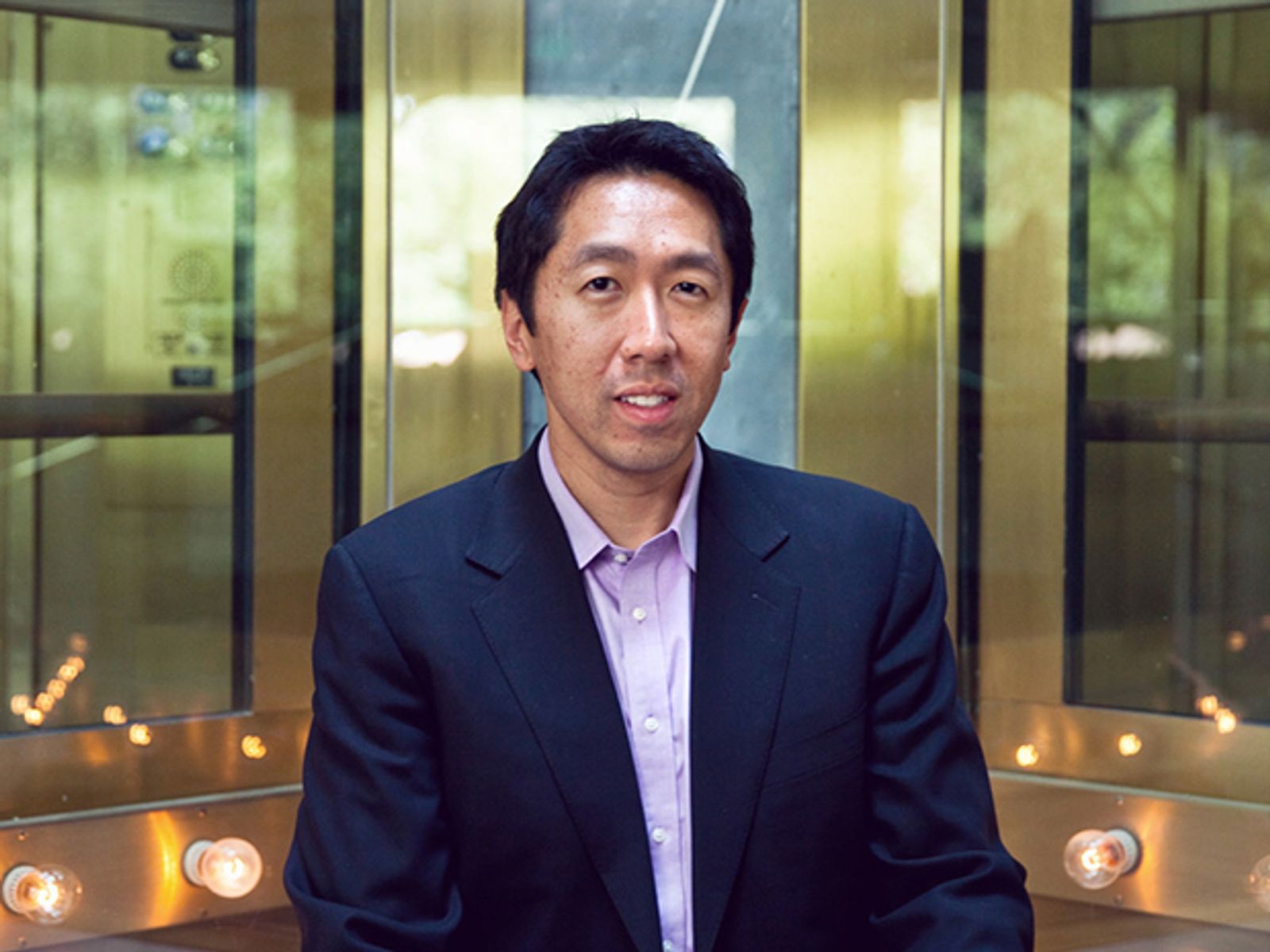
IEEE Spectrum's 2016 visit to the Baidu lab gives this handoff a physical setting. The lab then held about 60 AI researchers, and Andrew Ng described an organization that wanted to carry work from basic research through deployment rather than throw a paper “over a wall.”[4] Deep Speech 2's paper-to-Beijing-user path was an early demonstration of that operating model.
What To Notice On A Second Viewing
Watch how quickly the film moves from the difficulty of Mandarin to the small visible architecture change, then from that change to the result. The compression is persuasive because it makes portability look obvious after the fact. It was not obvious. The team had to discover which abstractions genuinely generalized across English and Mandarin, then pay the large data and compute bill needed to make those abstractions work.[1][2][3]
The durable AI-China signal is a method for reducing the cost of entering a new language domain. Deep Speech 2 showed that shared architecture could replace a large amount of language-specific feature and lexicon engineering. It also showed where generality stopped: at corpus construction, output vocabulary, language-model decoding, application data, and the boundary of the test set. Read that way, the video is neither a faded “machine beats humans” trophy nor a prophecy of effortless universality. It is a precise historical record of one layer of the stack becoming portable—and of all the layers that still did not.[2][3]
Sources
- Baidu Inc., “SVAIL Tech Notes: Deep Speech: Recognizing Both English and Mandarin with a Single Algorithm,” official YouTube video (February 9, 2016).
- Dario Amodei et al., “Deep Speech 2: End-to-End Speech Recognition in English and Mandarin,” Proceedings of Machine Learning Research, volume 48 (ICML 2016) — architecture, datasets, evaluation boundaries, and deployment system.
- Ryan J. Prenger and Tony Han, “Around the World in 60 Days: Getting Deep Speech to Work in Mandarin,” Baidu Silicon Valley AI Lab technical note (February 2016).
- Tekla S. Perry, “Checking in with Andrew Ng at Baidu's Blooming Silicon Valley Research Lab,” IEEE Spectrum (February 12, 2016) — lab context, Beijing rollout report, and source page for the Baidu photograph.
- Stanford Computer Forum, “Deep Speech, a Deep Learning based speech recognition system,” Awni Hannun colloquium abstract (June 5, 2015).