The best moment to turn the card red may be just after the first slice of picanha lands on your plate. The beef is hot. The person across from you was halfway through a story when the skewer arrived. Red gives you time for both. At a steakhouse serving rodízio, you can turn the card back to green as soon as you like. [1][2]
Consider what the carver sees on the way out of the kitchen. There’s one cut on the skewer and a roomful of people at different points in dinner. Someone is still working on a salad. Someone else would happily take a second helping of sirloin. They might be sitting inches apart. In a filing describing its dining rooms, Fogo de Chão was unusually precise about where it put the little red-and-green medallion. Each guest had one. Even two people sharing a table could eat at different speeds. [2]
One slice, two pairs of hands
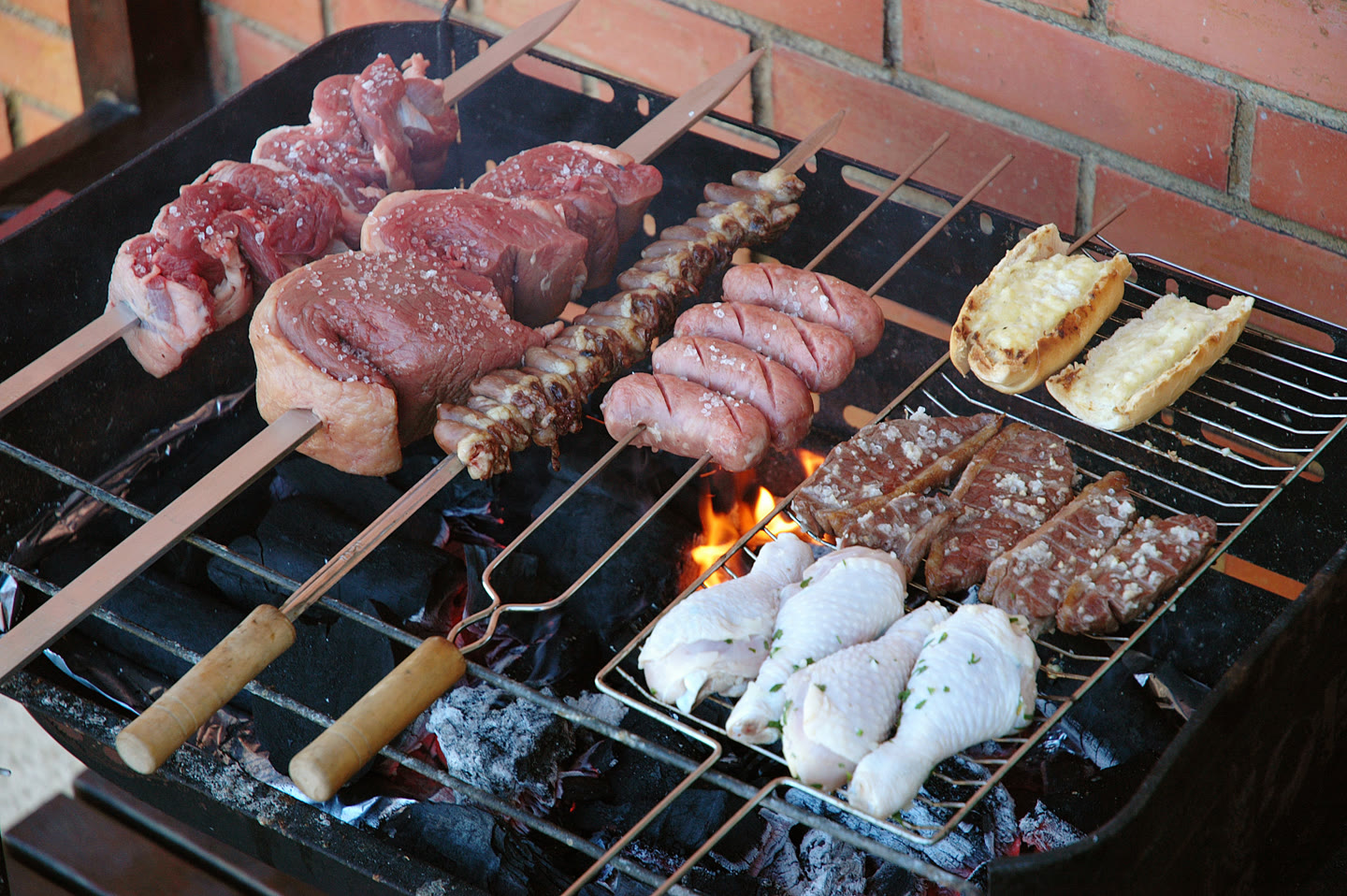
Churrasco is the barbecue. Rodízio describes the rotation that brings it through the room. A photograph of a carioca barbecue gives some idea of the variety that can come off the fire. Alongside the broad pieces of beef are little chicken hearts threaded in a row, sausages and even garlic bread. At Texas de Brazil, the cooks bring out skewers as the meat is ready. From the grill’s point of view a cut is ready for several people at once. From the diner’s point of view dinner arrives a slice at a time. [1][3]
The tongs at the place setting are the guest’s part of the carving service. If the cut appeals, the carver draws the knife and the guest takes hold of the slice with the tongs to guide it onto the plate. It’s a brief piece of coordination, easy to miss if you’ve been looking down at the menu. Green has brought the skewer within speaking distance. There’s still a choice to make when it gets there. You can let the lamb go by. You can also tell the carver you’d like some picanha when it comes round. The card has two sides, and neither names a cut. [1][2]
A pause long enough for cheese bread
At Fogo, the fixed-price churrasco meal also includes a market table with vegetables and salads, feijoada with rice, and warm pão de queijo brought to the table. Each makes a different claim on the few minutes between visits. A spoonful of black beans needs room on the plate. A little cheese roll is particularly good company for someone who has just put down the carving tongs. Leave the green side showing throughout and every passing skewer poses a perfectly reasonable question while your mouth is full. [1][4]
There’s a small pleasure in turning the card over before that happens. The carver can read red from a few steps away and carry the meat on to the next guest. Your companion can accept another slice while you finish the one with the browned edge you were saving. And when you do feel like some more, you can set down your fork, turn the card green and carry on listening to the story. [2]
Sources
- Texas de Brazil, “What Is Rodízio?” — the rotation, the card and the carving tongs.
- Fogo de Chão, annual report for the fiscal year ended January 1, 2017 — individual medallions and requests to the gaucho chefs.
- Leonardo Carvalho, “Churrasco carioca,” 2006 — photograph and identification of the foods on the grill.
- Fogo de Chão, dining FAQ — the market table, feijoada and sides included with the full churrasco service.