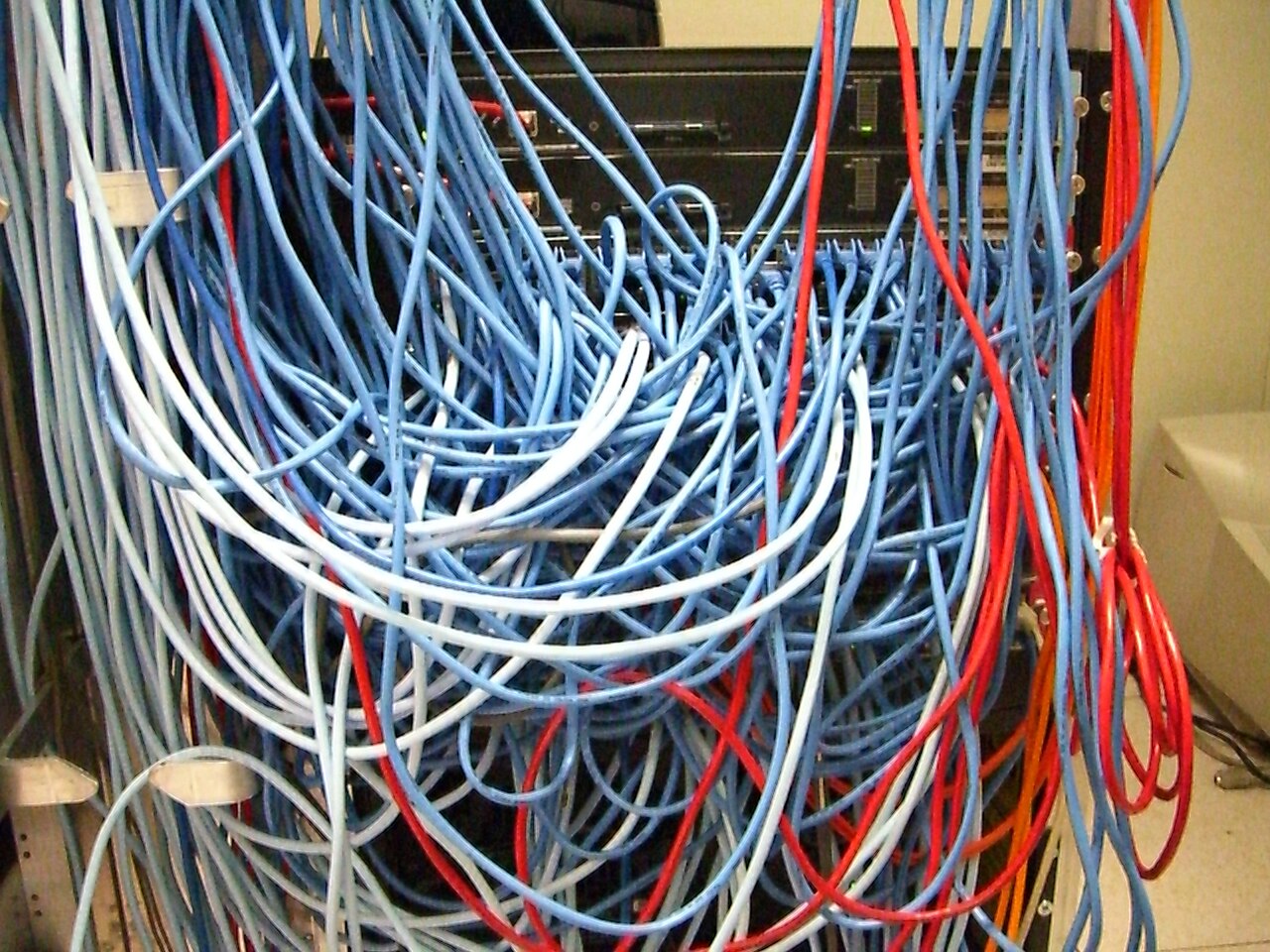
Vector is easy to introduce badly. If the first sentence is "a faster log shipper," the project sounds like a replacement for Fluentd, Logstash, Promtail, or whatever agent last made the logging bill unpleasant. Speed matters, but it is not the architecture. The better reading is that Vector turns observability collection into a directed pipeline with named sources, transforms, buffers, and sinks, then forces teams to decide where that pipeline should live.[1][2]
As of 2026-06-03T20:32:03Z UTC, the vectordotdev/vector repository showed 21,976 stars, 2,152 forks, 2,451 open issues, and a push timestamp of 2026-06-03T20:10:46Z through the GitHub API.[5] The releases page listed v0.56.0, published on 2026-06-03T15:26:05Z.[6] Those numbers are not an adoption argument by themselves. They are a freshness check for a tool that sits directly on the data path. If Vector is going to collect, reshape, and route production telemetry, release velocity and operational clarity both matter.
The architectural question is therefore not "Can Vector forward logs?" It can. The sharper question is: where should your organization own observability meaning, before vendor ingest, storage cost, and alert noise make that meaning harder to change?
The pipeline is the product
Vector's concepts page defines a component as the generic term for sources, transforms, and sinks. Sources ingest data and normalize it into events. Transforms mutate events in flight through parsing, filtering, sampling, or aggregation. Sinks deliver events to destinations, with the destination's protocol and transmission behavior shaping how the sink works.[1]
That breakdown is simple, but it is the project's main design claim. Observability routing should not be hidden inside one opaque agent config or spread across every service team. It should be a graph whose nodes have separate jobs: receive, normalize, enrich, drop, route, buffer, and deliver. Once those jobs are named, a platform team can reason about each failure mode separately.
This is where Vector differs from the casual "ship everything downstream" habit. A source is not just an input socket. It is the place where incoming records become Vector events. A transform is not just a convenience hook. It is where policy can become executable: parse this field, add this environment tag, drop this noisy event class, redact this key, or route this stream by tenant. A sink is not only an endpoint. It is the place where downstream reality enters the pipeline: object storage flushes differently from a socket, a Pub/Sub topic, or a monitoring backend.[1][4]
The payoff is ownership. If logs become expensive only after they reach a vendor, the cheapest levers are already gone. If bad fields become visible only after they land in a shared index, schema repair becomes political. Vector's best fit is earlier in the chain, where teams can still decide what an event means and where it deserves to go.
Backpressure is the hidden contract
The concepts page's buffer and backpressure sections are unusually important for understanding Vector. Sinks try to send events as quickly as they can. If a sink cannot keep up, Vector can buffer events, by default in memory, with disk buffering also available. When a full buffer is configured with buffer.when_full = block, backpressure propagates upstream through transforms and sources.[1]
That is the detail that separates a pipeline from a pile of forwarding rules. A telemetry system is not stable because every destination is fast on a good day. It is stable when the slow destination's behavior is visible enough that operators can choose the consequence. Should the pipeline block upstream? Should it drop newest events? Should some branches be allowed to degrade while others keep moving? Those are architecture decisions, not last-minute tuning.
The multi-sink case makes the problem concrete. Vector's docs explain that a source feeding multiple sinks only sends as fast as the slowest sink configured to provide backpressure, while sinks that drop rather than block can behave differently.[1] In practice, this means a single pipeline can create surprising coupling if it is designed casually. A slow archival sink can restrain a live operational stream. A deliberately dropping branch can protect throughput but sacrifice completeness. A poorly isolated transform can turn one tenant's traffic into everyone else's delay.
This is why Vector should be evaluated with workload shape, not only component count. Count the sinks that must be reliable, the sinks that are allowed to lose samples, the streams that must preserve order, and the branches that must not block one another. If a prototype only proves that data arrives in a happy path, it has not tested the pipeline contract.
VRL is policy, not decoration
Vector Remap Language, or VRL, is easy to mistake for a small scripting convenience. The transformation guide frames it more narrowly and more usefully: the remap transform uses VRL to define event transformation logic, with observability-specific functions, a data model aligned to Vector logs and metrics, and compiler checks for dead code, unhandled errors, and type mismatches.[4]
That matters because observability pipelines are full of tiny policy decisions that become expensive when they are scattered. A service emits a timestamp in a strange format. A Kubernetes label should become an environment field. A noisy path should be filtered before it reaches paid storage. A field that may contain secrets should be removed before it leaves the network boundary. None of these decisions is glamorous, but together they decide whether telemetry remains useful.
VRL gives those decisions a dedicated place in the graph. It is intentionally less broad than a general-purpose scripting environment, which is a feature in this context. Observability transformations need to be fast, predictable, and reviewable. If every pipeline fix turns into arbitrary embedded code, the data path becomes harder to audit than the applications it is supposed to observe.
The useful adoption pattern is to keep VRL close to normalization and routing, not to let it become a dumping ground for business logic. Parse logs. Promote stable fields. Redact sensitive values. Drop known junk. Attach routing context. Then send the event onward. The moment VRL starts carrying product-specific inference or long-running state, the pipeline is probably absorbing responsibility that belongs in a service, warehouse job, or backend processor.
Placement decides blast radius
Vector's production architecture guidance says Vector can deploy directly on nodes as an agent or on separate nodes as an aggregator. The same page recommends minimizing agent responsibilities, deploying Vector close to data, and using its small-footprint, shared-nothing shape to reduce single points of failure and blast radius.[2]
Those sentences should drive the rollout plan. An agent-only deployment gives every node local collection and early processing, but it can also push too much responsibility to edge processes if teams are not careful. An aggregator centralizes heavier routing, fan-out, and policy, but it creates a more visible shared service that must be scaled and protected. The unified architecture combines agent and aggregator roles: collect at the edge, then aggregate for flexibility, with the docs positioning it as a natural evolution for users already running aggregators who want Vector on individual nodes.[3]
The right placement follows the cost of failure. If the risky work is local log scraping and light enrichment, agents can own most of it. If the risky work is vendor fan-out, buffering, expensive transforms, or cross-cluster routing, an aggregator layer is easier to govern. If both are true, use the unified pattern and keep the edge layer boring: collect, normalize lightly, and hand off to an aggregator that owns heavier policy.[2][3]
GitLab's public runbook gives a grounded example of this pattern. It describes Vector as replacing Fluentd in parts of its logging path, with a Kubernetes vector-agent DaemonSet collecting pod logs from /var/log/pods/, applying VRL normalization and filtering, and publishing to GCP Pub/Sub topics. The same runbook notes live configuration reloading through a watched ConfigMap and uses vector tap for inspecting events inside pipeline components.[7] That is not a universal blueprint, but it shows the project being used as production routing infrastructure rather than as a mere binary swap.
Where Vector fits
Vector is strongest when a platform team wants to move observability control earlier in the path: before storage, before vendor lock-in, before high-cardinality fields become permanent, and before every application team invents a private log-shaping convention. It is especially plausible when the team can describe its telemetry as a set of source-to-transform-to-sink graphs and can decide which branches should block, buffer, or drop under pressure.[1][2]
It is weaker when the organization wants observability to remain somebody else's problem. Vector exposes routing and backpressure decisions; it does not make them disappear. It also does not remove the need to govern schemas, retention, privacy, or destination semantics. A pipeline tool can make those concerns explicit, but explicit concerns still need owners.
The cleanest pilot is not "replace every agent." Start with one path that has a real pain point: noisy Kubernetes logs, expensive vendor ingest, duplicated archival flows, or brittle Fluentd-style routing. Define the input, transformation policy, destination guarantees, buffer behavior, and failure expectation. Use vector tap or equivalent inspection to prove events look correct at each stage.[7] Then add one complication at a time: a second sink, a backpressure case, a config reload, or a high-volume service.
Vector's value is not that it makes telemetry simple. It makes the telemetry pipeline legible enough to operate. Sources, transforms, sinks, buffers, VRL, agents, and aggregators are not feature names to memorize. They are the boundaries that decide whether observability data remains under engineering control or quietly turns into a costly, fragile stream of everything.
Sources
- Vector documentation, "Concepts" - sources, transforms, sinks, pipelines, buffers, and backpressure behavior.
- Vector documentation, "Architecting your Deployment" - production deployment roles, agent and aggregator placement, and blast-radius guidance.
- Vector documentation, "Unified Architecture" - combined agent and aggregator deployment model.
- Vector guide, "Structuring, Shaping, and Transforming Data" - VRL usage, transform role, and compile-time checks.
- GitHub API,
vectordotdev/vectorrepository metadata sampled on 2026-06-03 - stars, forks, open issues, and push timestamp. - GitHub releases,
vectordotdev/vectorv0.56.0 - current release tag and publication timestamp used for the freshness check. - GitLab.com public runbook, "Vector" - production-style Vector agent deployment, VRL normalization, Pub/Sub routing, live config reload, and
vector taptroubleshooting. - Wikimedia Commons, "Server Rack with Spaghetti-Like Mass of Network Cables.jpg" - real 2006 photograph by Kim Scarborough used as the article image source.