systemd is easiest to misunderstand if you treat it as a fancier init replacement. That framing keeps the argument stuck at PID 1, when the more consequential design lives one layer up: systemd is a manager for a graph of units, ordering edges, activation triggers, and cgroup boundaries.[1][2][3][5] The point is not merely that it starts services earlier in boot. The point is that it tries to make process launch, dependency modeling, and resource ownership part of one system description.
As of 2026-05-01T10:34:21Z UTC, the public systemd/systemd repository reports 16,259 stars, 4,468 forks, 3,295 open issues, and a most recent push at 2026-05-01T10:09:22Z.[6] The public releases stream shows v260.1 published on 2026-03-23 after v260 on 2026-03-17.[7] That matters less as vanity than as a maintenance signal: systemd is still moving like a live platform component rather than a fossilized base package.
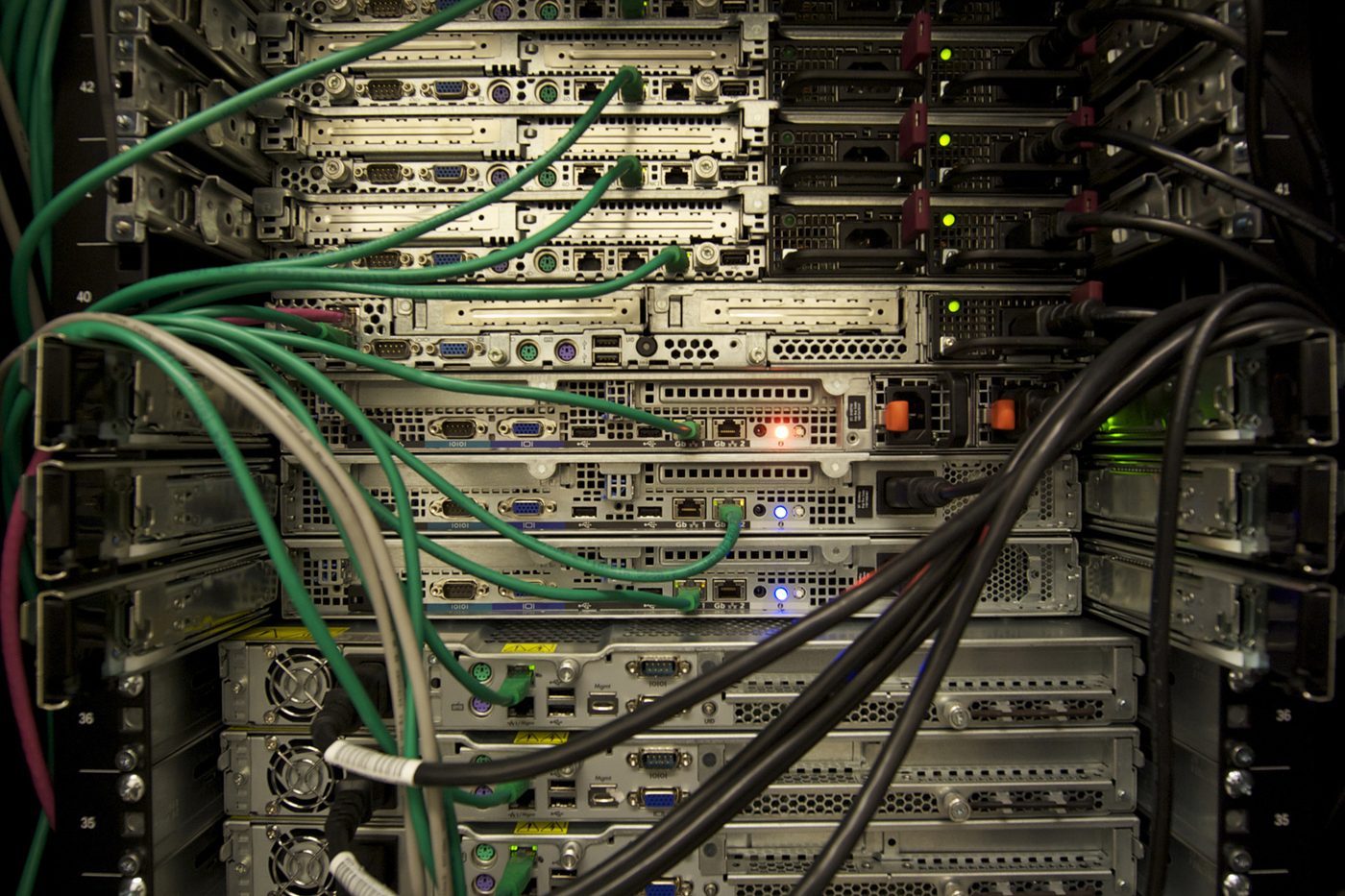
Image context: the cover now uses a real server-rack photograph rather than a developer portrait.[9] That is a stricter fit for this article: systemd’s architecture matters because actual Linux services, sockets, and cgroup boundaries have to be coordinated on machines that fail, reboot, and carry production state.
1. The unit graph is the real abstraction
The official unit documentation says unit files can describe services, sockets, devices, mounts, automounts, swaps, targets, paths, timers, slices, and scopes.[3] The bootup manual adds the operational consequence: startup is exposed as target units, the process is highly parallelized, and the manager activates the dependency closure of default.target, which usually aliases graphical.target or multi-user.target.[2]
The high-value detail is that dependency and ordering are separate ideas. Wants= and Requires= pull other units into the transaction, while After= and Before= decide sequencing.[3] If you collapse those into one mental bucket, systemd feels magical or arbitrary. If you keep them separate, the behavior becomes much more legible. The manager is reconciling a graph, not walking a shell script line by line.
The repository architecture document shows the same shape from inside the codebase. The service manager consumes unit files, credentials, kernel command-line settings, and D-Bus requests; it runs both in system mode and as per-user managers; and when it needs to launch a unit, it serializes execution settings and has systemd-executor apply namespacing, sandboxing, and cgroup options before the final exec.[1] That is a broader design than "replace /sbin/init." It is closer to a runtime for describing and launching Linux services in a common language.
2. Socket activation makes the listening endpoint part of the model
The socket documentation is the clearest illustration of why systemd is more than boot order. A .socket unit declares the listening object, while the matching .service unit describes the worker process that should handle incoming traffic.[4] With Accept=no, one service handles all traffic arriving on the listening sockets. With Accept=yes, systemd instantiates a template service per incoming connection.[4]
That division matters because it turns the socket itself into durable state owned by the manager. Lennart Poettering's old socket-activation essay, summarized independently by LWN, framed the benefit in the right way: the value is not mainly lazy startup theater, but easier parallelization, simpler dependencies, and higher resilience when a worker process restarts without needing to re-bind the public port.[8] The current socket man page still reflects that model. systemd can allocate the socket in the host network namespace, pass file descriptors with sd_listen_fds() or inetd-style handoff, and let the activated service run inside its own PrivateNetwork= boundary while only the activation sockets cross that line.[4]
That is a more interesting abstraction than "start this daemon when the machine boots." The kernel object that receives connections and the policy that supervises or isolates the worker live in the same graph.
3. The cgroup tree is not an add-on; it is the other half of the architecture
systemd's cgroup delegation document makes the resource model explicit. It builds around two cgroup v2 rules: no processes in inner nodes and single-writer ownership of each cgroup.[5] Once you hold those rules in view, the unit types line up cleanly. .service and .scope units are leaves that contain processes. .slice units are the inner branches of the tree, with defaults such as system.slice for system services and user.slice for user sessions.[5]
That is the second reason PID 1 is the least interesting part. The manager is not only starting processes. It is also deciding where those processes live in the resource hierarchy and who is allowed to mutate that hierarchy. The single-writer rule is especially important for container managers or nested supervisors. If something else edits the same subtree that systemd considers its own, the machine stops being composable and turns into a turf war.[5]
Put differently, systemd's architecture only fully makes sense when startup, supervision, and resource placement are treated as one problem. Remove the cgroup side from the mental model and many of its strongest opinions look gratuitous. Inside the full model, they look like guardrails.
4. The useful question is whether you want one manager to own the graph
This is where the fit boundary becomes clearer. systemd is strongest for Linux-first estates that want one native manager to own unit definition, boot targets, activation sockets, restart policy, and the top-level cgroup tree.[1][2][4][5] It is especially strong when service count is high enough that dependency edges are real, and when per-user managers, on-demand listeners, or resource slices matter operationally rather than ideologically.
It is weaker when the environment is intentionally minimal, portability across non-systemd Unix systems matters more than native Linux integration, or the service model is so small that a graph manager adds more machinery than leverage. That is an architectural trade, not a cultural one.
The repository activity reinforces that this is an active platform surface rather than frozen plumbing. The public repo and release stream keep moving in the open, which matters for teams building directly on unit semantics, activation rules, or cgroup behavior.[6][7] The right adoption question therefore is not whether systemd "won." The better question is whether your Linux estate benefits from one manager owning the graph end to end.
Bottom line
The most useful way to read systemd in 2026 is not as a boot replacement that happens to be controversial. It is as a Linux service manager that unifies three things many teams used to model separately: dependency graphs, activation points, and resource ownership.[1][2][4][5] Units describe state. Targets provide boot and session structure. Socket activation keeps listeners stable across worker lifecycles. Slices, scopes, and services map that state into the cgroup tree.
Once you see that architecture, the trade becomes clearer. If you want one manager to own the graph, systemd is unusually coherent. If you do not, its opinions will keep feeling heavier than the problem you think you have.
Sources
- systemd.io, "The systemd Repository Architecture" — service-manager inputs, per-user managers,
systemd-executor, and the internal code layout around unit handling. - freedesktop.org,
bootup(7)— target-based boot structure,default.target, and the highly parallelized startup model. - freedesktop.org,
systemd.unit(5)— unit types, load paths, and the distinction between dependency directives such asWants=/Requires=and ordering directives such asAfter=/Before=. - freedesktop.org,
systemd.socket(5)— socket units,Accept=yes/Accept=no, descriptor passing, and namespace boundaries for activated services. - systemd.io, "Control Group APIs and Delegation" — cgroup v2 design rules, slice/service/scope roles, unified hierarchy, and single-writer ownership.
- GitHub API,
systemd/systemdrepository metadata snapshot — stars, forks, open issues, and recent push activity at article creation time. - GitHub,
systemd/systemdreleases — current release stream includingv260.1andv260. - LWN.net, "systemd for administrators, Part XI: socket activation" — independent explanation of why socket activation helps with dependency handling and restart behavior.
- Wikimedia Commons, "File:Servers in a Rack.jpg" — source page for the real server-rack photograph used as the article image.