ScyllaDB is easy to summarize badly. "Cassandra-compatible, but faster" is directionally useful and architecturally incomplete. The more serious reading is that ScyllaDB asks a team to accept a specific database contract: one shard per core, shared-nothing execution inside each node, Cassandra-style wide-column data modeling, explicit consistency levels, compaction choices that shape disk economics, and repair work that remains part of normal operations.[1][2][3][4][5]
As of 2026-06-20T20:32:55Z UTC, the scylladb/scylladb repository showed 15,610 stars, 1,502 forks, 3,576 open issues, and a push timestamp of 2026-06-20T07:26:09Z through the GitHub API.[6] The public tags endpoint listed scylla-2026.2.0-rc3 among the newest tags.[7] Those are freshness signals, not proof that ScyllaDB fits a workload. A database can be active and still be wrong for a team that cannot operate its model.
The architecture question is narrower: do you want a high-throughput, horizontally scaled, Cassandra-compatible data store enough to own the mechanics that make that promise work?
The core is the unit of design
ScyllaDB's most important design claim is not a benchmark number. It is the shard-per-core model. The project describes ScyllaDB as a massively parallel database engine that runs sharded on each core across every server in the cluster, with peer-to-peer nodes rather than a primary/replica bottleneck.[1] Its glossary is even more concrete: each node is split into shards, each shard is an independent thread bound to a dedicated core, and each shard has its own CPU, RAM, persistent storage, and networking resources.[2]
That changes how platform teams should think about capacity. In a conventional mental model, a node is the main local unit and cores are just resources under it. In ScyllaDB, the shard is an operational boundary. A hot partition, overloaded request class, or imbalanced workload is not only "database pressure." It is pressure landing on particular shard-owned resources.
The payoff is reduced cross-core contention. If each shard owns its execution path, the database can avoid turning every request into a fight over shared locks and shared queues. That is why ScyllaDB's performance story is tied to modern multicore machines rather than only to horizontal node count.[1][2]
The tradeoff is that on-call reasoning has to become shard-aware. ScyllaDB's glossary defines shedding as dropping requests to protect the system when a request is too large or exceeds the maximum number of concurrent requests per shard.[2] That is a useful defensive mechanism, but it also exposes the reality of the architecture: overload can be local before it is global. Teams evaluating ScyllaDB should ask whether they can observe and debug per-shard saturation, not just whether aggregate CPU looks healthy.
Consistency stays a client-visible choice
ScyllaDB inherits the Cassandra-style habit of making consistency level an explicit per-operation control. The docs define a consistency level as the number of replicas that must acknowledge a read or write before the coordinator considers it successful, and note that consistency levels can be used with any transaction including lightweight transactions.[5]
That table is a practical adoption boundary. ONE favors availability and low latency by waiting for the closest replica. QUORUM waits for a simple majority of all replicas across data centers. LOCAL_QUORUM keeps that majority local to the coordinator's data center. ALL waits for every replica and therefore carries the highest consistency and lowest availability. SERIAL is for LWT reads and is described as linearizable.[5]
This is not a flaw. It is the operating model. ScyllaDB is strongest when the application can say which operations tolerate stale or partial visibility and which operations need stronger coordination. It is weaker when a team wants a database to infer that policy automatically. A workload with session-critical counters, uniqueness constraints, account balances, or non-commutative updates cannot be waved through by saying "distributed database." It needs a consistency design.
Jepsen's Scylla 4.2-rc3 analysis is useful here because it keeps the boundary honest. The report found safety issues in that tested release, including LWT split-brain and non-LWT isolation problems, while also noting fixes and documentation changes for several findings.[8] This article is not using that 2020-era test as a current-version verdict. The lesson is more durable: ScyllaDB's Cassandra-compatible semantics require careful reading, especially around last-write-wins behavior, LWT boundaries, membership changes, and the distinction between acknowledged availability and the application-level meaning of a write.[8]
Compaction is the disk contract
ScyllaDB uses log-structured storage, which means compaction is not janitorial cleanup after the real work. It is the real work's long tail. The docs frame compaction strategies around reducing read amplification, write amplification, and space amplification, then give four main choices: size-tiered, leveled, incremental, and time-window compaction.[3]
The numbers matter because they turn compaction from a vague tuning topic into a capacity plan. Size-tiered compaction triggers when there are enough similarly sized SSTables, four by default. Leveled compaction uses small fixed-size SSTables, 160 MB by default, divided into levels. Incremental compaction keeps STCS-like read and write amplification factors while breaking large SSTables into runs of smaller SSTables, 1 GB by default, to avoid the 2x temporary space amplification problem. Time-window compaction is designed for time-series data and compacts SSTables within windows.[3]
Those choices shape failure modes. STCS can be attractive for write-heavy LSM workloads, but the docs warn that overwritten or deleted data can remain in large SSTables for a long time and that worst-case temporary space can require up to half the disk to be empty.[3] LCS improves read efficiency because SSTables in each level have disjoint ranges, and in typical cases only one SSTable needs to be read, but it pays with more write I/O.[3] TWCS fits time-series expiry patterns, but the docs warn strongly against mixed TTL values in a table because an SSTable remains until all its data is expired.[3]
The adoption point is simple: ScyllaDB does not free a team from data-shape economics. It makes those economics explicit. A good pilot should pick a table with a known workload class and test compaction under real cardinality, overwrite rate, TTL policy, and disk headroom. A bad pilot only proves that initial inserts are fast.
Repair is part of ordinary operation
Distributed replicas drift. ScyllaDB's repair documentation says that data stored on nodes may become inconsistent with other replicas over time and that repairs are necessary database maintenance. Repair runs in the background and synchronizes data between nodes so replicas hold the same data.[4]
This is where ScyllaDB is most likely to disappoint teams that want a database to be high-throughput and maintenance-light at the same time. The docs say operators can run nodetool repair and nodetool cluster repair manually or schedule repair through ScyllaDB Manager. They also say that for clusters with both tablet- and vnode-based keyspaces, operators should run nodetool repair -pr on all nodes and nodetool cluster repair on any node.[4]
The cadence advice is concrete. The repair page says to run repair regularly and, if data is deleted frequently, more often than gc_grace_seconds, which is 10 days by default, giving every week as an example. It also says to use nodetool repair -pr on each node sequentially.[4] That is not incidental documentation. It is the durability hygiene that keeps the replica model honest.
ScyllaDB's row-level repair improves the cost profile by calculating checksums for each row, using reconciliation algorithms to find mismatches, and exchanging only mismatched rows.[4] That helps, but it does not remove the obligation. A team should plan repair like it plans backups, compaction capacity, and rolling upgrades: as part of the database's normal operating rhythm.
Where ScyllaDB fits
ScyllaDB is strongest for teams that already know they want Cassandra-shaped scale: wide rows, partition-key-driven access, high write and read throughput, tunable consistency, and multi-node replication without a primary write bottleneck.[1][5] The fit improves when the team can model data around partitions, avoid ad hoc relational queries, observe shard-level pressure, and treat compaction and repair as first-class work.
It is weaker when the workload wants relational joins, cross-row transactions as a default habit, arbitrary secondary-index exploration, or simple single-node operations more than high-scale partitioned throughput. It is also a weak fit when the team cannot decide which operations need QUORUM, LOCAL_QUORUM, ALL, or SERIAL, because the consistency level is not a garnish. It is part of the application contract.[5]
The cleanest evaluation plan is not a bake-off that writes synthetic keys as fast as possible. Start with one real access pattern. Define the partition key, replication factor, consistency levels, compaction strategy, repair cadence, expected TTL behavior, and what stale or lost visibility would mean for the product. Then test hot partitions, node loss, repair, deletes, compaction backlog, and shard-level saturation. If the design still looks understandable after those tests, ScyllaDB may be a serious fit.
The useful thing about ScyllaDB is not that it hides distributed database tradeoffs. It refuses to hide them. Shards, consistency levels, SSTables, compaction, repair, and replica acknowledgments are the vocabulary of the system. Teams that want those boundaries can get a powerful Cassandra-compatible engine. Teams that want the boundaries to disappear should choose a different database before production makes the lesson expensive.
Sources
- ScyllaDB, "Shard-per-Core Architecture" - project architecture framing around shard-per-core execution, modern multicore hardware, peer-to-peer nodes, and low-latency scale claims.
- ScyllaDB Docs, "Glossary" - definitions for shard, shedding, compaction, repair, replication factor, SSTable, and related operational vocabulary.
- ScyllaDB Docs, "Choose a Compaction Strategy" - STCS, LCS, ICS, TWCS behavior, default size anchors, amplification tradeoffs, and workload fit guidance.
- ScyllaDB Docs, "ScyllaDB Repair" - repair purpose,
nodetool repair,nodetool cluster repair, weekly repair guidance for frequent deletes, row-level repair, incremental repair, and automatic repair. - ScyllaDB Docs, "Consistency Levels" - per-operation consistency-level model and behavior of
ONE,QUORUM,LOCAL_QUORUM,ALL,SERIAL, andLOCAL_SERIAL. - GitHub API,
scylladb/scylladbrepository metadata sampled on 2026-06-20 - stars, forks, open issues, push timestamp, language, topics, and repository description. - GitHub API,
scylladb/scylladbtags - current public tag list used for thescylla-2026.2.0-rc3freshness note. - Jepsen, "Scylla 4.2-rc3" - independent consistency analysis of Scylla 4.2-rc3, including LWT and non-LWT findings and subsequent fix/documentation context.
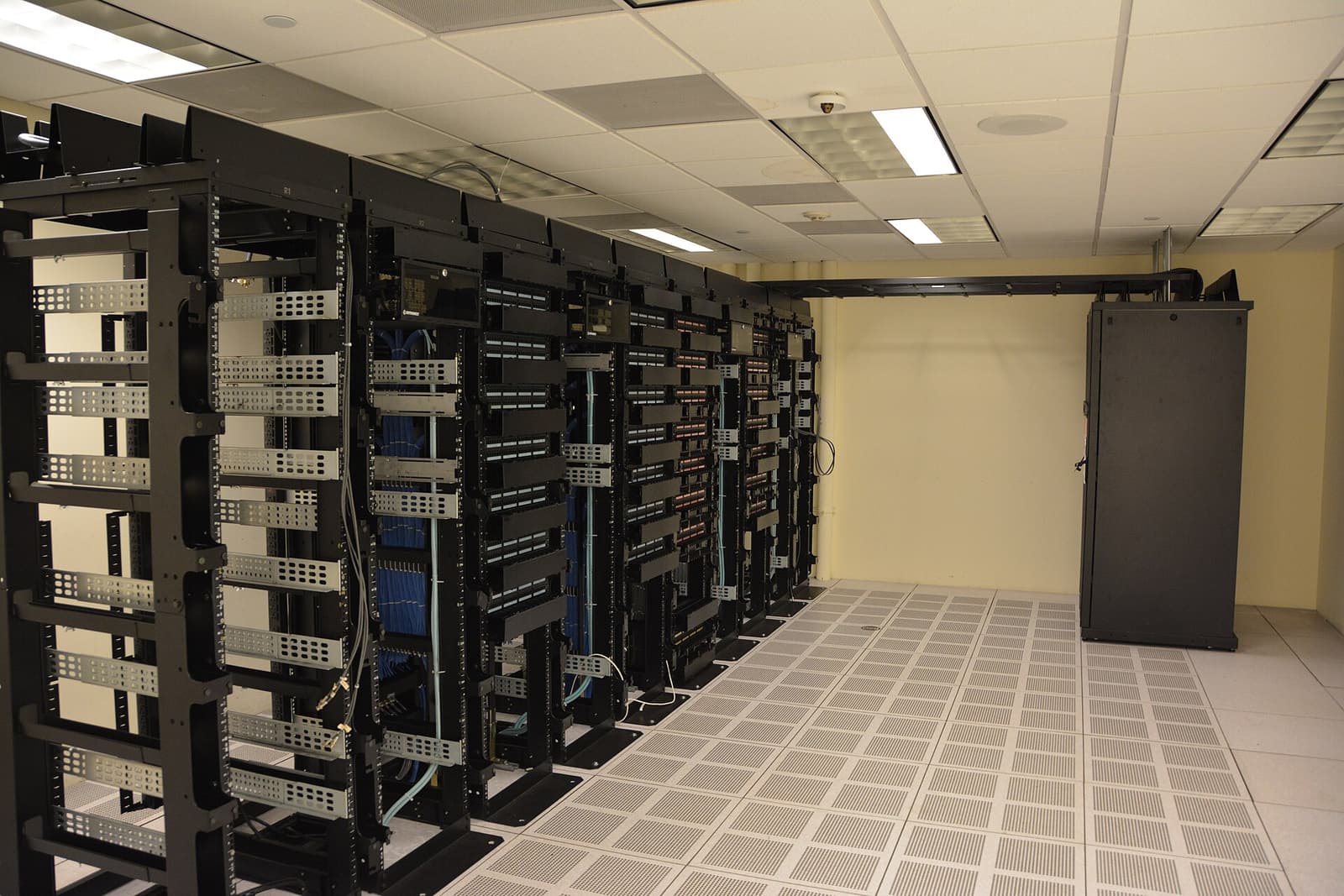
- Wikimedia Commons, "Datacenter Server Racks (22370909788).jpg" - real 2015 photograph by Carl Lender used as the article image source.