
PostgreSQL's MVCC is often taught as a reassuring slogan. Readers never block writers. Writers never block readers. Queries see a consistent view. All of that is true, and the official documentation says so plainly.[3] But Bruce Momjian's MVCC Unmasked talk is valuable because it refuses to leave the idea at slogan level. The talk keeps dragging concurrency back down to physical storage: row versions are created and expired, snapshots decide which versions count as real, and cleanup has to happen later or the whole system turns into a museum of obsolete tuples.[1][2][5]
That is the right way to watch this talk in 2026. The PostgreSQL docs still explain MVCC as a snapshot-based method that avoids reader-writer blocking, then move into transaction isolation and routine vacuuming as separate chapters.[3][4][5] Momjian's presentation reconnects those chapters. By the end, vacuum is no longer a boring maintenance command that lives somewhere after the exciting concurrency theory. It becomes part of the concurrency model itself. PostgreSQL can promise a calm read/write experience precisely because it is willing to preserve multiple row versions for a while and then clean them up with unusual discipline.[1][2][5]
My inference from the talk, the slide deck, and the docs is that PostgreSQL's real MVCC contract is not "no locks." It is "version first, cleanup later."[1][2][3][5] Locks still exist when they are needed, and higher isolation levels still impose real boundaries.[3][4] What makes PostgreSQL feel smooth in normal transactional work is that the system is constantly converting logical change into physical row-version churn, then containing the cost of that churn with snapshots, HOT updates, and vacuum.
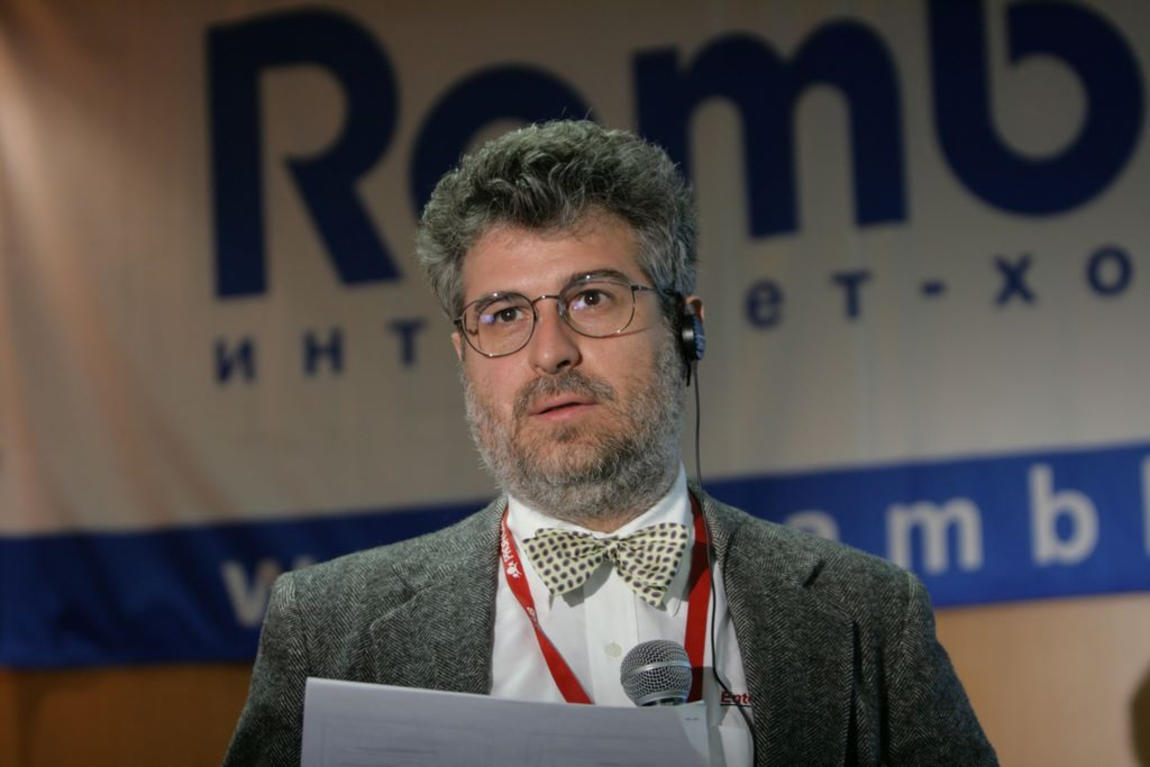
Image context: the cover uses a real conference photograph of Bruce Momjian from his personal homepage, captioned Moscow, 2007. It fits because this article is built around a speaker unpacking PostgreSQL's internal behavior for practitioners, not around a stock dashboard or an abstract database icon.[6]
Around 2:58, Momjian explains why MVCC has to be "unmasked" at all
The talk opens with a useful metaphor. Momjian shows the cast of Star Wars out of costume and says the point of the slide is that once you know what is underneath, you see the movie differently.[1] That is exactly the right promise for an MVCC talk. Most PostgreSQL users already rely on MVCC every day. What they usually do not carry around is a vivid picture of what an UPDATE means internally.
The slide deck makes that picture concrete very quickly. Insert, update, and delete are not three unrelated events. They are different ways of creating and expiring row versions, with creation and expiration metadata attached to each tuple.[2] Once you internalize that, MVCC stops being a purely logical concurrency feature and starts looking like a storage strategy with ongoing consequences. An update is not "the row changed." It is "the old version was marked as expired and a new version became the candidate for visibility." That is a more demanding model, but it is also why PostgreSQL can keep old readers steady while new writers continue moving.
Around 8:20, the famous slogan is presented as an outcome, not the mechanism
One of the central moments arrives when Momjian returns to the familiar line that readers never block writers and writers never block readers.[1][3] The phrase is easy to memorize and easy to misuse. It can leave people with the impression that PostgreSQL has somehow abolished the tradeoff between consistency and concurrency. The documentation is more careful: what PostgreSQL actually guarantees is snapshot visibility, meaning a statement sees a database version from some moment in time rather than the literal latest state of every row at the instant the scan reaches it.[3]
That distinction matters. PostgreSQL is not giving every reader the one current truth. It is giving each reader a coherent historical cut of the database.[3][4] The non-blocking feel comes from that temporal indirection. Readers are allowed to proceed because they do not demand the newest in-flight version. Writers are allowed to proceed because they create successor versions instead of rewriting shared reality in place. The slogan is therefore the user-facing effect. The underlying mechanism is version multiplication plus visibility rules.
Around 10:23 to 12:23, snapshot timing becomes the whole story
The talk sharpens when Momjian explains what a snapshot actually does and when PostgreSQL records one.[1] In Read Committed, a snapshot is taken at the start of each SQL statement. In Repeatable Read and Serializable, the snapshot is taken at transaction start.[1][4] The official transaction-isolation chapter says the same thing, and it also spells out the downstream consequences: successive selects in Read Committed can see different committed data, Repeatable Read holds a stable transaction-wide view, and Serializable adds Serializable Snapshot Isolation with possible retry-worthy failures.[4]
This is where many application mistakes are born. Developers hear that PostgreSQL is MVCC-based and assume that "transaction" automatically means "one fixed reality." That is only true at stronger isolation levels.[4] Momjian's explanation is valuable because it ties the abstraction back to storage pressure. The longer a snapshot has to stay meaningful, the longer old tuple versions may need to remain visible to someone. A long-running reporting transaction is therefore not just a query-planning fact. It is a cleanup delay.
Around 16:06 and again after 20:00, xmin and xmax turn row history into something you can inspect
The most clarifying part of the talk is the turn from theory to tuple headers. Momjian shows that tuple creation is tracked with xmin and expiration with xmax, then walks through page-level demos using pageinspect and the free-space map so viewers can see version churn instead of merely imagining it.[1][2] The slides reinforce the point with concrete examples of inserts, updates, deletes, and cursor behavior under changing tuple state.[2]
That matters because PostgreSQL's MVCC story is not built around an invisible global undo narrative. It is built around row versions carrying history markers that must be interpreted against a snapshot.[1][2] Once you understand that, a lot of operational advice stops sounding ceremonial. Avoid idle long transactions. Be careful with bulk updates. Expect write-heavy tables to accumulate dead tuples until cleanup catches up.[5] These are not tuning superstitions. They are direct consequences of a versioned storage model.
Around 34:35 and 39:32, vacuum and HOT updates stop looking optional
The closing third of the talk is the section many people most need. Momjian explains that PostgreSQL has to clean up deleted rows and obsolete row versions, and that autovacuum or manual vacuum does that work once tuples are no longer visible to any active snapshot.[1] The PostgreSQL docs say the same thing in even plainer language: updates and deletes do not immediately remove old row versions, so routine vacuuming is required both to recover space and to prevent transaction-ID wraparound failures.[5]
This is also where the talk's argument becomes more nuanced than "vacuum removes junk." The slide deck shows page-level cleanup states, free-space reuse, and the difference between ordinary vacuum behavior and heavier operations such as VACUUM FULL.[2][5] Momjian then points to HOT updates as one of the optimizations that reduces MVCC's downside by avoiding unnecessary index churn when indexed columns are unchanged.[1][2] That is the deeper lesson. PostgreSQL does not get concurrency for free. It earns it by making cleanup incremental, opportunistic, and cheap enough to run continuously in normal life.
That is why I think "cleanup contract" is the most useful phrase to carry away from this video. If you only remember the non-blocking slogan, PostgreSQL bloat will always feel like an unrelated maintenance nuisance. If you watch the talk closely, bloat, autovacuum thresholds, long-lived snapshots, and HOT-update behavior all collapse into one system story.[1][2][5] PostgreSQL concurrency works because the database is willing to preserve the past just long enough for snapshots to stay honest, then discard that past aggressively enough that ordinary OLTP does not drown in its own history.
Sources
- PGConf India, "PGConf India 2024 - MVCC Unmasked by Bruce Momjian (EDB)," YouTube video, published March 23, 2024.
- Bruce Momjian, "MVCC Unmasked" slide deck PDF, last updated February 2026.
- PostgreSQL 18 Documentation, "13.1. Introduction" - MVCC overview, snapshot view, and the reader/writer non-blocking claim.
- PostgreSQL 18 Documentation, "13.2. Transaction Isolation" - Read Committed, Repeatable Read, and Serializable Snapshot Isolation behavior.
- PostgreSQL 18 Documentation, "24.1. Routine Vacuuming" - dead-row cleanup, autovacuum, and wraparound protection.
- Bruce Momjian, personal homepage - source page for the conference photograph used in this article, captioned Moscow, 2007.