If you are evaluating Mastodon in 2026 as an OSS dependency, the useful question is no longer whether the codebase is culturally important. That answer is obvious. The useful question is whether the project has become governable enough to survive beyond founder charisma while still respecting the operational reality of people who run servers. On that test, Mastodon looks materially stronger than it did two years ago.[1][2][3][5][7]
The signal is not one clean corporate structure. It is something more interesting: a visibly messy but steadily formalized handoff. Mastodon now has a U.S. 501(c)(3), a publicly announced plan to move key assets into a European non-profit parent, a named post-founder leadership team, German fiscal sponsorship for donations, and public administrative updates when the legal structure changes shape.[2][3][5][6][7] For a project at this layer, visible structure matters more than elegant rhetoric.
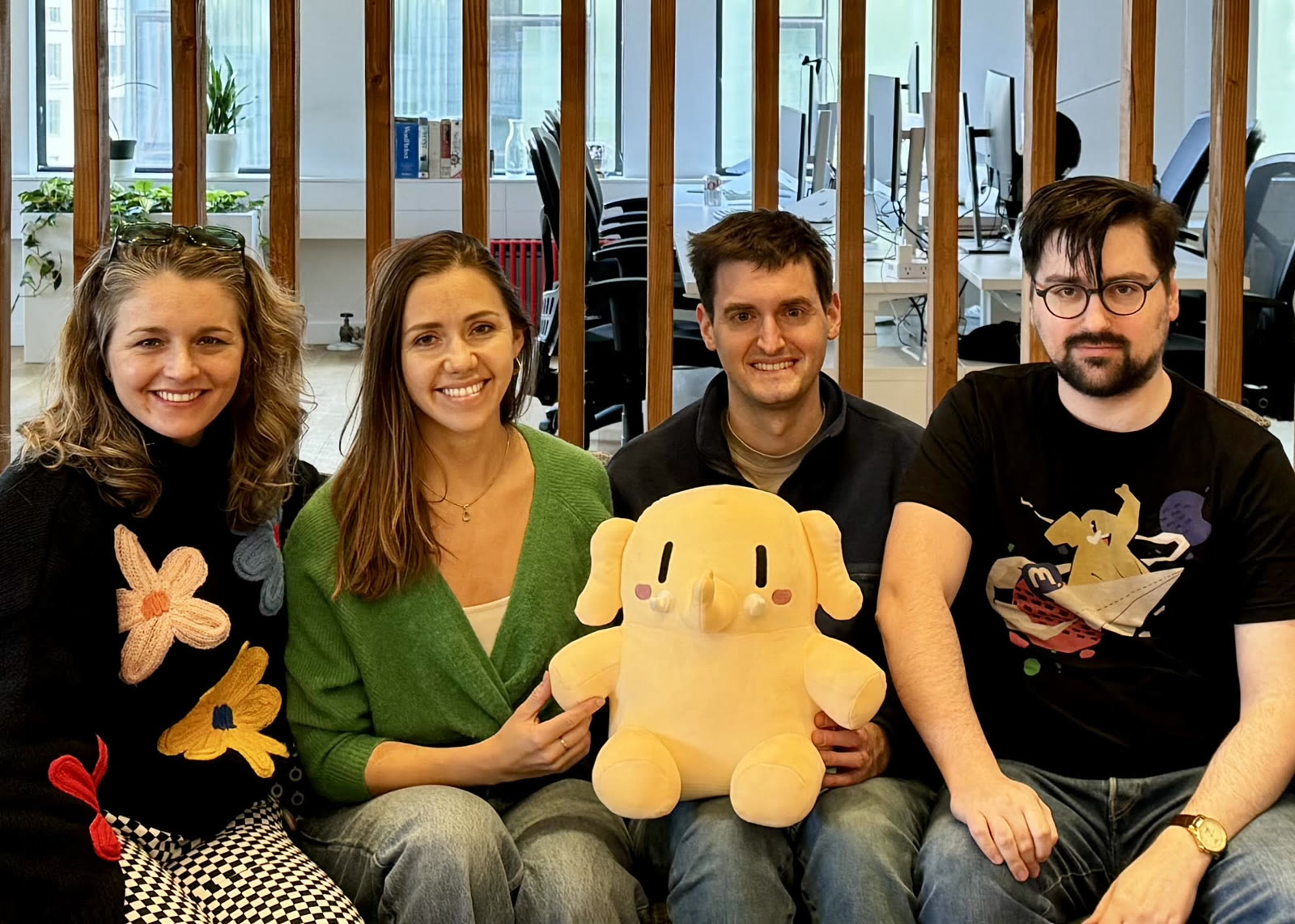
Image context: the cover uses Mastodon's official November 2025 team photograph rather than a logo or UI screenshot. That is the right visual here because this article is about maintainership becoming institutional and inspectable: people in named roles, with an actual handoff underway, rather than a platform orbiting one founder forever.[5]
The strongest signal is that Mastodon is trying to make founder gravity reversible
The April 2024 U.S. non-profit announcement was the first obvious institutional widening. Mastodon publicly named a five-person board for the new 501(c)(3) and framed the entity as a way to accept U.S. tax-deductible donations and in-kind support.[2] That alone did not solve the core governance question, because key assets and day-to-day power were still tied closely to founder control.
The more consequential move came on January 13, 2025. In "The people should own the town square," Mastodon said it would transfer key ecosystem and platform assets, including the name and copyrights, to a new European non-profit organization, and that Eugen Rochko would hand off overall management so he could focus on product strategy.[3] That is the real governance signal. Plenty of OSS projects promise independence in values language. Far fewer describe an actual path away from single-person ownership.
The later updates make that pledge look more operational than symbolic. In November 2025, Mastodon introduced a new leadership team with Felix Hlatky as Executive Director, Renaud Chaput as Technical Director, and Hannah Aubry as Community Director, while Rochko moved into a strategy and product advisory role.[5] Then in February 2026 the project published an administrative note explaining that the German entity now had to be referred to as Mastodon GmbH rather than Mastodon gGmbH, that Marius Rothermund had been appointed as second managing director in January 2026, and that the next step remained a Belgian non-profit parent structure.[7]
That sequence does not read like finished state. It reads like real governance work: legal friction, renamed entities, interim structures, and delegated management. Inference from those official posts: Mastodon is stronger precisely because the transition has been public and specific enough to inspect, rather than hidden behind a vague "trust us" narrative.[3][5][7]
Money and staffing now look less like volunteer fog
The 2024 annual report is the clearest financial signal. It says Mastodon generated about €2.2 million in total revenue in 2024, expanded from three to six full-time employees, and received large gifts including $100,000 from Mozilla, $100,000 from Jeff Atwood for web UI work, an additional $1.5 million from Atwood for restructuring support, and $50,000 from Craig Newmark.[1] It also records commercial contracts for hosting the European Commission's Mastodon instance and a support agreement with Schleswig-Holstein.[1]
That funding mix matters because it changes the risk shape. A project that depends entirely on small recurring donations can be admirable and still operationally brittle. A project with recurring small donors, major gifts, grants, and some service revenue is still exposed, but less exposed to any one failure mode.[1][4]
The staffing signal improved again in late 2025. The leadership update says Mastodon's engineering team had grown to nine people, while the June 2025 strategy post said the project's priorities were restructuring, user growth, and financial sustainability, with an explicit goal of making it easier to run servers safely and efficiently.[4][5] For operators, that combination matters more than abstract popularity because it says there is now an institution trying to convert mission into product, support, and release work.
The repository traffic still looks large enough to matter. As of 2026-03-29 UTC, the GitHub API reports 49,785 stars, 7,419 forks, 4,442 open issues, and push activity as recent as 2026-03-29T05:03:24Z for mastodon/mastodon.[10] Those numbers do not prove execution quality. They do show that Mastodon remains a living upstream rather than a static code monument.
The operator-facing signal is better because the project now publishes boundaries
Mastodon only becomes legible as OSS when you stop reading it as a social brand and start reading it as software people must operate under abuse pressure. On that front, the January 2026 Trunk & Tidbits post is unusually useful. It listed the current point releases 4.5.6, 4.4.13, and 4.3.19, explicitly told operators to update because of bugfixes and a security issue, and stated that the entire 4.2.x line and below were out of support while 4.3.x support would end on May 6, 2026.[8]
That is good maintainer behavior. The project is telling operators where the support floor is rather than letting old branches linger in false half-life. A lot of OSS communities are friendlier about unsupported versions than production reality can afford to be.
The moderation documentation reinforces the same point. Mastodon documents e-mail-domain blacklisting, IP-based rate and block controls, CIDR-based IP rules, and moderation-event webhooks that can feed external coordination systems.[9] None of that makes abuse manageable by default. It does show that the project treats moderation as part of the operating surface, not as something administrators are expected to invent from folklore.
This is where Mastodon's governance story becomes more than nonprofit theater. A project that says it wants to outgrow founder control, diversify revenue, and simplify safe server operation is also a project admitting what layer it really lives in: software with policy, abuse, and upgrade labor built in.[4][8][9]
Fit boundary, mismatch boundary, and one falsifier
Mastodon looks strongest when a community, institution, newsroom, public body, or values-heavy company wants a real social layer it can host and govern with its own moderation norms, and when it has enough operational maturity to treat upgrades, abuse handling, and administrator policy as ongoing work.[4][8][9]
The mismatch boundary is just as important. This is a weak fit if what you actually want is a fully outsourced trust-and-safety stack, a product where unsupported branches can be ignored indefinitely, or a platform where organizational uncertainty never leaks into operator planning. Mastodon has improved its governance signal, but it has not turned decentralized social software into a zero-maintenance commodity.[3][7][8][9]
Falsifier: this thesis weakens if the governance handoff stalls in a permanent interim state, if support-window discipline starts slipping, or if the broader staffing and funding surface narrows back toward founder-centered dependency.[1][5][7][8]
Bottom line
Mastodon's 2026 maintainer signal is stronger than the average founder-led OSS platform because the project is trying to make itself institutionally legible before a crisis forces the issue. The evidence is not just ideological language. It is board seats, leadership roles, fiscal sponsorship, administrative corrections, release support boundaries, and operator documentation that acknowledge what running Mastodon actually costs.[2][3][5][6][7][8][9]
That does not make Mastodon simple. It makes it more inspectable. For a project in the social-software layer, that is the stronger and rarer achievement.
Sources
- Mastodon, Annual Report 2024 — funding mix, team growth, commercial contracts, and cost structure.
- Eugen Rochko, "Mastodon forms new U.S. non-profit" — 501(c)(3) formation and initial board structure.
- The Mastodon Team, "The people should own the town square" — transfer of key assets to a new European non-profit and founder-management handoff plan.
- Andy Piper, "Mastodon in 2025" — restructuring, growth, sustainability priorities, and service-revenue context.
- The Mastodon Team, "The Future is Ours to Build - Together" — new leadership team, engineering-team size, and source of the article image.
- The Mastodon Team, "Mastodon Joins Forces with WE AID" — German fiscal sponsorship and nonprofit donation path in Europe.
- The Mastodon Team, "Administrative updates" — Mastodon GmbH naming change, second managing director, and planned Belgian parent entity.
- The Mastodon Team, "Trunk & Tidbits, January 2026" — supported release lines, current point releases, and 4.3 end-of-life date.
- Mastodon documentation, "Moderation actions" — e-mail-domain blacklisting, IP rules, and moderation-event webhooks.
- GitHub API,
mastodon/mastodonrepository metadata snapshot used for stars, forks, open issues, and recent push activity.