Kernel decisions often get framed as vendor decisions. In practice they are more often calendar decisions.
If your estate depends on Linux across servers, appliances, edge boxes, or cloud images, the real risk is not "which logo is on the support contract?" but "how predictable is the upstream machine that everything else is downstream from?" That is where the Linux kernel remains unusually strong in 2026. Its authority structure is public, its release rhythm is simple, its backport rules are narrower than many teams assume, and the boundary between upstream and distribution responsibility is stated without euphemism.[1][2][3][5]
The useful question is not whether the kernel is big. It is. The useful question is whether maintainers have kept that scale legible enough that operators can schedule change instead of mythologizing it. On current evidence, the answer is yes.[1][2][3][4][5]
Signal 1: the mainline release train is short, repetitive, and easy to reason about
Kernel.org's release page still describes the cadence in very plain terms: a new mainline kernel arrives every 9-10 weeks, with a 2-week merge window followed by roughly 7 weeks of stabilization and weekly release candidates.[1] The development-process documentation says the same thing from the maintainer side: the merge window is when subsystem trees land, -rc1 closes the feature gate, and the rest of the cycle is about finding breakage rather than sneaking in new ambition.[2]
That matters more than "fast release cadence" as a slogan. A short, repeated cycle does three useful things for operators:
- it makes new-feature intake predictable;
- it limits how long destabilizing work can hide before review;
- it gives downstream teams a fixed rhythm for rebase, qualification, and regression budgeting.[1][2]
There is no mystery lane where giant features appear at random. The machine is noisy, but not opaque.
Signal 2: longterm support is public, finite, and attached to named maintainers
As of 2026-03-27 UTC, kernel.org lists 6 active longterm lines: 6.18, 6.12, 6.6, 6.1, 5.15, and 5.10. Their projected end-of-life dates are public as well: the two newest are projected through December 2028, 6.6 and 6.1 through December 2027, and 5.15 plus 5.10 through December 2026.[1]
That is a strong governance signal because support is not marketed as timeless. It is named, dated, and carried by specific maintainers: Greg Kroah-Hartman and Sasha Levin on the currently listed longterm branches.[1] In other words, the kernel does not pretend every old line is indefinitely safe. It tells you which branches are still being tended and when that promise is expected to stop.
This is exactly the kind of clarity infrastructure teams need. If you still have products or fleets anchored to 5.10 or 5.15, the clock is no longer abstract. Those lines are in their final projected support year. That should convert roadmap discussion into current-quarter work: hardware qualification, downstream patch audit, driver dependency review, and the first rehearsal move to a newer longterm base.[1]
The LWN coverage of Greg Kroah-Hartman's June 2025 decision to end the 6.14.y line a bit earlier than prior branches is useful here. The point was not drama. The point was that stable maintainers were willing to adjust branch-end timing in public to avoid a late flood of merge-window spillover being stuffed into a branch that was about to die anyway.[4] That is what healthy governance looks like under load: process pressure is named and handled as process.
Signal 3: stable backports are intentionally narrow
Many teams still imagine -stable as a vague promise that maintainers will keep old kernels generally healthy. The actual rules are much stricter.
The stable-kernel rules page says a patch must already exist in mainline, be obviously correct and tested, and generally stay under 100 lines with context. It must fix a real bug that bothers people: an oops, hang, data corruption, real security issue, hardware quirk, build break, or similarly concrete problem. The document explicitly rejects speculative fixes, trivia, and theory-first cleanup.[3]
That narrowness is not bureaucracy. It is the reason the stable lane is credible.
Stable branches work because they are not second mainlines. They are a constrained backport channel with a bias toward user-visible breakage and low-regression fixes.[3] If operators read that boundary correctly, several practical choices follow:
- stop assuming every desirable improvement will get backported;
- separate "important for our product" from "eligible for stable";
- budget downstream carrying cost when your hardware enablement or vendor patch stack outruns upstream stable policy.[3][4]
This is also why old-branch support gets harder with age. The further a branch drifts from current mainline internals, the more expensive it becomes to apply clean, low-risk fixes. Kernel.org's own longterm ladder already hints at that reality through finite projected EOLs,[1] and recent LWN discussion around end-of-life branches makes the labor cost even plainer.[4]
Signal 4: upstream tells you directly when support responsibility stops being upstream
One of the most useful lines on kernel.org is also one of the least romantic. If uname -r shows anything after the dash, you are running a distribution kernel, not a vanilla upstream release, and support should come from the distribution vendor rather than kernel developers.[1]
That clarity matters because a lot of organizational confusion starts here. Platform teams say "Linux upstream" when they really mean "RHEL-derived," "Ubuntu HWE," "Android common kernel," or a vendor BSP with several years of downstream delta. Those are not the same operational object.
The kernel project is unusually explicit about this split.[1] Upstream provides the release train, the longterm ladder, the stable rules, and the source of truth for mainline fixes. Distributions and vendors decide how much extra patching, ABI policy, certification work, and support duration they want to layer on top. Once you see that boundary clearly, blame gets assigned more accurately and upgrade planning gets less mystical.
Signal 5: trust and artifact integrity are built into the release surface
Kernel.org's signatures page is another quiet governance signal. Kernel releases are published with OpenPGP signatures, the likely release signers are named, and kernel.org documents both the key-discovery path and the verification flow.[5] That is not just a supply-chain hygiene footnote. It is part of what makes the release machine auditable.
In mature infrastructure software, governance is not only "who decides." It is also "how can an operator independently verify that the artifact is what the maintainer said it was?" Signed releases, a public web-of-trust path, and documented fingerprints answer that question in a way many projects still do not.[5]
Where this signal is strongest
The Linux kernel's governance premium matters most when you operate in one of three environments:
- multi-year device or appliance programs where branch choice locks in validation cost;
- platform estates where a kernel bump drags driver, firmware, and observability dependencies with it;
- regulated or uptime-sensitive fleets where "supported" must map to a real branch and a real calendar, not just a sales deck.
In all three cases, the kernel's public process turns risk into something more schedulable. It does not make the work small. It makes the work legible.[1][2][3][5]
The boundary: good upstream governance does not erase downstream patch debt
This is where the bullish reading needs discipline.
The Linux kernel is well-governed at the release-machine level, but that does not rescue a team that has accumulated years of private driver patches, board-support-package drift, out-of-tree security knobs, or certification assumptions bound to one aging branch. Upstream can make the calendar visible. It cannot remove the local debt attached to missing every calendar checkpoint.
The clearest falsifier for a positive thesis would be this combination:
- merge windows stretching unpredictably or losing their stabilization discipline;
- stable policy becoming loose enough that regression risk spikes;
- longterm EOL dates losing credibility because maintainers stop signaling boundaries clearly.
That is not what the public evidence shows in 2026. What it shows is a project that still prefers explicit clocks and explicit ownership over folklore.[1][2][3][4][5]
Operator move for 2026
Treat your kernel estate like a ladder, not a blob.
Write down which systems sit on mainline-derived vendor kernels, which sit on current longterm bases, and which still depend on 5.10 or 5.15 assumptions. Then map each line against upstream projected EOL, vendor support windows, and the cost of carrying local delta after upstream maintenance ends.[1]
That is the practical payoff of Linux kernel governance. The project gives you a readable release contract. Your side of the bargain is to use it before support cliffs arrive.
Takeaway
The Linux kernel in 2026 still earns trust the old-fashioned way: a 2-week merge window, a roughly 7-week stabilization lane, mainline releases every 9-10 weeks, publicly named longterm maintainers, explicit stable-backport rules, and signed release artifacts.[1][2][3][5]
That does not make Linux simple. It makes Linux governable.
For operators, that distinction is the whole point.
Sources
- Kernel.org, "Active kernel releases" - current cadence, active longterm lines, maintainers, and projected EOL dates.
- The Linux Kernel documentation, "How the development process works" - merge-window mechanics,
-rcstabilization, and maintainer staging model. - The Linux Kernel documentation, "Everything you ever wanted to know about Linux -stable releases" - patch eligibility rules and stable submission boundaries.
- LWN.net, "Three stable kernel updates" (2025-06-10) - public explanation for ending
6.14.yearlier to avoid late stable backport churn. - Kernel.org, "Linux kernel releases PGP signatures" - release verification process, signing identities, and integrity guidance.
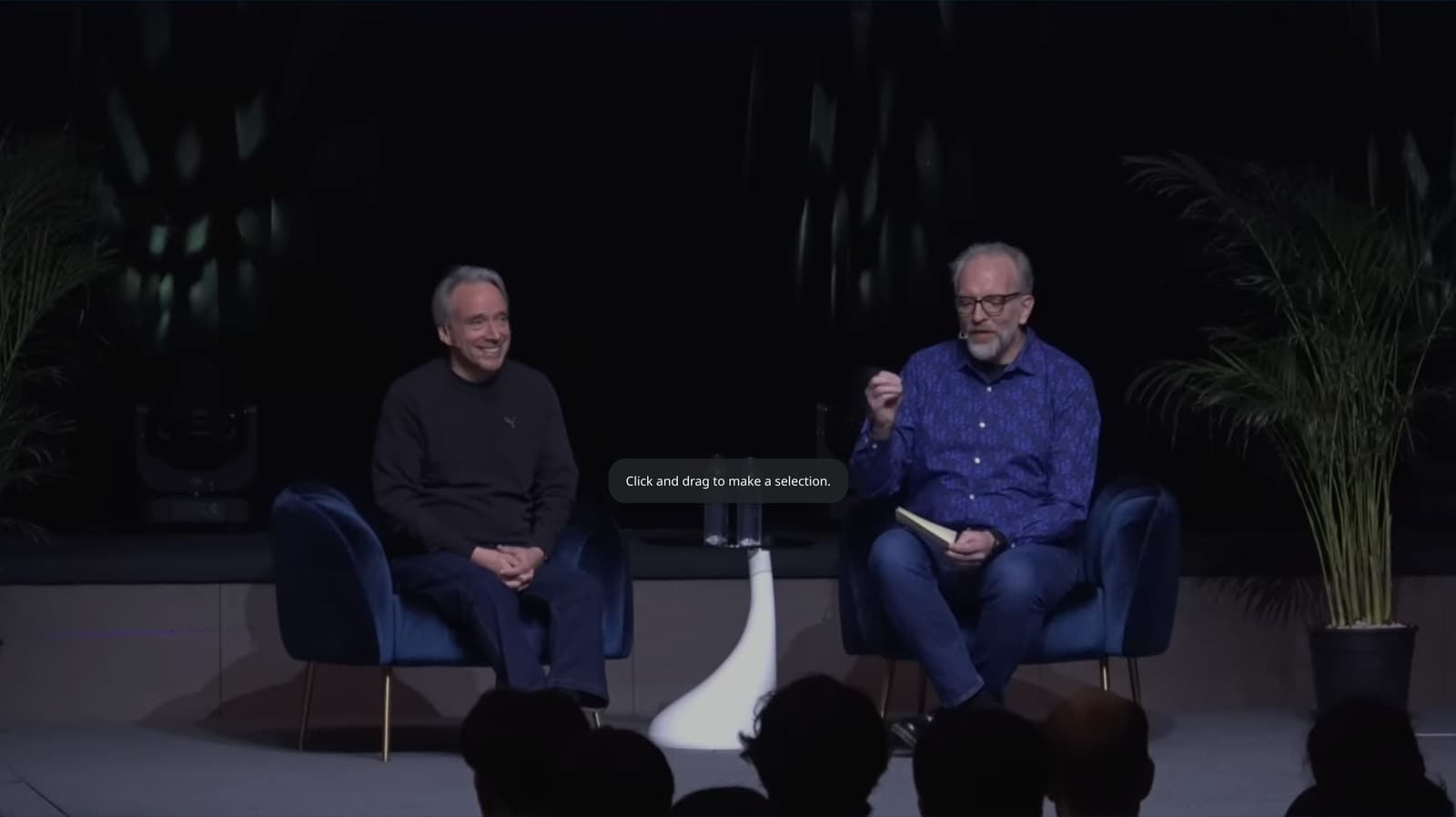
- Wikimedia Commons, "Linus Torvalds in Conversation with Dirk Hohndel 2025" - source page for the article image.