Kaniko used to answer a clean CI question: how do you build a container image from a Dockerfile inside Kubernetes without handing the build job a Docker daemon or a privileged container? Its README framed the value directly: Kaniko builds inside a container or Kubernetes cluster, does not depend on a Docker daemon, and executes Dockerfile commands in userspace so it can run in environments where a daemon is difficult or unsafe to expose.[1]
That technical argument is still understandable. The governance argument changed on June 3, 2025, when GoogleContainerTools/kaniko was archived and made read-only. The repository page now says the project is "no longer developed or maintained" and that the code remains available for historic purposes.[1] In 2026, the useful question is no longer "does Kaniko solve daemonless builds?" It is "which maintenance contract are you actually adopting when you keep using Kaniko?"
As of 2026-05-31T12:36:10Z UTC, the original repository still shows the old public scale signal: roughly 15.8k stars, 1.5k forks, 707 open issues, and 53 open pull requests on an archived repository.[1] That is an unusually visible form of infrastructure afterlife. The user base did not vanish when the upstream stopped. Instead, the project split into a historical upstream, a Chainguard-maintained fork, a community fork, and downstream platforms deciding whether to migrate away.[2][3][4][6][7]
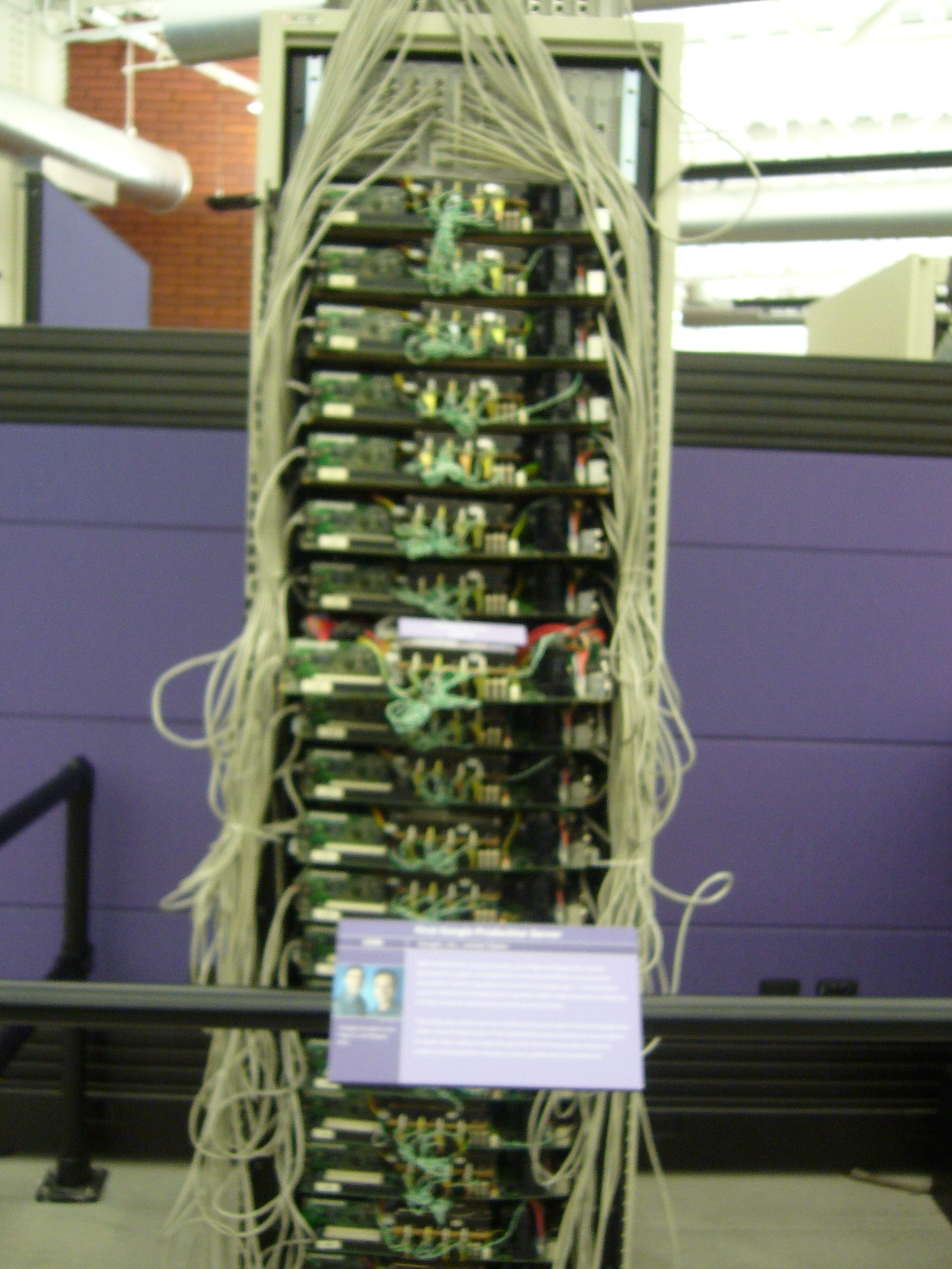
Image context: the cover uses a real 2014 Wikimedia Commons photograph of Google's first production server rack at the Googleplex.[8] It is not a Kaniko screenshot or logo. That choice is intentional: this article is about infrastructure whose usefulness outlives its first owner, and about the maintenance burden that appears when an old but widely used layer becomes someone else's responsibility.
The original architecture solved a real build-runner problem
Kaniko's core design was never mysterious, which is part of why it spread. The executor image unpacks the base image filesystem, runs Dockerfile commands, snapshots the filesystem in userspace after each step, appends changed files as layers, and updates image metadata.[1] That gives a Kubernetes-native build job a way to produce an OCI-style image without mounting /var/run/docker.sock or running a nested Docker daemon.
The supported context model reinforced that CI shape. The original README listed build contexts from GCS, S3, Azure Blob Storage, local directories, local tar files, standard input, and Git repositories.[1] It also documented registry push paths for Docker Hub, GCR, ECR, Azure Container Registry, JFrog, and other destinations.[1] In other words, Kaniko was not just a clever executor binary. It became glue between source context, Kubernetes job isolation, registry credentials, layer caching, and multi-cloud CI runners.
That is why the archive matters. The more a tool becomes glue, the less a project can treat maintenance as optional. Every dependency update, registry API change, base-image behavior, and CI runner convention can turn into breakage for teams that have encoded the builder into their release path.
The archive turned scale into liability
The original repository's own text is now the strongest governance signal: "archived," "read-only," "no longer developed or maintained."[1] That is not a small caveat for a tool that runs build instructions and handles registry credentials. It means old documentation, old images, old issue threads, and old installation examples need to be read as historical material unless a team has chosen a maintained successor.
The security section in the archived README is also important because it prevents a common overclaim. Kaniko "by itself does not make it safe to run untrusted builds" and relies on the container runtime's security features for build security.[1] That was true before the archive, but it becomes sharper afterward. A daemonless builder reduces one class of risk: direct dependence on a Docker daemon or privileged container. It does not remove the need to isolate build jobs, understand Dockerfile trust, protect credentials, and keep the builder image patched.[1]
This is the maintenance trap. Teams often adopted Kaniko as a security improvement over Docker-in-Docker. After the archive, that same security story depends on where patches, images, and support now come from. If nobody owns those pieces, the old "more secure than exposing Docker" argument starts to decay.
The forks are not equivalent contracts
Chainguard's fork makes the most explicit continuity claim. Its repository says it is a supported replacement for the original Google repository, created after the June 2025 archive to continue upkeep with security patches and maintenance; it also says no major feature work is planned.[2] That is a deliberately narrow contract. It is not "Kaniko is reborn as a fast-moving platform." It is "this widely used builder will keep receiving maintenance attention."
The same README draws an important artifact boundary. It says releases are tags on the source repository, while old gcr.io/kaniko-project/executor and gcr.io/kaniko-project/warmer images are unmaintained and no longer updated. Users must either build artifacts themselves or use Chainguard container images as customers.[2] Chainguard's image directory then adds its own supply-chain posture: the packaged image includes SBOM and provenance visibility and is described as SLSA Level 3 compliant.[3]
The community osscontainertools/kaniko fork makes a different promise. Its README says it is a supported replacement focused on keeping dependencies up to date, fixing bugs, and improving performance, with images available via Docker Hub and ghcr.io/osscontainertools/kaniko:latest.[4] That may be attractive for teams that want publicly consumable images, but it is still a different trust decision from either the archived Google project or Chainguard's commercial image lane.[2][3][4]
The governance signal is not that one fork is automatically right. The signal is that "we use Kaniko" has stopped being precise. In 2026, a team has to name the source repository, image registry, patch policy, release verification path, and fallback plan.
Downstream documentation is already voting with migrations
GitLab's current documentation is a strong independent signal because GitLab had long been one of the places people met Kaniko in practice. The removed Kaniko page now states that Kaniko is no longer maintained and points users toward Docker, Buildah, Podman, or Podman with GitLab Runner on Kubernetes instead.[6] GitLab's BuildKit page goes further by listing BuildKit rootless as a secure alternative and a replacement for Kaniko.[7]
That does not mean every Kaniko estate should migrate immediately. A regulated organization with working jobs, narrow Dockerfile inputs, tested runner isolation, and a chosen maintained fork may rationally keep the pattern. The New Stack's June 2025 coverage captured why: after Google archived the project, Chainguard forked it for organizations that depended on it in CI/CD pipelines, with the article naming financial services and defense among affected sectors.[5]
But downstream docs changing their recommendation is still evidence. It means major platform maintainers are no longer treating Kaniko as the default answer to restricted image builds. They are asking users to reconsider the builder choice itself.[6][7]
What the signal means for teams still using Kaniko
The practical decision tree is now shorter than the discourse around it. If you are on gcr.io/kaniko-project/executor, treat that as an urgent inventory item because the old images are no longer updated under the original project line.[2] If you move to Chainguard's fork, decide whether the commercial image model and maintenance-only scope fit your organization.[2][3] If you use the community fork, document why that fork's release and artifact path satisfies your patching and provenance requirements.[4] If none of those contracts is comfortable, test BuildKit rootless, Buildah, Podman, or another builder under the same runner constraints that made Kaniko attractive in the first place.[6][7]
The most important lesson is not that Kaniko failed. It solved a real problem and became important enough that its archival created ecosystem motion.[1][2][5] The lesson is that build tools are part of the supply chain, not disposable CI plumbing. A daemonless builder still needs daemonless maintenance: patches, images, provenance, docs, migration guidance, and someone clearly accountable when the old path stops moving.
Kaniko's 2026 story is therefore a governance signal with architectural consequences. The build pattern remains useful. The original ownership contract is gone. Every team still using it has to make that difference explicit.[1][2][3][4][6][7]
Sources
- GitHub,
GoogleContainerTools/kanikoarchived repository - archive date, original README, daemonless userspace build model, snapshotting, context support, registry push paths, known issues, and security caveats. - GitHub,
chainguard-forks/kaniko- supported replacement statement, June 2025 archive context, no-major-feature-work note, release artifact boundary, and unmaintained old image warning. - Chainguard Containers, "kaniko" image listing - packaged-image posture, SBOM/provenance claims, SLSA Level 3 compliance statement, and related Chainguard artifact options.
- GitHub,
osscontainertools/kaniko- community fork positioning, maintenance focus, image locations, and current README guidance. - Darryl K. Taft, The New Stack, "Kaniko Lives On: Chainguard Forks Google's Dumped Tool" - independent coverage of the archive, Chainguard fork, and continuity argument for dependent organizations.
- GitLab Docs, "Use kaniko to build Docker images (removed)" - removed Kaniko guidance and current recommendation to use other build approaches.
- GitLab Docs, "Build Docker images with BuildKit" - BuildKit rootless positioning as a secure alternative and replacement for Kaniko.
- Wikimedia Commons, "Computer History Museum Google First Production Server" - source page for the article's clearer real photographic cover image of Google's first production server rack.