Most etcd explanations stop at the visible rule: three members tolerate one failure, five members tolerate two, and everything important seems to live inside majority quorum. That rule matters, but it is not the architecture boundary that usually decides whether a control plane feels calm or fragile. The harder truth is that etcd is a small-write, disk-backed consensus system. Once it becomes the backing store for Kubernetes or any other control plane, leader stability starts depending less on abstract Raft vocabulary and more on whether heartbeats survive real disk latency, whether revision history is being compacted on time, and whether membership changes are staged safely enough that the cluster does not destabilize itself while trying to grow.[1][2][3][5][6]
That is the useful way to read etcd in 2026. Quorum math is the easy part. The real work is keeping the cluster inside the narrow operating envelope that etcd's own docs describe: metadata-sized requests, fast enough storage, disciplined maintenance, and cautious reconfiguration.[1][2][4][5]
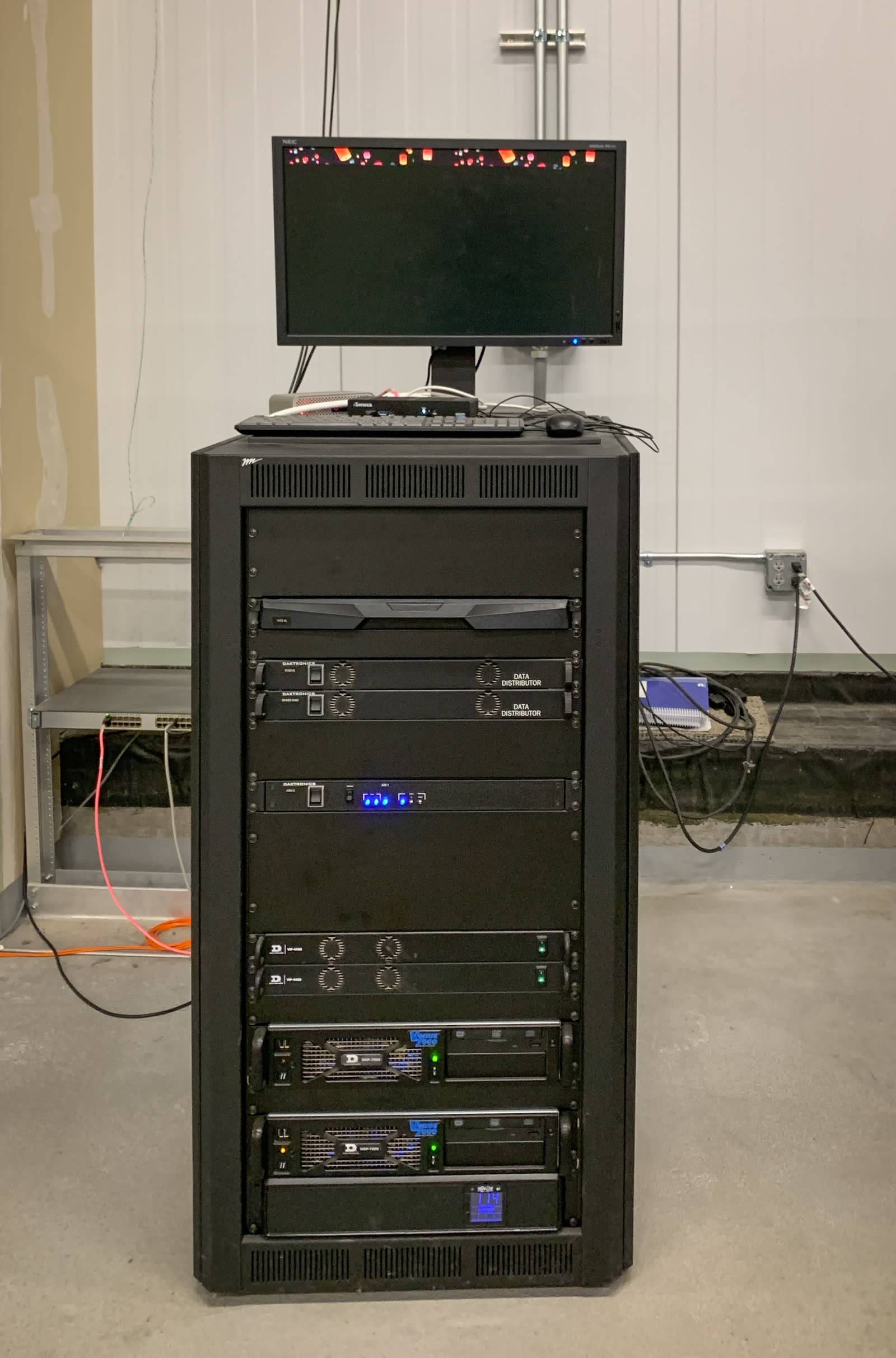
Image context: the cover image shows a real server-rack aisle because etcd reliability is decided in physical cluster rooms. Heartbeat intervals, election timeouts, WAL fsync behavior, and follower catch-up all cash out against actual disks and actual network paths, not only against clean Raft diagrams.[7]
1. Quorum is the rule you can memorize; leader stability is the one you have to operate
The tuning guide gives the first reminder that etcd is not a generic database with consensus attached after the fact. By default, etcd uses a 100 ms heartbeat interval and a 1000 ms election timeout, and it recommends sizing heartbeat roughly around the network round-trip time between members.[1] Those defaults are operational values, not only academic ones. If RTT or fsync latency drifts far enough upward, followers miss heartbeats, elections trigger more often, and clients experience the familiar control-plane symptom: not instant data loss, but intermittent unavailability and request timeouts.[1][5][6]
This is why the Kubernetes operating guide pairs its odd-member-count advice with a warning about resource starvation. It does not say merely "run three or five nodes." It says keep an odd number of members and avoid starving etcd of network and disk I/O, because heartbeat timeout and leadership instability follow directly from those shortages.[6] In other words, quorum size gives you the fault-tolerance budget, but storage and network quality decide whether you are constantly spending that budget by accident.
That distinction matters for sizing. Moving from three members to five increases failure tolerance, but it also widens the number of replication paths that must stay healthy. If the extra nodes sit on slower disks or noisier links, the cluster may become more politically redundant while feeling less operationally smooth.
2. Slow disks hurt etcd twice: first on write latency, then on elections
The hardware guide is unusually blunt for infrastructure documentation. etcd requires fast storage because every request and every Raft heartbeat may trigger multiple fdatasync operations, and the guide recommends SSD-class devices, with 50 sequential IOPS as a bare minimum and 500 sequential IOPS for heavily loaded clusters.[5] That language is easy to skip if you are used to storage advice being padded with marketing vagueness. Here it is the core of the system design.
The reason is visible in the tuning guide: when other processes contend for the same disk, etcd can miss heartbeats because of disk latency, which then causes request timeouts and temporary leader loss.[1] This is the real control-plane boundary. etcd is often introduced as "the Kubernetes backing store," which sounds like a pure data-role description. In practice it behaves more like a latency amplifier. Slow fsyncs do not remain a local storage problem. They propagate upward into lease delays, watch lag, API-server retries, and in the worst case a cluster that appears politically alive but cannot make progress reliably.
That is also why etcd teams who are otherwise comfortable virtualizing everything still get conservative around storage classes. CPU and memory matter, but etcd's write path keeps asking the same practical question: how long does durable acknowledgement really take on this disk under contention?[1][5]
3. Membership changes are safest when the new node does not vote yet
The learner design document is one of the clearest places where etcd's operational maturity shows up. Adding a new member to a running cluster sounds routine, but historically it has been one of the more dangerous moments in consensus operations because a fresh node starts empty and must catch up from the leader. If it becomes a full voting member too early, quorum math changes immediately even though the new node is not yet useful.[3]
etcd's learner mode exists to avoid exactly that trap. A new learner joins as a non-voting member, receives data from the leader, and only counts toward quorum after explicit promotion once it has caught up far enough for etcd to validate the change safely.[3] The design doc also notes what learner nodes do not do: leadership is not transferred to them, and they reject client reads and writes until promotion.[3]
That set of constraints is worth taking literally. Learners are not a convenience feature for elegance. They are a boundary against self-inflicted quorum instability during reconfiguration. If a team still treats member expansion as a quick "add node and move on" step, it is operating below the level of caution the project now expects.
4. etcd stays healthy only if you keep history, file growth, and quotas in check
The maintenance guide makes a point that many operators learn late: an etcd cluster needs periodic maintenance to remain reliable.[2] That maintenance is not polish. It is part of how MVCC history stays bounded enough that the store can continue to accept writes and serve watches without backend growth turning into a quota alarm.
Three pieces matter together:
- History compaction removes older revisions that are no longer needed for watch history.[2]
- Defragmentation reclaims backend space, but the guide notes that it blocks the local member from reading and writing while it rebuilds its state, and the operation is local rather than cluster-replicated.[2]
- Snapshots/backups give you a recoverable checkpoint before compaction or space pressure turns a degraded cluster into an outage.[2][6]
The system-limits page explains why the maintenance burden exists at all. etcd is designed for small metadata-shaped values, with a default maximum request size of 1.5 MiB, a default backend quota of 2 GiB, and 8 GiB suggested as a normal-environment ceiling.[4] Those are not arbitrary numbers. They are the project telling you what kind of store this is. If a team keeps letting object-sized payloads or long-unbounded history accumulate, it is no longer "using etcd heavily." It is using etcd outside its intended shape.[2][4]
5. The best operating model is deliberately narrow
Put the docs together and the architecture note becomes simpler than many etcd explainers.
etcd is strongest when:
- the dataset is small, hot, and metadata-like rather than blob-like[4]
- storage is fast enough that fsync latency stays comfortably inside heartbeat and election expectations[1][5]
- revision history is compacted and backend space is defragmented on purpose rather than after alarms[2]
- member changes are staged through learner mode instead of rushed into quorum[3]
- the surrounding control plane treats etcd as first-class infrastructure, not a silent sidecar to the "real" system[6]
The common mistake is to read etcd as a solved primitive because Kubernetes uses it everywhere. Kubernetes uses it precisely because etcd is conservative about what it wants to be: a reliable, small-write coordination store with clear operational boundaries. Those boundaries are the design, not a footnote.
That is why quorum math ends up being the easy part. Anyone can remember "odd number of members." The harder discipline is to keep the cluster in the conditions where that majority can actually lead, replicate, compact, and recover without fighting the disk beneath it or the history behind it.
Sources
- etcd documentation, "Tuning" (default heartbeat/election values, RTT guidance, and the impact of disk latency on missed heartbeats and temporary leader loss).
- etcd documentation, "Maintenance" (history compaction, defragmentation behavior, space quotas, and snapshot backup).
- etcd documentation, "Learner design" (non-voting learners, promotion rules, and reconfiguration safety).
- etcd documentation, "System limits" (1.5 MiB request limit, 2 GiB default backend quota, and 8 GiB suggested maximum).
- etcd documentation, "Hardware recommendations" (fdatasync sensitivity and storage IOPS guidance).
- Kubernetes documentation, "Operating etcd clusters for Kubernetes" (odd-member guidance, backup discipline, and resource-starvation warning).
- Wikimedia Commons file page for the server-rack photograph used as the article image.