
The shallow explanation of direnv is that it loads environment variables when you enter a project directory.[1][4] That description is true, but it strips away the reason the tool has survived while so many shell helpers feel fragile after the first week. The strongest part of Kyle Adams's "Better Living Through Direnv" is that he treats direnv less like a convenience wrapper and more like a boundary-management tool: it hooks into the shell prompt, loads project code only after explicit approval, and sends back only the environment changes that survive crossing from a bash subprocess into your current shell.[1][2][4]
That boundary logic is the piece worth watching. Direnv's official docs describe the mechanism plainly: before each prompt, the tool checks for .envrc in the current or parent directories, loads authorized files in a bash subprocess, captures the exported variables, and makes that diff available to the shell you are actually using.[2][4] The same documentation also explains the consequence: aliases and shell functions do not come back across that line, because direnv is exporting environment state, not smuggling an entire shell session into another shell.[2] Once you see that, a lot of the tool's design stops feeling arbitrary.
This is why the PyOhio talk still holds up. Adams is not just demoing a nice developer-experience trick for Python teams. He is showing how direnv turns three annoyances into one coherent system: shell startup files that accumulate too much project logic, repository-local configuration that should not run silently, and team workflows that need shared defaults without treating personal machine state as a universal template.[1][2][3][5]
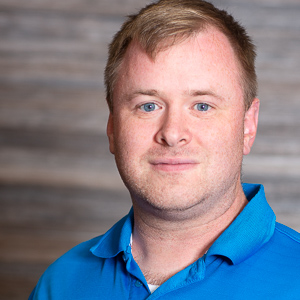
Image context: the cover uses a real conference-speaker headshot rather than a terminal screenshot or generated graphic. That keeps the visual language grounded in the talk's actual human context, which matters here because the article is about a speaker's explanation of workflow discipline, trust, and shell ergonomics, not about diagramming a generic CLI stack.[6]
Around 2:00 to 3:20, the talk makes clear that the shell hook is the real product surface
Adams starts with installation, but he does not linger on package managers.[1] The interesting part arrives when he explains that the important step is the eval "$(direnv hook ...)" line that gets added to the shell profile.[1][3][4] That may sound like setup trivia. It is not. Direnv only becomes useful once it is attached to the prompt cycle, because the whole model depends on reevaluating the current directory every time the shell is ready for the next command.[2][3][4]
The official docs back up exactly that reading. The hook page is explicit that direnv has to be wired into the shell's extension mechanism, and the man page repeats the same point for bash, zsh, fish, tcsh, elvish, and PowerShell.[3][4] This is why direnv is better understood as shell infrastructure rather than as a glorified .env parser. A parser can run once. Direnv has to stay resident at the shell boundary, because its job is to make directory changes meaningful without making you remember another command.
That framing also helps explain the tool's restraint. Because direnv only exports environment differences back to the current shell, it stays portable across shells and avoids pretending that every shell runtime is the same.[2] The limitation is productive. It keeps the contract narrow enough to be dependable.
Around 3:35 to 5:15, the approval model reveals that direnv is designed around trust before convenience
The talk's next useful moment is when Adams hits the first .envrc is not allowed message and treats it as a feature, not a nuisance.[1] He jokes about the coworker who could otherwise check in a malicious file, but the official documentation makes the same security argument in dry terms: if new .envrc files loaded automatically, any repository or unpacked archive could execute project-specific shell code just because you changed directories.[4]
That is the decisive difference between direnv and softer automation tools. Direnv does not merely detect configuration; it asks you to bless executable project context before it becomes active.[2][4] The man page describes direnv allow as the command that grants permission, and direnv edit as the shortcut that opens the file and reloads it afterward if it changed.[4] In the talk, Adams uses that behavior to make the workflow feel smooth, but the more important point is conceptual: convenience is always downstream of explicit trust.[1][4]
This part also explains why reapproval after edits is not incidental busywork. It is direnv's way of keeping configuration drift visible. A shared .envrc is not treated as inert text. It is executable policy for your local shell, and direnv insists that you notice when that policy changes.[1][4]
Around 5:40 to 10:05, the talk shows why direnv scales from local secrets to team structure
The final stretch worth embedding is where Adams distinguishes .envrc from .env, then starts using the stdlib instead of hand-written exports.[1] His practical rule is simple: local, machine-specific values belong in .env, while team-shared project settings belong in .envrc.[1] That division lines up neatly with direnv's own helper functions. The stdlib includes dotenv_if_exists for optional .env loading and source_up for inheriting a parent directory's .envrc when you want nested projects to share higher-level defaults.[2][5]
That is where direnv stops being a neat shell trick and becomes architecture for developer hygiene. The homepage explicitly sells the tool as a way to "unclutter your .profile," and the stdlib man page shows how the helpers are designed to keep project behavior close to the project while still allowing composition.[2][5] PATH_add prevents the usual broken-PATH mistakes, dotenv_if_exists gives a controlled bridge to optional local state, and source_up lets subprojects inherit shared rules without copy-pasting everything into each repo layer.[2][5]
Adams uses a Tolkien-flavored demo, but the underlying argument is serious.[1] Teams do not usually fail because they lack one more export statement. They fail because shell state gets smeared across personal dotfiles, copied README steps, local secrets, and half-shared conventions. Direnv's answer is not to centralize everything in one magic file. Its answer is to keep the contract narrow, make execution explicit, and let composition happen through a small library of reusable helpers.[2][4][5]
That is why the talk is more useful than a generic "what is direnv?" introduction. It makes the project legible as a set of boundaries: hook into the prompt, authorize executable project context, export only the environment diff, and compose shared versus local state with stdlib helpers instead of profile sprawl.[1][2][3][4][5] Once you see direnv that way, it reads less like a convenience utility and more like a disciplined answer to a recurring shell problem that most teams solve badly by default.
Sources
- Kyle Adams, "Better Living Through Direnv," YouTube video, uploaded December 17, 2023.
- direnv, "direnv - unclutter your .profile" - official overview and quick-demo documentation.
- direnv, "Setup" - official hook documentation for bash, zsh, fish, PowerShell, and other shells.
- direnv, "direnv(1)" - official man page covering
allow,edit,export, hook behavior, and the trust model around.envrc. - direnv, "direnv-stdlib(1)" - official stdlib reference for helpers such as
dotenv_if_exists,PATH_add, andsource_up. - Test Double, "Kyle Adams | Agent #0033" - source page for the photographic speaker headshot used as this article's cover image.