As of 2026-03-29 16:11 UTC, the European Union's new small-parcel customs duty is easiest to misread as a political gesture against cheap online shopping. The closer read is more operational. Brussels is trying to simplify how customs authorities process an enormous volume of low-value e-commerce imports before the fuller customs reform architecture is ready.[2][3][4][6]
The pressure is not abstract. Commission and Parliament materials cite 4.6 billion low-value consignments imported into the EU in 2024, or roughly 12 million parcels a day.[2][6] Commission customs data make the traffic mix even clearer: 97.9% of e-commerce import declarations concern consignments worth 150 euros or less, the average declared value is 8.82 euros, and about 93% of these goods come from China.[3] In that setting, granular tariff calculation on every tiny parcel stops looking like principled precision and starts looking like a throughput problem.
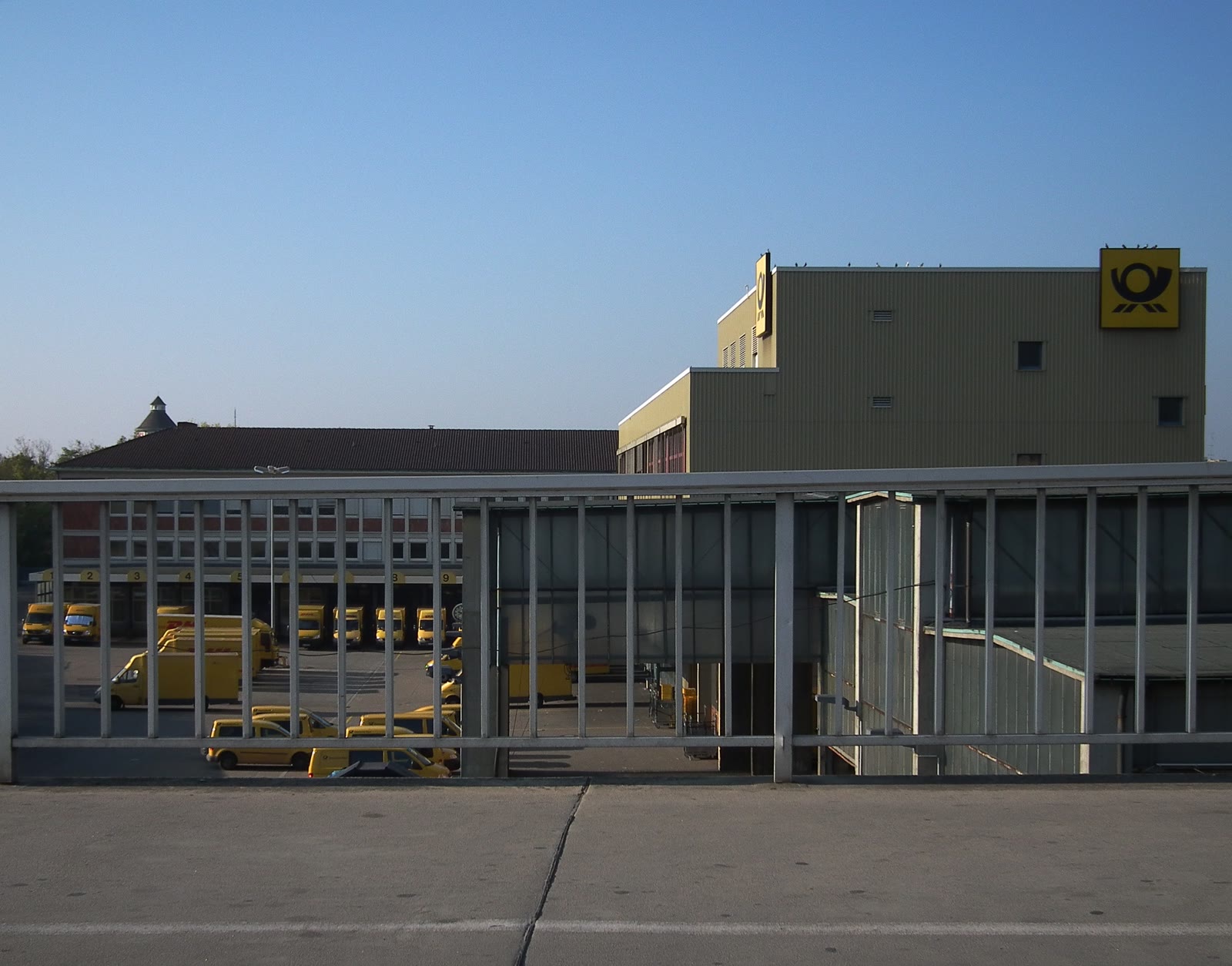
Image context: the header photo shows a parcel center rather than a storefront because the live policy problem sits in sorting, declaration, and inspection capacity. The July duty matters at the logistics node where millions of small packages hit customs systems each day.[8]
What changed
Here is the verified sequence behind the file:
- By March 2026: EU institutions were already treating the 1 July 2026 customs change as the next operating regime for low-value e-commerce imports.[2][6][7]
- Duty design: for parcels worth up to 150 euros sent directly to EU consumers under the Import One-Stop Shop (IOSS), customs duty shifts to a flat 3 euros per item category; parcels outside IOSS stay in the ordinary tariff path.[7]
- Current structural backdrop: the Commission's 2025 e-commerce communication and tax materials argue that customs, VAT collection, and market-surveillance tools all need simplification because the present flow of low-value imports has outgrown the older control model.[4][5]
- Control evidence: a coordinated customs action published in January 2026 found that traditional controls are no longer enough for the volume and that most checked products did not comply with EU rules.[1]
Confidence is high on the July start date and the flat-duty design because Commission and Parliament materials are now describing the measure as the incoming live regime rather than as an open concept.[2][6][7] Confidence is also high on the traffic-volume problem because the Commission's own customs pages present the same scale story from multiple angles.[1][3][4][5]
Why this looks like a stopgap
The strongest clue is that the new duty is deliberately blunt. A 3-euro flat charge per item category is not a finely tuned trade policy instrument. It is a simplification device. For the parcels that flow through IOSS, customs no longer have to perform the same level of tariff-by-tariff calculation that a conventional import file would require.[7]
That matters because the EU is trying to solve three problems at once.
The first is sheer volume. When most import declarations are tiny parcels, the system risks spending too much effort on classification and too little on control quality.[3][4] The second is undervaluation. Commission and Parliament materials both point to widespread manipulation of declared values, which directly erodes customs revenue and muddies enforcement priorities.[2][3][6] The third is safety and compliance. The January 2026 control action did not merely find paperwork noise; it found that many checked goods failed to meet EU standards.[1]
Seen from that angle, the July duty is a triage mechanism. It trades some tariff granularity for faster treatment of the dominant parcel flow, while pushing more sellers into the IOSS channel where VAT and customs data are easier to standardize.[5][7] That is why calling it a consumer-tax story misses the central design logic. The real target is customs friction.
Who should care, and what changes by horizon
Next 24 hours
Importers, marketplaces, customs brokers, and parcel operators should treat the legal question as settled. The useful work now is systems work: confirm whether sellers are using IOSS, identify how item categories are mapped in current data, and locate parcels that will still fall into the ordinary tariff path because the seller is outside IOSS.[6][7]
Next 7 days
The next week matters for operational audit, not ideology. Marketplaces and intermediaries need to test whether order feeds, customs declarations, VAT data, and fulfillment systems all point to the same parcel-level facts. If they do not, the July change will create disputes at scale rather than a cleaner customs lane.[3][5]
Next 30 days
The 30-day question is whether the EU uses the flatter duty to buy real enforcement room. If customs authorities can redirect effort away from repetitive low-value calculations and toward unsafe, misdeclared, or undervalued flows, the interim regime will have done its job. If not, the measure will look like a revenue patch layered on top of the same bottleneck.[3][4][6]
Decision impact
For marketplaces, the central issue is routing. The more parcel volume can be kept inside a clean IOSS process, the less operational chaos July should create.[5][7] For customs brokers and parcel carriers, the issue is data hygiene: item-category mapping, low-value thresholds, seller registration status, and exception handling. For policymakers, the real test is whether simplification actually improves control intensity on the risky end of the flow rather than merely speeding everything through.[1][4]
This is also why the July measure should be read as transitional in policy logic. It sits inside a broader Commission push to rebuild e-commerce customs, VAT, and market-surveillance controls rather than standing as the finished shape of the reform by itself.[4][5][6]
Scenarios
- Base case: the flat duty reduces processing friction on the dominant low-value parcel flow, more sellers use IOSS, and customs authorities gain some room to focus on undervaluation and unsafe goods.[1][3][5][7]
- Upside case: the simplified lane also improves data quality, which lets EU authorities combine faster clearance with sharper targeting against non-compliant imports.[1][3][4]
- Downside case: marketplaces and intermediaries fail to normalize their parcel data, non-IOSS exceptions remain messy, and the EU ends up adding a new fee logic without materially improving control quality.[3][5][7]
Action checklist
- Audit which sellers and fulfillment lanes are already inside IOSS and which are not.[5][7]
- Reconcile parcel value, item-category, and declaration data before July rather than after disputes begin.[3][7]
- Watch whether customs authorities publish evidence that the flatter duty is actually freeing inspection capacity for unsafe and underdeclared goods.[1][4]
- Reassess the current thesis if July passes and enforcement outcomes do not improve despite the simplified duty structure.[1][7]
The cleanest read on the file is procedural. Europe is not primarily trying to make one more symbolic statement about cheap imports. It is trying to keep customs systems functional while billions of low-value parcels keep arriving. The July duty is best understood as a throughput tool with enforcement ambitions, not as the finished shape of e-commerce reform.[2][4][6][7]
Sources
- European Commission, "Large scale EU customs control action shows most third-country e-commerce goods do not follow standards" (7 January 2026).
- European Commission, "Protein powder, sunglasses, moisturiser... what do these products have in common if you buy them online? They all need to be checked by customs" (3 March 2026).
- European Commission, "Goods bought online".
- European Commission, "Factsheet: E-commerce Communication, February 2025".
- European Commission, "New approach to VAT on e-commerce imports: simplify trade and compliance" (15 May 2025).
- European Parliament, "EU targets low-value imports via e-commerce platforms" (8 July 2025).
- European Parliament, "Answer given by Executive Vice-President Séjourné on behalf of the European Commission to parliamentary question P-001065/2026" (16 March 2026).
- Wikimedia Commons, "File:Paketzentrum HD Czernyring.JPG" (article image source).