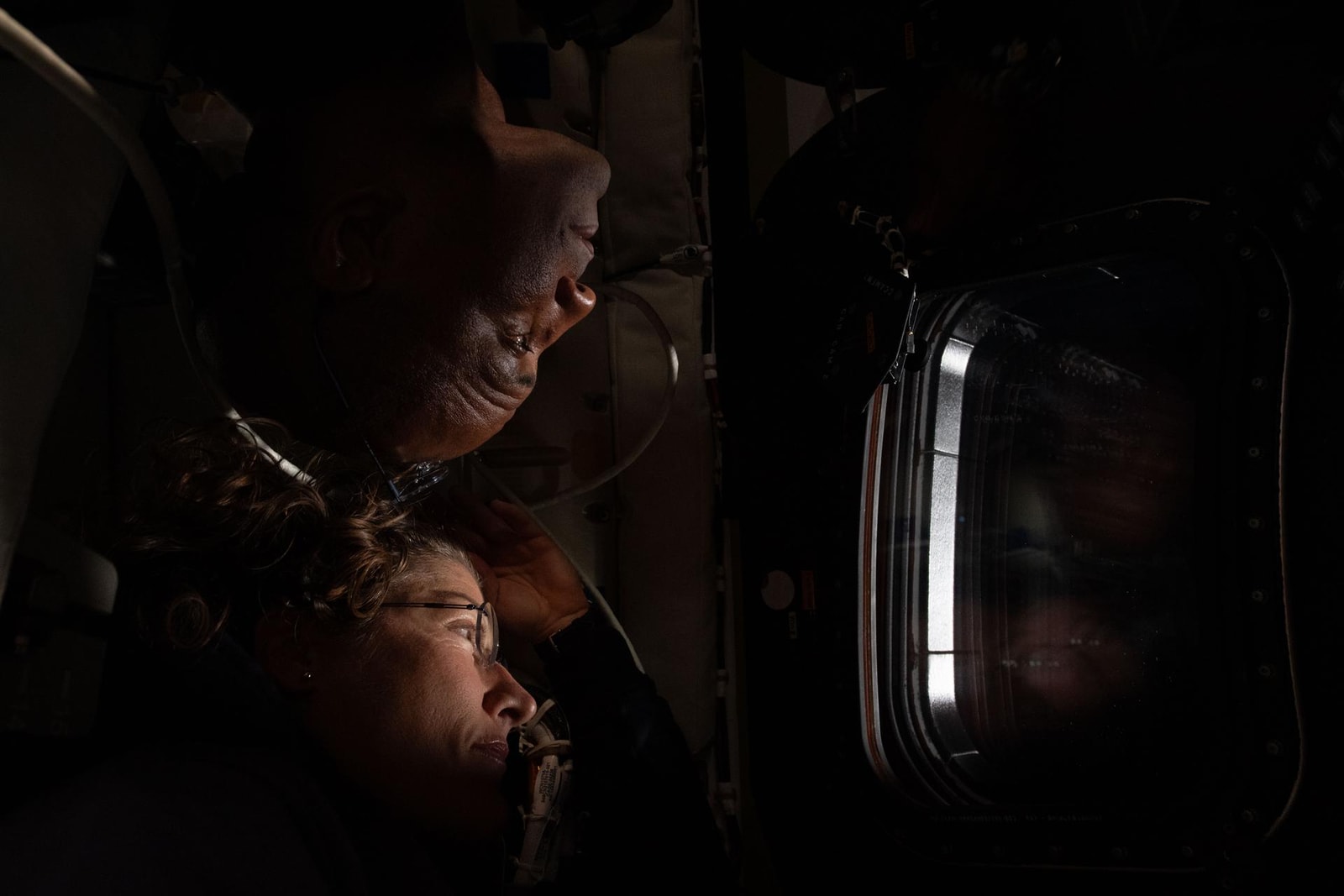
As of 2026-10-07 22:33 UTC. NASA released more than 800 gigabytes of Artemis II lunar science data on October 7, opening the crew's photographs, spoken observations and annotated images to researchers and the public. The release includes more than 11,000 full-resolution images, video and 8.5 hours of observation audio from the flight around the Moon.[1]
The archive gives outside investigators a way to follow an observation across different records: what a camera captured, what an astronaut described and what the crew marked for later attention. It also comes with a qualification. The Planetary Data System's Geosciences Node labels this a first delivery and says the mission's SPICE navigation and observation-geometry bundle is delayed.[2]
What became available today
The release documents establish three distinct states:
- Available, October 7: crew-camera, Orion-camera, mission-audio and mission-document bundles, according to the archive's release notice.[2]
- Pending, October 7: the SPICE bundle, expected in the near future without a firm date on the release page.[2]
- Still being prepared in the initial user guide: the collection of crew photographs taken with iPhones. The guide says the archive and documentation will be updated when these arrive.[3]
These are documented release statuses, rather than estimates of scientific progress. The archive page also identifies temperature and humidity measurements from Orion's storage lockers among its holdings. The files extend beyond the photographs selected for public galleries.[2]
A fleeting observation gets a longer life
The accompanying Preliminary Lunar Science Report offers a concrete example of what researchers can investigate. During the solar eclipse seen from Orion, the astronauts reported five distinct flashes on the Moon's dark surface. Their records include audio accounts and an annotated image showing approximate locations. Several flashes were seen simultaneously by more than one crew member; the report treats those overlapping observations as corroboration.[4]
That combination preserves more of the encounter than a single photograph could. A flash is brief, while the discussion and subsequent annotation record how the observers understood it. Researchers can examine that chain and ask how strongly its parts support an interpretation. The report explicitly describes its science as preliminary, with further analysis and publications still to follow.[4]
The observing process also depended on people on the ground. NASA's separate operations report describes a SCIENCE flight-control position responsible for coordinating lunar science with the flight director and other disciplines. The lunar science team completed nine integrated simulations with the Flight Operations Directorate. When astronauts were unavailable for a simulation, science-team members sometimes supplied realistic observations as crew surrogates.[6]
Those rehearsals help explain the character of the archive. The spoken record emerged from a planned observing operation, with a working relationship between the cabin and mission control. For future mission planners, the operations report makes the preparation available for scrutiny alongside the scientific material it helped produce.[6]
The files carry limits as well as observations
A bright, detailed photograph can invite more precision than its capture process supports. The data user guide states that no calibrated data products are provided in this archive. It also says no color-calibration imaging was performed to characterize the handheld cameras' sensors or their views through Orion's windows.[3]
For processed Nikon images, the guide warns that output colors cannot be fully verified or quantified without further information, calibration and testing. A visible color difference can therefore suggest a question for investigation; using it as a precise measurement of the surface requires additional work. Researchers need to distinguish a file prepared for convenient viewing from one suitable for their particular measurement.[3]
The delayed SPICE bundle concerns a different layer of interpretation. JPL's Navigation and Ancillary Information Facility describes SPICE as a system for calculating observation geometry using spacecraft trajectories, pointing, instrument information and related records. Its software can calculate quantities such as distance and illumination angles, helping investigators connect an observation to the circumstances in which it was made.[5]
The practical implication is specific: researchers planning geometry-dependent comparisons should check the availability and suitability of the needed navigation products before promising results. The delay does not prevent reading the transcripts or inspecting released photographs. It limits what can be assumed about the completeness of the supporting archive.[2][5]
What to watch after the release
For research groups, educators and science editors, the next 24 hours are a chance to identify a manageable observation or sequence and read its documentation. Over seven days, the useful work is matching the relevant images, recordings and annotations. Over 30 days, watch for archive updates and analyses that explain their methods; a publication deadline would be an editorial choice, not a timetable NASA has promised.
Three conditional paths follow from the release:
- Base: investigators begin working with the available material while checking the archive for pending components.
- Upside: the navigation bundle arrives and supports reproducible comparisons between the crew's observations and other lunar records.
- Downside: missing supporting data or calibration limits prevent a particular proposed measurement, requiring a narrower question or additional validation.
Before presenting a result, check the product's processing level, record the archive version and separate the crew's observation from the conclusion drawn from it. Revise the account if later files change the observation's timing, geometry or interpretation. Today's release makes the observing record available for that work; the strength of any new finding will depend on what investigators can demonstrate from it.
Sources
- NASA, “NASA Releases Artemis II Lunar Science Data, Images” (October 7, 2026) — release announcement, data volume and photograph art002e025880.
- NASA Planetary Data System Geosciences Node, Washington University in St. Louis, “Artemis II Mission” (October 7, 2026 release notice) — archive holdings and delayed SPICE bundle.
- Artemis II Lunar Science Team, “Artemis II Lunar Science Data User Guide,” version 1.0 (October 7, 2026), sections 1.1, 3.1.3, 5 and 5.2.4 — pending images, calibration and processing limits; PDF.
- NASA, “Artemis II Preliminary Lunar Science Report” (released October 7, 2026), foreword and section 5.1.2 — preliminary status and impact-flash observations; large PDF.
- NASA/JPL Navigation and Ancillary Information Facility, “The SPICE Concept” (accessed October 7, 2026) — navigation records and observation geometry.
- NASA, “Artemis II Lunar Science Operations Report” (released October 7, 2026), sections 3.1 and 3.2.1 — integrated simulations and the SCIENCE flight-control role; PDF.