As of November 18, 2026, 09:34 UTC.
Earth has passed the predicted peak of the Leonid meteor shower, but astronomers have another appointment in the forecast. At 21:55 UTC on November 18, Earth is expected to encounter dust that comet 55P/Tempel–Tuttle shed in 1800. The material is sparse. For anyone with a clear predawn sky, there is still reason to step outside, though little reason to travel for a meteor storm. [1][2]
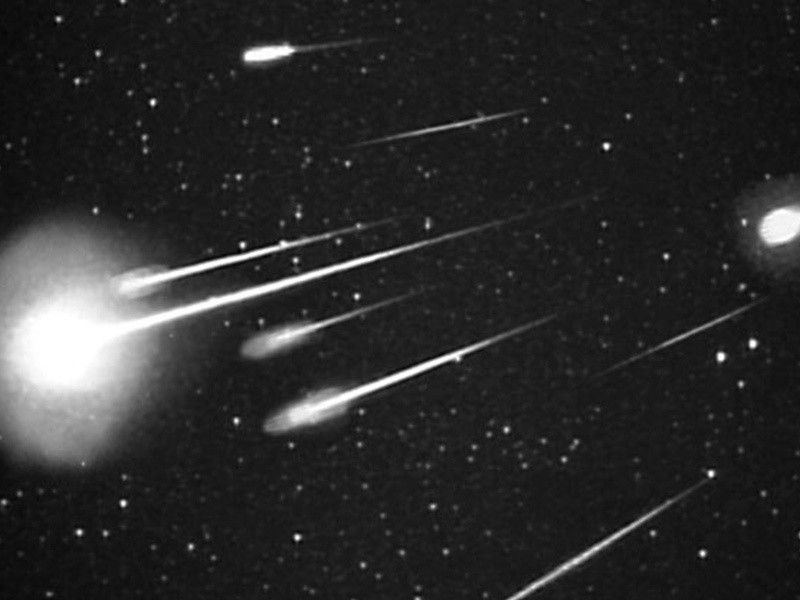
What the forecast clock measures
Each time Tempel–Tuttle swings around the Sun, it leaves grains along its orbit. When a grain enters Earth's atmosphere, a streak of light marks the encounter. The Leonids return each November because Earth crosses the wider stream each year. Within it, astronomers can trace narrower trails back to individual passages of the comet. That distinction gives this week's calendar three quite different entries. [1][3]
- November 17, 23:45 UTC. The International Meteor Organization placed the shower's ordinary maximum here, with an ideal rate near 15 meteors per hour. Most observers see fewer. [1][2]
- November 18, 21:55 UTC. Jérémie Vaubaillon's calculation places the encounter with the 1800 trail here. He expects too few grains for a substantial outburst. [1]
- November 19, around 03:30–04:00 UTC. Mikiya Sato's model gives two further chances of weak activity from material shed in 1699. All three trail times are predictions. An observer's count depends on how much dust Earth actually meets and how much sky the observer can see. [1][4]
Is it worth setting an alarm?
If it's still dark where you are on the morning of November 18, NASA favors the hours after moonset and before dawn. Bright Jupiter and reddish Mars can help you find Leo. Imagine following a meteor's streak backward across the sky. A Leonid's path should lead back toward the constellation, even if the flash itself appeared far away. Give yourself a wide view and about half an hour for your eyes to adjust. [2][3][4]
For the next morning, an occasional Leonid is a reasonable expectation under clear skies. A modest pickup during one of the predicted encounters would reward a longer watch. If the encounter falls in local daylight or under solid cloud, its precise time buys you nothing. The wider shower remains active through November 30, with the best rates expected near the peak. [1][4]
Before heading out, check local moonset, dawn and cloud cover. If you count meteors, write down when you started and stopped and whether clouds crossed your field of view. Two streaks in ten clear minutes and two in an hour of broken cloud make the same tally, but tell different stories about the shower. [4][5]
Sources
- International Meteor Organization, 2026 Meteor Shower Calendar, Leonids forecast and dust-trail calculations, pp. 18–19
- NASA Science, November 2026 skywatching highlights and transcript
- NASA Science, Leonids, including the 1999 airborne campaign photograph
- Time and Date, Look Up for the Leonids, November 2026 observing guide
- International Meteor Organization, Visual Observations and observing methods