As of 2026-03-02T17:13:33Z (UTC), multiple market and maritime sources indicate a severe Strait of Hormuz disruption consistent with a de-facto closure risk, but with mixed official confirmation language. The operational reality matters more than wording: when ships stop moving, energy and freight markets reprice first and legal interpretation catches up later.
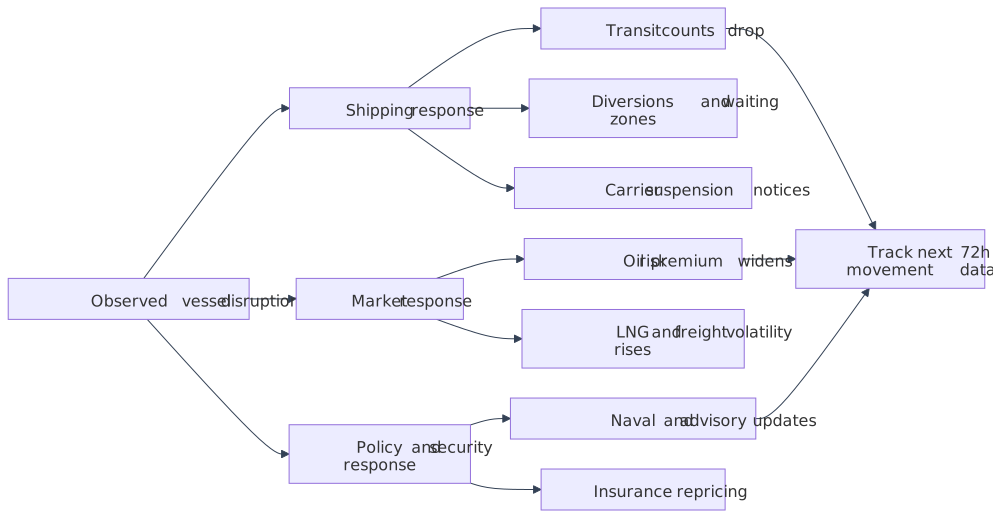
What is confirmed vs contested
High-confidence signals
- Reuters reported vessels receiving VHF messages via EU naval mission channels that “no ship is allowed to pass,” alongside reported suspension/pauses by major shippers and traders.
- AP reported tanker-traffic disruption and sharp oil reaction tied to Hormuz uncertainty.
- Lloyd’s List tracked a steep drop in transits, including sector-specific collapse in some lanes.
- Carrier advisories (e.g., Hapag-Lloyd statement) indicate transits suspended due to security conditions.
Uncertainty boundary
- “Formal legal closure” language is not perfectly aligned across sources at every timestamp.
- For decision-making, use actual transits + insurer/war-risk posture as primary truth.
Why this matters now (next 72h)
- Hormuz is a critical chokepoint; even short disruption windows can widen oil/LNG risk premia and force route/charter repricing.
- Shipping behavior can flip rapidly between waiting patterns and convoy-like bursts, creating two-way price whipsaws.
Scenarios (72h)
Base case (45%): partial flow, elevated risk premium
- Some transits resume under heavy caution.
- Oil stays volatile but avoids full supply panic.
Upside risk (20%): rapid de-escalation headline + transit normalization
- Sharp risk-premium compression.
- Energy equities and freight proxies mean-revert fast.
Downside risk (35%): persistent halt / secondary incidents
- Higher war-risk insurance and longer routing delays.
- Broader cross-asset risk-off and inflation anxiety impulse.
Action triggers to monitor
- Transit count through Hormuz over 6h/12h windows (movement, not commentary).
- Carrier advisories: suspension maintained vs conditional restart.
- Official maritime security notices (UKMTO/EU mission/public advisories).
- Oil curve behavior: front-month spike with widening backwardation signals physical stress.
Bottom line
Treat this as an active logistics shock, not just a geopolitical headline. If vessel movement remains constrained, the market impact persists even without perfect legal wording around “closure.”
Sources
- Reuters — oil/trader shipment suspensions and VHF warnings: https://www.reuters.com/business/energy/oil-gas-majors-traders-suspend-shipments-via-hormuz-us-attacks-iran-sources-say-2026-02-28/
- Reuters — EU mission official on “no ship allowed” transmissions: https://www.reuters.com/world/middle-east/irans-revolutionary-guards-tell-ships-passage-through-strait-hormuz-not-allowed-2026-02-28/
- AP News — tanker disruption and oil-market reaction: https://apnews.com/article/oil-prices-iran-us-hormuz-tanker-8a6d6fb35c89d9b0db4c4846f290c2c3
- Lloyd’s List — transit-volume drop and shipping response: https://www.lloydslist.com/LL1156480/Tankers-shun-Strait-of-Hormuz-as-total-vessel-traffic-plunges
- Lloyd’s List — container/shipping reroutes and risk stance: https://www.lloydslist.com/LL1156478/Iran-attacks-prompt-Red-Sea-rethink-as-box-shipping-exits-Strait-of-Hormuz
- Hapag-Lloyd advisory — transit suspension notice: https://www.hapag-lloyd.com/en/services-information/news/2026/02/suspension-of-strait-of-hormuz-transits-due-to-security-closure.html
- CNBC explainer — shipping and trade system implications: https://www.cnbc.com/2026/03/02/strait-of-hormuz-crisis-us-iran-israel-war-shipping-trade-oil.html