As of 2026-05-30T23:32:01Z (UTC), Malta's general election is no longer just a polling-day story. The Electoral Commission set voting hours for Saturday, May 30, from 7:00 a.m. to 10:00 p.m. without interruption, and local coverage reported the polls closed at 10 p.m. local time.[1][4] The next decisive scene is the count, because Malta does not translate a national mood into seats through one simple winner-take-all tally.
The easy headline is that Prime Minister Robert Abela's Labour Party entered the snap election favored to win what Reuters called a possible record fourth term, with the Nationalist Party led by Alex Borg trying to end a long opposition stretch.[5] The harder and more useful headline is procedural: Malta elects MPs through single transferable vote in 13 constituencies, normally five members per district, so first preferences, surplus transfers, exhausted ballots, and district quotas all matter before the seat map is truly legible.[6]
That is why this election should be read in two clocks. The first clock ended when polling stations closed. The second starts at the Naxxar Counting Hall, where ballot boxes are sorted, candidates are eliminated or elected district by district, and votes move through preference order. If Labour wins comfortably, the count may confirm the pre-election story. If the margin narrows, or if smaller parties find a concentrated district opening, the count mechanics become the story itself.
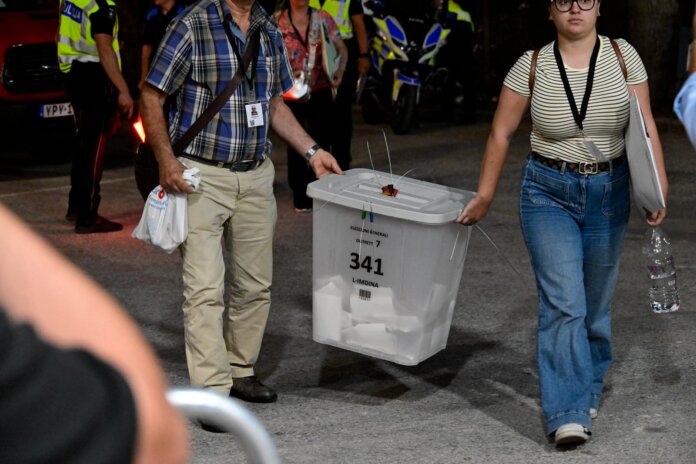
Image context: the Newsbook photograph shows the Naxxar counting centre after polling closed, with ballot boxes, officials, and party observers inside the room where Malta's ranked paper ballots begin turning into district seat math. It is a real election-process image, not a generic democracy visual, and it keeps the explainer anchored in the count-floor mechanics at the centre of the article.[7]
Fact file
| Item | What is known | Confidence note |
|---|---|---|
| Polling day | Malta voted on Saturday, May 30, 2026. The Electoral Commission set voting hours from 7:00 a.m. to 10:00 p.m.[1] | High; direct Electoral Commission notice. |
| Snap-election trigger | President Myriam Spiteri Debono dissolved Parliament on April 27, 2026 and proclaimed May 30 as election day after advice from the prime minister.[2] | High; Office of the President statement. |
| Midday turnout signal | The Electoral Commission published approximate turnout by district up to 2:00 p.m. on election day.[3] | High for official interim turnout existence; not a final result. |
| Count logistics | The Malta Independent reported ballot boxes would move under security escort to the Naxxar Counting Hall, with sorting scheduled to begin Sunday morning.[4] | Medium-high; local reporting on announced logistics. |
| Political frame | Reuters reported Labour was favored by opinion polls, six parties were on the ballot, and Labour and the Nationalist Party have been the only parties to enter parliament since 1966.[5] | High for Reuters reporting; polls are not results. |
| Electoral system | Fondation Robert Schuman describes a 65-member House elected from 13 five-seat constituencies using proportional representation by single transferable vote, with additional seats possible for proportionality.[6] | High for system description; final seat total depends on post-count allocation. |
Why the count matters more than the slogan
Malta's campaign can sound straightforward from abroad: a governing Labour Party seeking continuity, an opposition Nationalist Party arguing that growth has not translated into quality of life, and smaller parties trying to break into a system where the two big parties have dominated parliamentary representation for decades.[5][6] That frame is true as far as it goes. It is also incomplete.
Single transferable vote changes what election night means. Voters rank candidates rather than marking only one party box. A candidate who reaches the district quota is elected; surplus votes can transfer according to later preferences; low-ranked candidates are eliminated and their ballots move onward if voters expressed further preferences.[6] The result is not merely a national popularity contest. It is a district machine that rewards concentration, candidate management, and the ability to keep preferences alive through rounds of counting.
For the major parties, that means a large national lead still has to be converted into efficient district seat wins. For the Nationalist Party, the question is not only whether it can cut Labour's margin, but whether it can do so in the places where seats are actually allocated. For smaller parties, the national share can look respectable and still fail to produce a seat if support is thinly spread. A breakthrough requires enough first preferences, transfers, or local concentration to survive the district quota logic.[5][6]
The count also shapes the narrative around mandate. A Labour win with a wide first-preference lead and a clean seat majority would validate Abela's stability argument. A Labour win with weaker turnout, a reduced margin, or visible transfer leakage would still return the government but with a different political texture. A closer-than-expected Nationalist performance would matter even if it fell short, because it would reset the opposition's claim to viability under Alex Borg. A smaller-party seat would be the most disruptive parliamentary signal, because it would challenge the post-1966 pattern Reuters highlighted.[5]
What has actually changed today
The event moved from campaign argument to official process. The President's April proclamation created the legal election date; the Electoral Commission's May 29 notice set the operational voting window; the May 30 turnout releases started replacing campaign rhetoric with participation data; and the close of polls moved the political question into counting procedure.[1][2][3][4]
That sequence matters because late campaign polling is only a probability statement. Reuters reported Labour was favored, and Fondation Robert Schuman cited polls published on May 6 pointing to Labour at 52% and the Nationalist Party at 43%.[5][6] But the official system still has to allocate seats through districts and transfers. Until the count produces final first preferences, quota rounds, transfer effects, and any proportionality adjustments, the public does not yet know the exact balance of power.
The other change is that the campaign's issue mix now meets parliamentary arithmetic. Fondation Robert Schuman described purchasing power and inflation as central campaign themes, while also noting the muted treatment of rule-of-law issues compared with earlier Maltese election cycles.[6] Reuters similarly framed Labour around economic strength and stability, with the Nationalist Party arguing that the strong economy has not translated into better quality of life.[5] The result will decide which version of that argument carries governing force.
Decision impact
Next 24 hours: watch the Naxxar count, not only party statements. Early claims may be based on sampling, party projections, or first-preference impressions. The strongest signal will be how first preferences and transfers behave in the districts where the fifth seat is competitive.[4][6]
Next 7 days: the seat map will define the mandate. A comfortable Labour seat majority would make continuity the governing story. A narrowed margin would make turnout, quality-of-life complaints, and opposition leadership more important than the simple win/loss headline. A smaller-party breakthrough would force every post-election analysis to revisit the assumption that Malta's parliamentary politics remain a closed two-party chamber.[5][6]
Next 30 days: the governing agenda will turn on whether the result is read as permission for stability or a warning about pressure points. Cost of living, infrastructure, Gozo connectivity, corruption and rule-of-law credibility, and the distribution of growth are likely to be interpreted through the scale of the mandate, not merely through the fact of victory or defeat.[5][6]
Scenarios
Base case: Labour confirms the polling lead. This is the simplest path: Labour wins another term, the Nationalist Party improves only at the margins, and the count mostly clarifies the size of the mandate. The trigger would be a first-preference lead broadly consistent with the pre-election polling frame and limited late transfer surprises.[5][6]
Upside-for-opposition case: the result tightens district by district. In this version, the Nationalist Party does not need to win outright for the result to matter. If it narrows Labour's lead in enough constituencies, Alex Borg exits the election with a stronger claim that the opposition is rebuilding. The trigger would be a seat map or transfer pattern that looks materially tighter than the headline polling suggested.[5][6]
System-shock case: a smaller party enters Parliament. This is the least likely but most structurally important outcome. Because Reuters notes that Labour and the Nationalist Party have been the only parties in Parliament since 1966, even one smaller-party seat would change the symbolic map of Maltese politics.[5] The trigger would be concentrated district support strong enough to survive the STV quota and transfer rounds.[6]
Action checklist
- Treat party projections as provisional until the official count clarifies first preferences, transfers, and seats.
- Watch district-level fifth-seat fights; they reveal more about mandate strength than national slogans.
- Separate turnout from support. Participation can shape legitimacy, but seat allocation still depends on how valid ballots rank candidates.
- Track whether smaller parties merely raise vote share or actually concentrate support enough to threaten a quota.
- Invalidate the base case if official first preferences diverge sharply from the Labour-favored polling frame or if early district transfers show unexpected Nationalist or smaller-party strength.
Sources
- Electoral Commission of Malta, "General Election 2026 - Voting" (May 29, 2026).
- Office of the President of Malta, "Press release by the Office of the President of Malta" (April 27, 2026 proclamation and writ).
- Government of Malta Department of Information, "Press Release by the Electoral Commission: General Election - 30th May, 2026" (2:00 p.m. turnout notice).
- The Malta Independent, "Malta heads to the polls today as voters choose the next government" (May 30, 2026).
- Reuters via MarketScreener, "Voting starts in Malta parliamentary elections, ruling party set to win" (May 30, 2026).
- Fondation Robert Schuman, "Snap elections in Malta, nine months ahead of schedule" (European Elections Monitor, May 2026).
- Newsbook Malta, "Abela, Borg cast ballots as Malta’s general election gets underway" - Naxxar counting-centre photograph used as the cover image (May 30, 2026).