As of 2026-03-27T12:37:52Z (UTC), the Justice Department's Data Security Program should no longer be read as a one-time foreign-adversary headline. The main dates that turned the program from theory into operating law have already passed. The rule itself took effect on April 8, 2025, and the second compliance layer for due diligence, audits, annual reports, and rejected-transaction reporting took effect on October 6, 2025.[1][2][3][4][5]
That timing changes the practical question for 2026. The issue is no longer whether counsel has read Executive Order 14117 or whether the business knows the list of countries of concern. The harder test is whether a company can identify where covered data sits, which transactions expose it, which counterparties and service providers can touch it, and what evidence exists to prove that restricted transactions are being controlled rather than merely noticed.[1][3][4][5][6]
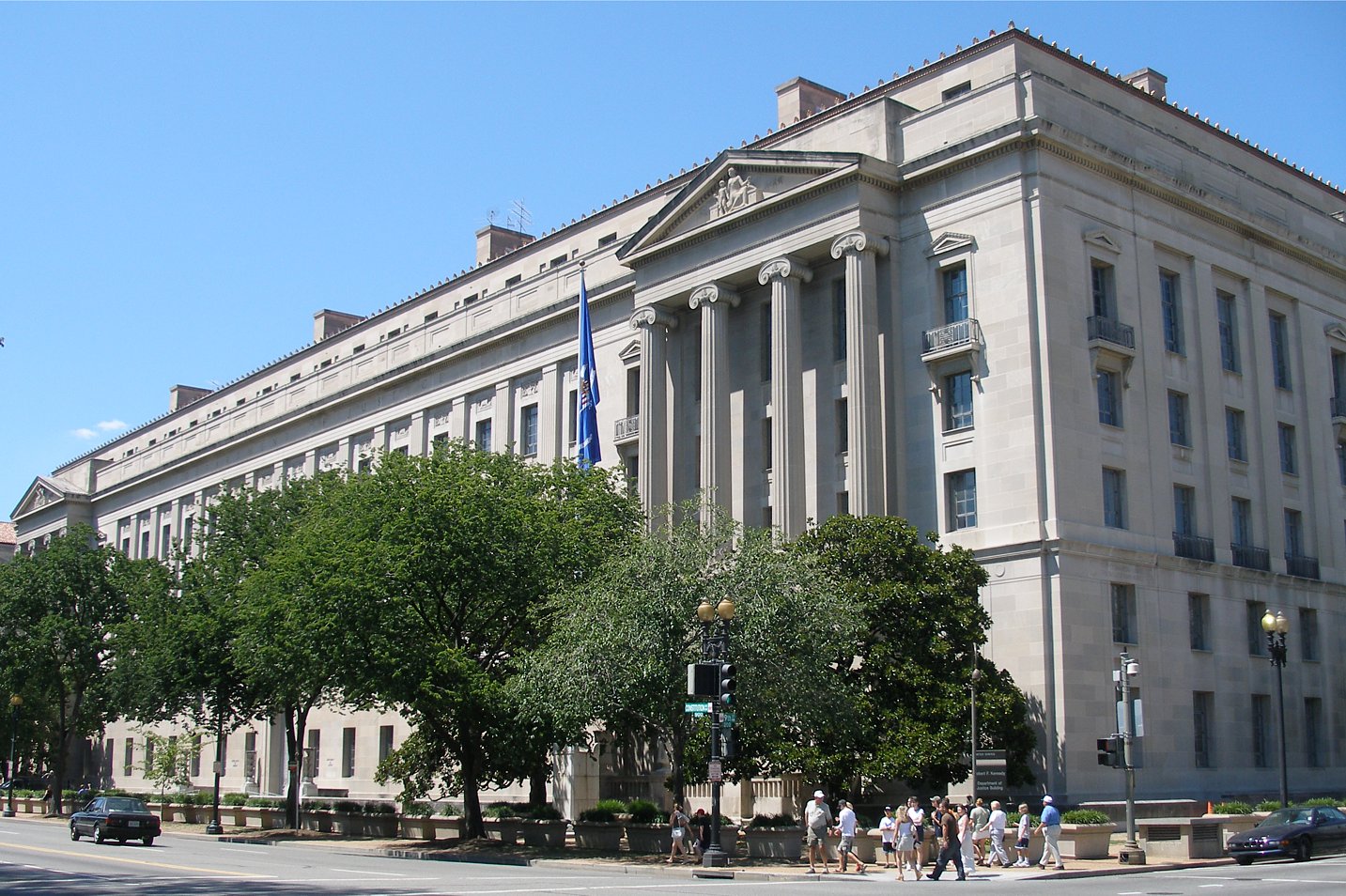
Image context: the header photo shows the Robert F. Kennedy Department of Justice Building in Washington, D.C., used here because the story is about the Department's live compliance regime rather than about a specific cyber incident or court case.[7]
What already moved from policy to operating law
The official DOJ overview is clear about the program's scope. The Data Security Program was issued under Executive Order 14117, and it targets the national-security risk that countries of concern and covered persons could use commercial relationships to gain access to U.S. government-related data or Americans' bulk sensitive personal data.[1] The data categories are broad enough that many legal and operations teams cannot treat this as a niche intelligence rule: genomic, geolocation, biometric, health, financial, and other sensitive personal data all appear in the program's framing.[1][3]
The compliance guide is equally clear about the mechanism. The program regulates covered data transactions involving data brokerage, vendor agreements, employment agreements, and investment agreements, with a structure that distinguishes prohibited transactions from restricted ones and that pushes firms toward licenses, exemptions, or control measures only after the transaction has been classified correctly.[3] That is why the 2026 burden lands first on classification and workflow. A company that does not know which data it holds, in what volume, and under which transaction form cannot know whether it is looking at a prohibited lane, a restricted lane, or an exempt one.[3][4]
The second effective date matters because it removed the last excuse for treating the rule as a transition project. DOJ's April 2025 materials state that subpart J due-diligence and audit obligations, the annual reporting requirement in § 202.1103, and the reporting requirement for rejected prohibited transactions in § 202.1104 all became live on October 6, 2025.[3][4][5] In other words, 2026 is the first full year in which the regime is not just about whether risky transactions are blocked, but whether the business can demonstrate how it made that judgment and how it monitors the restricted transactions it still keeps.
Why the real 2026 burden is data-flow mapping
The DOJ FAQ uses the phrase "know your data" for a reason.[4] The requirement is not satisfied by screening company names against a list and stopping there. Firms engaged in restricted transactions are expected to build risk-based procedures that verify the types and volumes of data involved, the identities of the parties, and the structure of the transaction.[4] In practice, that becomes a data-flow mapping problem before it becomes a sanctions-screening problem.
Three operational consequences follow from that design.
First, ordinary outsourcing can move into scope faster than many business teams expect. A vendor agreement that gives a covered person or a country-of-concern-controlled actor access to bulk U.S. sensitive personal data does not look exotic when it is sitting in a procurement queue. It often looks like routine analytics support, back-office processing, model training assistance, data labeling, or software maintenance. By the time legal is asked whether the arrangement is prohibited, restricted, or exempt, the real work should already have happened upstream: where is the data, how much is it, who can actually reach it, and what onward-transfer rights or access credentials exist?[3][4][5]
Second, employment and investment lanes cannot be handled as side cases. The compliance guide explicitly places those agreements inside the transaction map.[3] That means 2026 compliance is partly an HR and corporate-development discipline, not only a security or privacy discipline. If a company treats the program as something procurement owns, it will miss the places where access is created through staffing, affiliates, contractors, or capital structures rather than through a conventional vendor contract.[3][4]
Third, once the October 2025 obligations started, evidence quality became part of the rule's center of gravity. A company may already believe that its controls are sensible. DOJ's framework asks a harder question: can the firm show the due-diligence process, the audit trail, and the reporting logic that support those controls?[3][4][5] That is the point at which a policy memo stops being enough.
Where operators still underestimate friction
1. They treat the April 2025 ramp window as if it were still available
DOJ's April 11, 2025 press release and its implementation policy offered a limited early period in which NSD said it would not prioritize civil enforcement for April 8 through July 8, 2025 violations when firms were making good-faith efforts to come into compliance.[2][5] Those materials were designed to help companies revise contracts, identify data flows, change vendors, and deploy controls.[2][5] That grace-period logic does not define 2026. The real operating assumption now should be that the transition excuse has expired.
2. They think "restricted" means "allowed if we are careful"
The program's structure does permit some transactions subject to security requirements and other conditions, but that makes diligence more important, not less.[1][3][6] Restricted transactions are where controls, auditability, and reporting are supposed to prove that the access lane is narrowed and monitored. If a business keeps the revenue and forgets the recordkeeping, it has misunderstood the design of the rule.[3][4][6]
3. They separate security controls from transaction governance
CISA's security requirements matter because DOJ's rule and technical safeguards were built to operate together.[1][6] If the legal team classifies a transaction as restricted but the technical team cannot show identity controls, data minimization, logging, segmentation, or other required protections in the relevant environment, the compliance picture is incomplete.[6] In 2026 the most exposed firms are not necessarily the ones with the most cross-border activity; they are the ones whose legal classification and technical implementation still live in separate systems.
A realistic 2026 operating check
For companies that may touch in-scope data, a serious readiness test now has five parts:
- Inventory the data categories and volume thresholds that might move a dataset into bulk sensitive personal data or government-related data treatment.[1][3][4]
- Map the transaction form, not just the counterparty: vendor, employment, investment, or data-brokerage exposure.[3][4]
- Trace actual access paths across vendors, affiliates, contractors, and tooling rather than relying on contract labels alone.[3][5]
- Verify the restricted-transaction control stack against CISA's security requirements and your own evidence trail for audits and annual reporting.[4][6]
- Test the reporting edge cases now, especially how the business would document restricted transactions and how it would log and report a rejected prohibited transaction if one is stopped late in the process.[3][4]
That checklist is useful because it forces the organization to answer one question the program keeps asking in different ways: do you actually understand how sensitive data moves through your commercial relationships, or do you just know which country names to avoid?
Bottom line
The DOJ's Data Security Program is now deep enough into implementation that the news value sits in execution, not announcement. In 2026 the strongest firms will be the ones that have turned the rule into a living map of data categories, transaction types, access lanes, controls, and evidence. The weakest firms will be the ones that still treat it as a geopolitical screening memo and discover too late that the Department built an ongoing data-governance regime instead.[1][3][4][5][6]
Sources
- U.S. Department of Justice, National Security Division, "Data Security" overview page.
- U.S. Department of Justice, Office of Public Affairs, "Justice Department Implements Critical National Security Program to Protect Americans' Sensitive Data from Foreign Adversaries" (April 11, 2025).
- U.S. Department of Justice, National Security Division, Data Security Program: Compliance Guide (April 11, 2025 PDF).
- U.S. Department of Justice, National Security Division, Data Security Program: Frequently Asked Questions (updated September 24, 2025 PDF).
- U.S. Department of Justice, National Security Division, Data Security Program: Implementation and Enforcement Policy Through July 8, 2025 (April 11, 2025 PDF).
- Cybersecurity and Infrastructure Security Agency, Security Requirements for Restricted Transactions (January 3, 2025).
- Wikimedia Commons, "File: U.S. Department of Justice headquarters, August 12, 2006.jpg".