As of 2026-03-30 21:39 UTC, the useful way to read Washington's March crypto push is no longer "the SEC finally said something." The real shift is that the SEC and CFTC have now published a workable interim classification map for a wide range of crypto assets and transactions, while the durable gap has become easier to see: federal agencies can interpret their statutes, but they still cannot finish U.S. spot-market structure by themselves.[1][2][4][6][7]
That is why this matters beyond the crypto industry. A published interpretation changes how exchanges, broker-dealers, issuers, trading venues, custodians, and compliance teams write internal memos right now. It does not, by itself, settle who gets full rulemaking power over non-security spot crypto markets, how a long-term registration regime should work, or what kind of statutory perimeter Congress ultimately wants.[2][4][6][7]
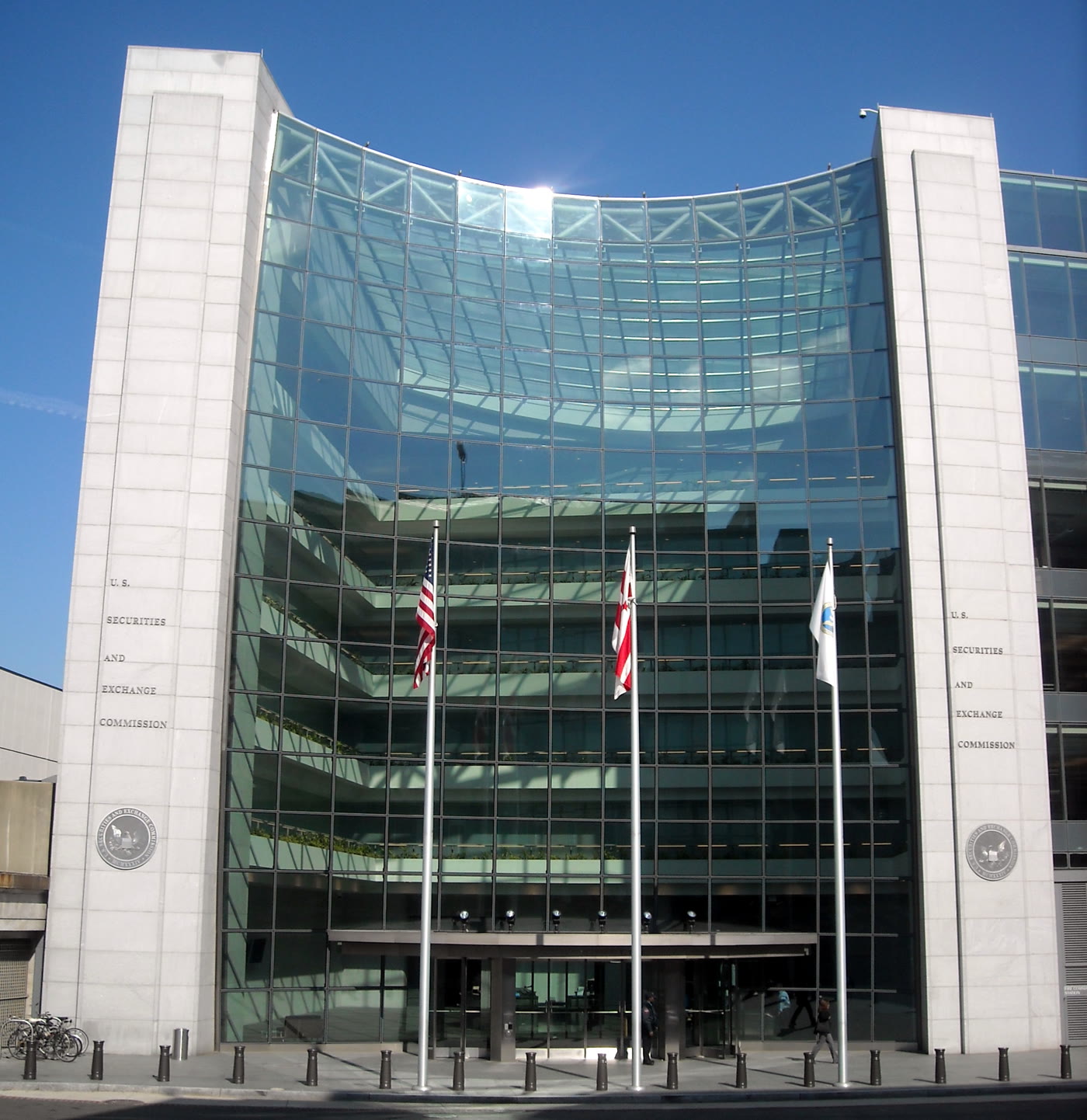
Image context: the header photo shows SEC headquarters in Washington. It fits this story because the current move is not a token-price event or a venture-funding story. It is a rulebook event, centered on how federal agencies are drawing category lines while Congress still holds the cleaner legislative answer.[8]
Facts on the record
- On March 17, 2026, the SEC announced an interpretive release on how federal securities laws apply to certain crypto assets and transactions involving crypto assets.[1]
- The interpretation was published in the Federal Register on March 23, 2026, became effective the same day, and opened a 30-day public-comment window.[2]
- The SEC's fact sheet says the release addresses crypto assets such as certain stablecoins, digital collectibles, memecoins, and tokenized securities, and stresses that tokenization does not change the legal nature of the underlying instrument.[3]
- A separate SEC staff statement from January 28, 2026 made the same boundary explicit for tokenized securities: placing a security on a blockchain does not stop it from being a security or remove the ordinary securities-law obligations that follow from that status.[5]
- On March 17, 2026, the CFTC said it joined the SEC interpretation so the Commodity Exchange Act would be administered consistently with the SEC's approach, and described the release as a coherent taxonomy for digital commodities, digital collectibles, digital tools, stablecoins, and digital securities.[4]
- Congress still has not enacted a full market-structure statute. The House-passed CLARITY Act was received in the Senate on September 18, 2025 and referred to the Senate Banking Committee, where Congress.gov still shows it as having passed the House but not become law.[6]
- Treasury's Financial Stability Oversight Council said in its 2024 annual report that Congress should provide federal financial regulators with explicit rulemaking authority over the spot market for crypto assets that are not securities.[7]
What changed in March
The biggest change is not philosophical. It is operational. Before this release cycle, many firms were forced to work from scattered speeches, enforcement signals, staff statements, and one-off litigation arguments. The March interpretation gives them a more consolidated federal reading of how common crypto categories fit inside existing securities law, and the CFTC's same-day alignment reduces the risk that one agency's language immediately collides with the other's.[1][2][4]
The practical value of that change is highest in border cases. Tokenized debt, tokenized equity, fund interests represented onchain, and assorted non-security crypto assets can now be discussed inside a more stable federal vocabulary.[2][3][5] That does not remove every hard case, but it does change the quality of legal analysis. Teams can now write around a published interpretive baseline instead of treating every asset review as a fresh archaeology project.
What did not change
The March interpretation is still an interpretation. It did not create a full statutory market-structure framework, and it did not magically settle the spot-market authority problem that federal policymakers have been circling for several years.[2][6][7]
That boundary matters because the live U.S. policy question is no longer just "is this token a security?" The harder question is what federal regime should govern the large category of crypto activity that agencies and lawmakers increasingly describe as non-security digital assets or digital commodities. FSOC's recommendation is blunt on that point: Congress should give regulators explicit rulemaking authority over those spot markets.[7]
The same logic explains why the CLARITY Act still matters even after the SEC and CFTC moved in March. The bill is a legislative attempt to assign durable roles to both agencies, define digital commodities, and build registration and trading rules that do not depend entirely on interpretive patchwork.[6] Until something like that becomes law, the agencies can narrow uncertainty, but they cannot fully end it.
Decision impact
The institutions that should care most over the next month are:
- crypto exchanges and trading venues deciding how to classify listed assets and related products.[2][4][6]
- broker-dealers, ATS operators, and transfer-agent or custody teams handling tokenized securities workflows.[3][5]
- issuers and treasury teams designing token launches, wrappers, or onchain distribution models.[2][3][5]
- banks, stablecoin-adjacent payment firms, and compliance teams tracking where securities treatment stops and commodities treatment starts.[3][4][7]
In the next 24 hours, the most useful move is to update internal asset inventories against the new interpretive categories. In the next 7 days, legal and compliance teams should rewrite any memo that still treats tokenization itself as a regulatory escape hatch.[3][5] In the next 30 days, firms with real exposure should decide whether to submit comments to the SEC while the interpretation is still inside its initial public-comment window.[2]
Scenarios
Base case: the March interpretation becomes the working federal baseline for the rest of 2026, firms adjust compliance and listing analyses around it, and Congress moves more slowly than the agencies.[2][4][6]
Upside case: Senate movement on market-structure legislation turns the March interpretation into a bridge document rather than a semi-permanent substitute for legislation.[6][7]
Downside case: firms overread the interpretation as a completed settlement, underinvest in product-by-product analysis, and discover that category clarity did not eliminate registration, disclosure, custody, or market-conduct obligations where securities treatment still applies.[2][3][5]
Action checklist
- Re-map every listed or planned crypto asset against the March SEC/CFTC categories instead of relying on older enforcement-era shorthand.[1][2][4]
- Separate "tokenized" from "non-security" in internal product reviews; the SEC has made clear those are not synonyms.[3][5]
- Identify which parts of your business depend on a future congressional framework rather than on current agency interpretation, especially in spot-market and exchange design.[6][7]
- Decide whether to file comments during the SEC's initial 30-day window if the interpretation changes your registration, listing, custody, or disclosure assumptions.[2]
- Watch Senate Banking and related Treasury/CFTC signals for evidence that Congress is moving from vocabulary cleanup to durable market-structure law.[6][7]
The short read is that Washington has finally produced a more usable crypto vocabulary. The longer read is that vocabulary and statute are not the same thing. By March 30, 2026, the agencies have made the first part of the map clearer; Congress still controls whether the second part becomes durable.
Sources
- U.S. Securities and Exchange Commission, "SEC Clarifies the Application of Federal Securities Laws to Crypto Assets" (March 17, 2026 press release).
- Federal Register, "Application of the Federal Securities Laws to Certain Types of Crypto Assets and Certain Transactions Involving Crypto Assets" (published March 23, 2026; effective March 23, 2026).
- U.S. Securities and Exchange Commission, "Fact Sheet: The SEC's Interpretation Regarding the Application of the Federal Securities Laws to Certain Types of Crypto Assets and Certain Transactions Involving Crypto Assets" (March 2026).
- Commodity Futures Trading Commission, "CFTC Joins SEC to Clarify the Application of Federal Securities Laws to Crypto Assets" (March 17, 2026 press release).
- U.S. Securities and Exchange Commission, "Statement on Tokenized Securities" (January 28, 2026).
- Congress.gov, "H.R. 3633 - Digital Asset Market Clarity Act of 2025" (bill status page showing House passage and Senate referral).
- U.S. Department of the Treasury, "Financial Stability Oversight Council Releases 2024 Annual Report" (December 6, 2024; includes recommendation for explicit spot-market rulemaking authority over crypto assets that are not securities).
- Wikimedia Commons, "U.S. Securities and Exchange Commission headquarters.JPG" (cover image source).