As of 2026-03-31T10:11:54Z (UTC), Britain's long-duration electricity storage file has moved out of scheme-launch rhetoric and into licence drafting. Ofgem's call for input on draft special licence conditions is open until 20 April 2026, and it arrives after 77 projects cleared Window 1 eligibility and after the regulator published the financial model and handbook that will govern the scheme's first cohort.[1][2][3]
The easy reading is that Britain has already decided to back long-duration storage. That is true, but it is no longer the live issue. The live issue is how much investor certainty Ofgem is willing to hard-wire into enforceable licence text before summer 2026 regime awards. That reading comes from the source sequence itself: the March 2025 technical decision still pointed to first awards in Q2 2026, while the active late-March 2026 milestone is now a draft-licence exercise feeding statutory consultation and final decisions in the summer.[1][4]
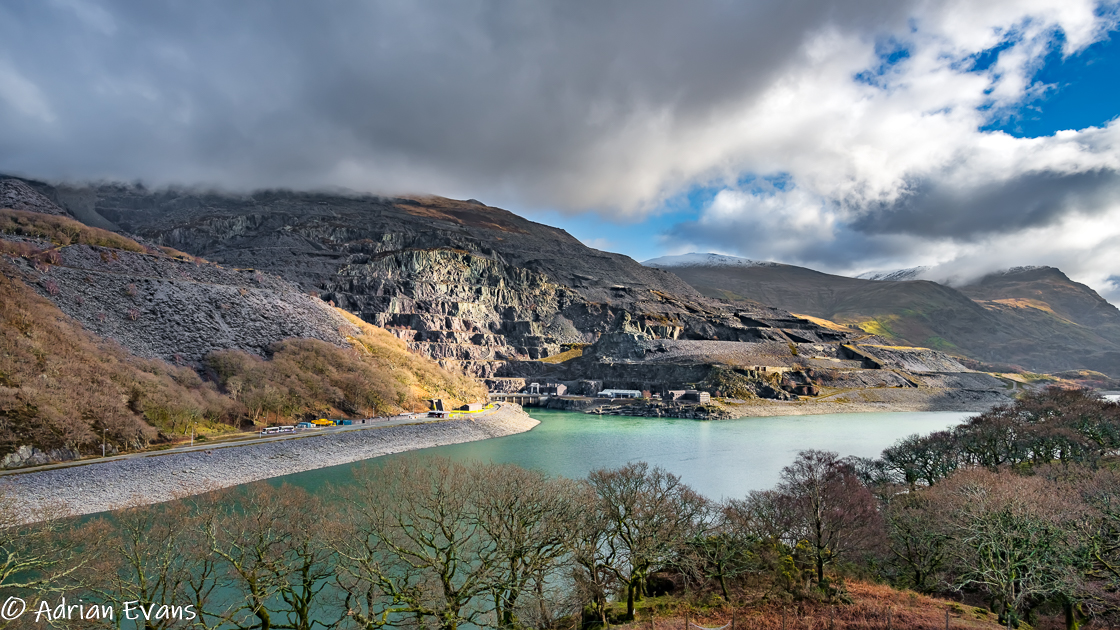
Image context: the header photo shows Dinorwig, one of Britain's landmark pumped-storage assets. It fits this article because the present question is practical and physical at the same time: the LDES regime now has to translate policy support into financeable, licensable infrastructure attached to real storage projects.[6]
Facts on the file
- Ofgem published its draft special licence conditions call on 13 March 2026 and set 20 April 2026 as the response deadline.[1]
- Ofgem said in September 2025 that 77 projects had passed the Window 1 eligibility stage and moved into project assessment, with successful projects to be confirmed in summer 2026.[2]
- Ofgem's Window 1 financial model and handbook say initial cap-and-floor levels will be set at regime award, then updated at financial close and finalized after post-construction review.[3]
- Ofgem's March 2025 technical decision document described the first application window as a route toward first awards in Q2 2026 and also tightened parts of the consumer-protection framework, including raising the sharing rate above the cap to 30%.[4]
- DESNZ's December 2025 open letter framed the current delivery target as first projects signing cap-and-floor contracts by summer 2026 and linked the regime to a system need for 2.7 GW to 7.7 GW of long-duration storage by 2035, against roughly 2.8 GW operating today.[5]
- The government's October 2024 response established the cap-and-floor direction that Ofgem is now operationalizing through the technical decision and current licence process.[4][5]
Why the licence is now the real story
The shift from policy design to licence drafting matters because this is the point where political support becomes a legal operating package. Ofgem already has the broad policy mandate, an application pool, and a financial model.[2][3][4] What it still needs is the special-licence architecture that will define obligations and rights in a form lenders, developers, and investors can actually underwrite.[1]
That is why the draft-licence call deserves more attention than a generic "Britain backs storage" headline. By the time 77 eligible projects are already in assessment, the regime is no longer searching for proof that the sector exists.[2] It is deciding how much discretion stays with future regulatory processes and how much certainty gets embedded upfront. My inference from the sequencing of the documents is that this boundary, more than the headline cap-and-floor idea itself, is now the main bankability question.[1][2][3][4]
Where uncertainty still sits
1. The calendar has become a legal calendar
The March 2025 technical decision still described Q2 2026 as the path to first regime awards.[4] The current live process looks narrower and more legalistic. The draft special-licence call runs into late April, then points toward statutory consultation and final decisions in summer 2026.[1] The practical implication is that timing risk now sits less in high-level policy approval and more in how quickly Ofgem can close the legal wrapper around the first cohort.
2. A summer award will open the financing path, not finish it
The financial model and handbook make this explicit. Initial cap-and-floor levels are set at regime award, then updated at financial close, and only finalized after post-construction review.[3] That means a summer 2026 award should be read as a financing and contracting milestone, not as a once-and-done settlement of project economics. Developers and lenders therefore have a strong incentive to narrow licence ambiguity before award day, because the scheme still contains later adjustment points.[1][3]
3. Consumer protection is still being tuned alongside financeability
The March 2025 technical decision already showed Ofgem making substantive consumer-value adjustments, including a higher revenue-sharing rate above the cap and pared-back cost and delivery incentives.[4] That matters because it clarifies the regulator's posture. The scheme is not being drafted as a one-way developer support package. It is being drafted as a negotiated balance between system need, investor certainty, and consumer protection. For project finance, that usually means the most valuable certainty is certainty written clearly and early.[1][4][5]
Decision impact by horizon
Next 24 hours
Developers, sponsors, and lenders should treat the 20 April response window as the live operating deadline. The fastest way to misread this file is to focus only on whether cap-and-floor support exists while ignoring how the first licence text allocates discretion, milestone risk, and post-award adjustment risk.[1][3]
Next 7 days
The useful work is clause-by-clause rather than slogan-by-slogan. Teams should identify which commercial assumptions depend on matters that still sit in draft form and decide what they want clarified before statutory consultation begins.[1][3][4]
Next 30 days
The key question is whether Ofgem uses the call-for-input phase to narrow uncertainty or preserve flexibility. If the regulator gives the market a cleaner legal perimeter ahead of summer awards, the regime will look more financeable. If major ambiguities survive into the next phase, summer announcements may still leave debt and equity committees doing extra work before capital truly clears.[1][2][3]
Scenario map
- Base: Ofgem tightens the licence package enough for first-cohort projects to move toward summer 2026 awards with a workable financing path, while leaving some later adjustment points intact.[1][2][3]
- Upside: the regulator uses the draft process to lock in a clearer risk allocation than the market feared, which helps the first cohort convert awards into financing momentum and strengthens the signal for later windows.[1][3][5]
- Downside: the scheme reaches summer with awards in sight but too much unresolved legal or economic detail, leaving the headline intact while project-level capital remains slower and more conditional than ministers want.[1][3][4][5]
Action checklist
- Read the 20 April 2026 deadline as the live influence point, because this is the point where bankability can still be shaped before the summer phase.[1]
- Separate the existence of cap-and-floor support from the quality of the first licence text. These are related, but they are not the same thing.[1][3][4]
- Model summer 2026 as an award-and-financing gate, not as the end of the economic calibration process.[3]
- Track whether Ofgem's next iteration reduces discretion in the areas most relevant to debt underwriting and construction-risk allocation.[1][3][4]
- Revisit project timelines if statutory consultation or final licence decisions slip, because the schedule now depends on legal finalization as much as on policy intent.[1][4][5]
Britain's LDES regime is still a real policy build. The demand signal is there, the application pool is there, and the government has already committed to the cap-and-floor model.[2][4][5] What changed by late March 2026 is the center of gravity. The scheme now lives or dies on drafting quality. If the licence package gives investors enough certainty soon enough, summer 2026 can become a real financing checkpoint. If it does not, Britain will still have a storage policy, but not yet the full investment translation that policy was supposed to unlock.
Sources
- Ofgem, "Long Duration Electricity Storage: Draft Special Licence Conditions" (13 March 2026).
- Ofgem, "Long Duration Electricity Storage (LDES) Window 1 Eligibility Assessment Outcome" (23 September 2025).
- Ofgem, "Long Duration Electricity Storage (LDES) cap and floor financial model and handbook" (9 October 2025).
- Ofgem and Department for Energy Security and Net Zero, Long Duration Electricity Storage: Technical Decision Document (11 March 2025 PDF).
- Department for Energy Security and Net Zero, "Long duration electricity storage: open letter to industry" (18 December 2025).
- Wikimedia Commons, "File:Electric Mountain Llanberis.jpg" (image source for article photo).