As of 2026-03-30 20:36 UTC, the U.S. prediction-market fight has moved beyond the question of whether these contracts are an odd corner of the internet. The live question is whether the Commodity Futures Trading Commission can turn a burst of litigation, lobbying, and product launches into a national rulebook before states and Congress write a narrower answer for it.[1][2][3][4]
That shift is why March matters. In less than seven weeks, the CFTC withdrew the prior event-contract proposal and a 2025 staff advisory, opened a new advance notice of proposed rulemaking with comments due on April 30, 2026, issued a replacement advisory that tells designated contract markets to tighten product-review discipline, and signed its first integrity memorandum with Major League Baseball.[1][2][3][4][5] At the same time, Arizona filed criminal charges against Kalshi over sports and election contracts, and Senators John Curtis and Adam Schiff introduced legislation that would bar CFTC-registered entities from listing sports-bet-like or casino-style prediction contracts.[7][8]
The core claim here is an inference from those sources: by late March 2026, the center of gravity has shifted from novelty to preemption. The CFTC is trying to prove that prediction markets belong inside a federal derivatives framework. Its critics are trying to prove that at least the fastest-growing slice of the business, especially sports contracts, belongs back under gambling-style prohibitions or state control.[2][3][6][7][8]
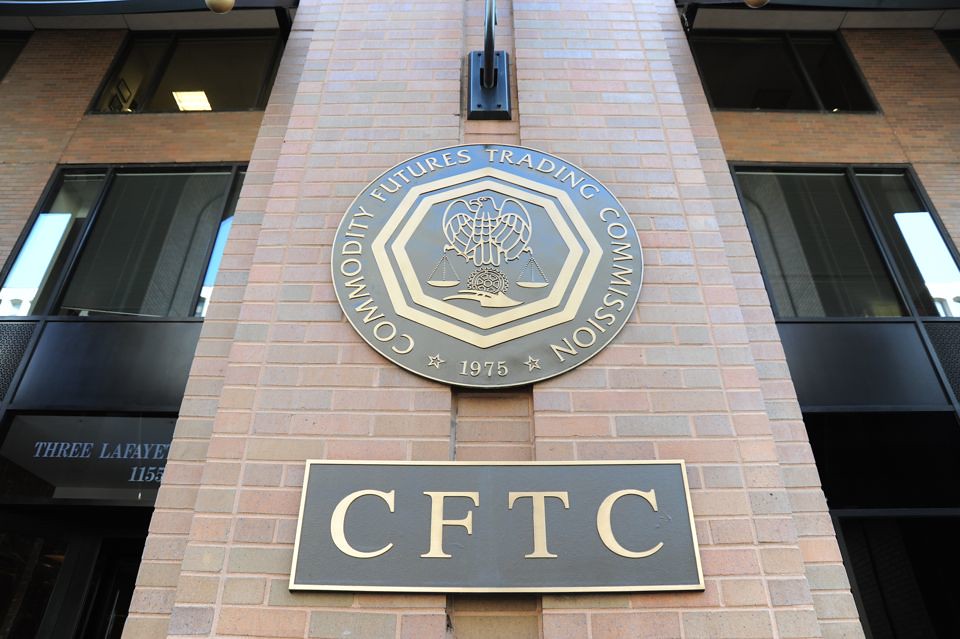
Image context: the cover photo shows CFTC headquarters in Washington. It is the right documentary image because this story turns on federal jurisdiction, rulemaking sequence, and agency posture rather than on a symbolic sportsbook visual.[9]
Facts on the record
- On February 4, 2026, the CFTC withdrew the June 2024 event-contract proposal and withdrew Staff Letter 25-36, the 2025 advisory that had warned certain markets about sports event contracts.[1]
- On March 16, 2026, the Commission's new prediction-markets ANPR entered the Federal Register with comments due April 30, 2026.[2][3]
- The ANPR says the Commission saw roughly 1,600 event contracts certified for listing in 2025, up sharply from prior years, and that staff were reviewing several additional DCM applications from firms focused primarily on prediction markets as of March 2026.[3]
- On March 17, CFTC staff issued a new advisory saying DCMs remain the front-line regulators for these products and flagging sports-related event contracts as an area requiring special care under existing core-principle and product-submission duties.[4]
- On March 19, the CFTC and MLB announced the first memorandum of understanding between the agency and a professional sports league, focused on integrity and information sharing.[5]
- AP reported on March 17 that Arizona filed a 20-count criminal case against Kalshi, accusing it of taking sports and election bets in violation of Arizona law.[7]
- Senators Curtis and Schiff said on March 20 that their bill would prohibit CFTC-registered entities from listing contracts that resemble a sports bet or casino-style game.[8]
What the CFTC reset actually changed
The February withdrawal mattered because it cleared away a pending proposal without locking in a final categorical answer.[1] The March ANPR is broader and more strategic. Instead of finalizing the earlier path, the Commission is now asking for comment on core principles, public-interest limits, insider-information concerns, cost-benefit questions, and how event contracts should be classified under the Commodity Exchange Act.[2][3] That move does two things at once: it buys procedural room, and it reframes the debate as one of market structure rather than headline morality.
The Federal Register text makes clear why the agency believes it can do that. The document leans on the Commodity Exchange Act's existing architecture, including the CFTC's exclusive jurisdiction over swaps and futures listed on designated contract markets, and it stresses that event contracts can function as information-aggregation and risk-management instruments inside that framework.[3] It also underscores how quickly the category has grown. Once the Commission is confronting 1,600 certified event contracts in a year and several new exchange applications, the issue stops looking like an edge case.[3]
The replacement staff advisory points in the same direction. It does not tell exchanges that sports event contracts are automatically acceptable, and it does not excuse them from statutory limits. It tells them that product governance, core-principle compliance, and market-surveillance work still belong first to the exchange and then to the Commission.[4] That is a subtle but important change in emphasis. The agency is trying to supervise a market that exists, not one it can hold in suspension indefinitely.
Why this has become a preemption fight
The pressure against that federal framing is now visible from three directions.
The first is state enforcement. AP's March 17 report on Arizona shows the sharpest version yet: a state attorney general using criminal charges to say prediction-market exchanges are offering wagers that remain illegal under state law even when the platform claims federal status.[7] That turns an abstract jurisdiction argument into a direct operating risk for exchanges and counterparties.
The second is congressional override. Curtis and Schiff are not asking the CFTC to refine the line more carefully. Their bill would draw a new line in statute by prohibiting registered entities from listing contracts that resemble sports bets or casino-style games, explicitly framing the issue as one of state authority and family protection rather than derivatives innovation.[8] If that view gains traction, the CFTC's current rulemaking posture becomes a temporary holding pattern rather than a durable settlement.
The third is the politics of integrity. Chairman Michael Selig has argued that states are encroaching on federally regulated event-contract markets and has cast the Commission's role as defending exclusive federal jurisdiction.[6] Yet the MLB memorandum shows that the CFTC also understands the weakness in its own case: if it wants prediction markets treated as legitimate financial infrastructure, it needs integrity plumbing that looks credible to leagues, lawmakers, and the public.[5] The MOU does not settle the legality debate, but it does show the agency reaching for tools that make these markets look more like supervised exchanges and less like a regulatory loophole.
That combination is why the current phase deserves the label Analysis rather than Report. The immediate facts are clear. The harder question is which legal theory will organize the market next: federally supervised derivatives with narrower product constraints, or a patchwork in which sports and some political contracts are pushed back toward gambling law, criminal enforcement, and explicit legislative carve-outs.[3][5][7][8]
Decision impact by horizon
Next 30 days: the key marker is the April 30 comment deadline in the ANPR.[2][3] Exchanges, leagues, consumer groups, state regulators, tribes, and market-structure advocates all have a chance to define the record the Commission will carry into any later proposal.
Next 90 days: the issue is whether the CFTC can show that exchange-level surveillance and integrity agreements are strong enough to justify federal control of sports contracts.[4][5] If states keep escalating while Congress adds bipartisan pressure, the Commission's procedural reset will look less like leadership and more like delay.
Next 12 months: the larger risk is fragmentation. A market that is federally encouraged in theory but criminally challenged in some states and politically contested on Capitol Hill will trade with a permanent discount on legal durability. That matters for exchange applicants, data partners, institutional users, and any operator treating prediction markets as a scalable business rather than a tactical launch window.[3][7][8]
Scenario map
Base case: the CFTC uses the ANPR to assemble a more defensible product-governance framework, keeps pressing the exclusive-jurisdiction argument, and narrows the live dispute to which contracts clear the public-interest line rather than whether prediction markets exist at all.[2][3][4][6]
Upside case: the agency's integrity push gains enough credibility that leagues, exchanges, and lawmakers accept a federal model with tighter surveillance, conflict-of-interest controls, and clearer carve-outs for the most politically sensitive contracts.[4][5]
Downside case: Arizona's theory spreads, Congress legislates faster than the agency can write rules, and sports-related prediction markets become the wedge that breaks the broader federal framework into state-by-state conflict.[7][8]
Action checklist
- Treat the April 30 ANPR deadline as the current policy gate, because this is where the CFTC is building the next record.[2][3]
- Separate the sports-contract fight from the entire prediction-market category; the political coalition for banning sports-style products is broader than the coalition for banning all event contracts.[3][4][8]
- Watch whether additional leagues adopt integrity-sharing arrangements similar to MLB's, because that would strengthen the CFTC's argument that regulated exchanges can police these products inside a federal framework.[5]
- Invalidate the current base case if Congress advances the Curtis-Schiff bill quickly, if more states move from civil or administrative pressure to criminal enforcement, or if the Commission itself abandons the exclusive-jurisdiction theory it is defending now.[6][7][8]
The short read is that March 2026 changed the question. Prediction markets are no longer being judged only on whether they look strange, popular, or lucrative. They are being judged on whether the federal derivatives regime can absorb them before states and Congress decide that the most visible contracts belong somewhere else.[1][2][3][5][7][8]
Sources
- Commodity Futures Trading Commission, "CFTC Withdraws Event Contracts Proposal and Staff Advisory" (Press Release No. 9179-26, February 4, 2026).
- Commodity Futures Trading Commission, "CFTC Publishes Advance Notice of Proposed Rulemaking Regarding Prediction Markets" (Press Release No. 9194-26, March 12, 2026).
- Commodity Futures Trading Commission, Prediction Markets advance notice of proposed rulemaking, Federal Register Vol. 91, No. 50 (March 16, 2026).
- Commodity Futures Trading Commission, "CFTC Staff Issues Prediction Markets Advisory" (Press Release No. 9193-26, March 17, 2026).
- Commodity Futures Trading Commission, "CFTC and Major League Baseball Enter Memorandum of Understanding to Strengthen Integrity of Prediction Markets in Sports" (Press Release No. 9199-26, March 19, 2026).
- Michael S. Selig, "States Encroach on Prediction Markets" (CFTC statement republishing the Wall Street Journal op-ed, February 17, 2026).
- Hannah Schoenbaum, "Arizona hits Kalshi with criminal charges, escalating fight between states and prediction markets." Associated Press, March 17, 2026.
- Sen. John Curtis, "Curtis, Schiff Introduce Bipartisan Legislation to Ban Sports Prediction Market Contracts" (March 20, 2026).
- Commodity Futures Trading Commission, "CFTC - Washington DC" (Flickr photo source for cover image).