As of 2026-03-08 23:38 UTC, California’s insurance reset is no longer a policy concept. It is an active operational program with three moving parts: FAIR Plan governance reform, model-enabled rate filings tied to write-more obligations, and emergency non-renewal protections. The question for 2026 is no longer whether reform exists on paper; it is whether market capacity can absorb demand fast enough to stop the FAIR Plan from functioning as a permanent channel.[1][2][3][4][5][6][7]
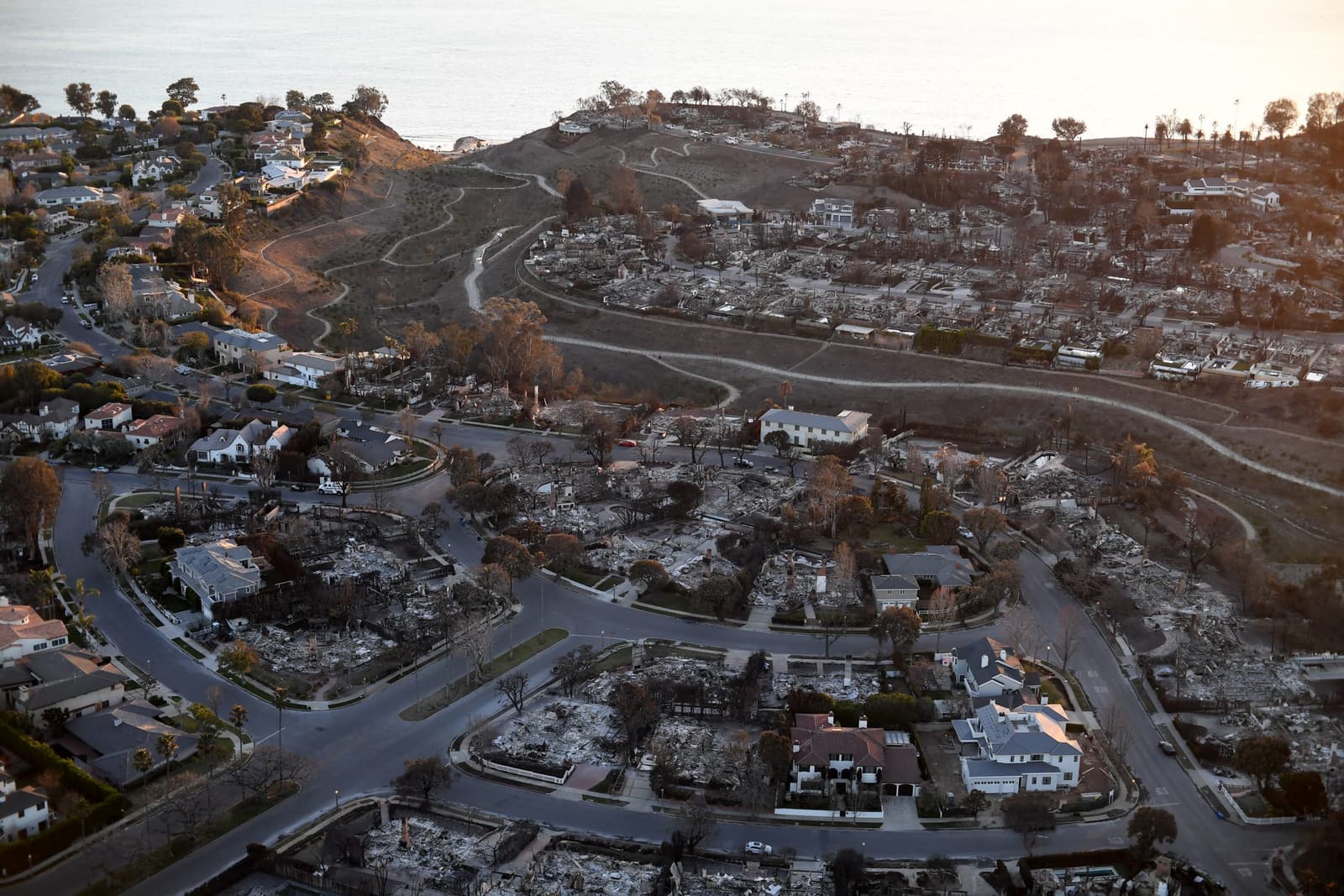
Hero image context: the cover photo reflects wildfire-exposed residential zones where underwriting availability and claims throughput are the practical bottlenecks discussed in this analysis.
What is already real (not hypothetical)
Three facts matter more than commentary:
- The residual pool is still huge and growing. As of December 2025, FAIR Plan exposure was $724 billion, policies in force were 668,609, and written premium reached $1.98 billion.[1]
- Regulatory force has escalated from guidance to enforcement and statute. The Department moved from operational findings and legal directives to an announced 2026 legislative package (AB 1680 / “Make It FAIR Act”) targeting claims handling, governance, transparency, and staffing.[3][4]
- Claims cash-out is large, but service quality remains contested. The state tracker shows 42,121 claims filed, 39,677 partially paid, and $22.4 billion paid to date for the Eaton and Palisades fires (updated Nov 17, 2025), while the Department simultaneously pursued legal action over smoke-claim handling patterns.[5][6]
The core mechanism: policy progress vs operating load
The state’s strategy is coherent: allow forward-looking catastrophe models, require participating insurers to write more in wildfire-distressed areas, and use FAIR Plan reform to improve last-resort service quality.[2][3]
But operating load is still compounding:
- FAIR Plan new business in FY2026 Q1 (Oct–Dec 2025) was 53,115 policies, still far above pre-crisis baselines despite a quarter-over-quarter moderation.[1]
- The 2025 examination update said 32 prior findings/recommendations/best-practice items had been tracked; 15 were satisfactory, while 17 remained not started/partial/new-issue, including governance, capital/liquidity, and claims operations.[4]
- FAIR Plan obtained a $600 million commercial-bank liquidity line effective Sep 4, 2025—an important stabilizer, but also a signal that liquidity planning had to catch up to catastrophe-era volatility.[4]
That combination is why “reform announced” should not be interpreted as “capacity normalized.”
Why this matters for 2026 decisions
If you run risk, treasury, mortgage servicing, or real-estate operations in California, the practical risk is throughput mismatch:
- policy demand and claims complexity can expand faster than adjudication/underwriting capacity,
- legal standards can tighten while file handling remains uneven,
- and voluntary-market re-entry may happen by ZIP and segment, not as a uniform statewide snapback.
This means planning assumptions should be portfolio-segmented (county/ZIP risk mix, replacement-cost profile, lender covenants), not “California average.”[1][2][3][7]
Strongest counterweight
The strongest bullish counterargument is that this cycle is already turning: model review is complete for at least one framework, write-more obligations are now explicit, and some major carriers have publicly signaled continued or expanded participation under the Sustainable Insurance Strategy.[2][7]
That is directionally true, and it reduces tail risk versus 2023-style policy drift. The unresolved point is speed: administrative and claims throughput must improve at the same pace as policy architecture.
Falsifier
This bottleneck thesis is wrong if FAIR Plan policy-in-force growth flattens materially over consecutive quarters while complaint/enforcement intensity drops and voluntary-market take-up increases in the same distressed ZIP clusters.
What to watch next (next 2–3 quarters)
- AB 1680 legislative path and implementation detail: whether staffing, disclosure, and claims-process obligations become enforceable on timeline.[3]
- Quarterly FAIR Plan trendline: PIF, exposure, and new business trajectory versus FY2026 Q1 baseline.[1]
- Claims quality signal: movement in smoke-claim dispute intensity relative to payout progression.[5][6]
- Moratorium and transition stress: whether non-renewal protections and market re-entry are reducing forced migration into the residual pool.[7]
Takeaway
California’s insurance response has moved from broad rhetoric to concrete operating instruments. That is meaningful progress. The remaining high-value question is execution bandwidth: in 2026, outcomes depend less on whether reforms exist and more on whether the system can process underwriting and claims demand quickly enough to convert policy design into durable coverage availability.
Sources
- California FAIR Plan — Key Statistics & Data (updated through Dec 2025)
- California Department of Insurance — Reform made real — final evaluation of wildfire catastrophe model (Jul 24, 2025)
- California Department of Insurance — Commissioner Lara and Assemblymember Calderon announce legislation transforming the California FAIR Plan (Feb 2, 2026)
- California Department of Insurance — Report of Examination of the California FAIR Plan Association (as of Sep 30, 2023; filed Dec 22, 2025)
- California Department of Insurance — LA County Wildfire Claims Tracker (updated Nov 17, 2025)
- California Department of Insurance — Commissioner Lara takes legal action against FAIR Plan for denying smoke damage claims (Jul 31, 2025)
- California Department of Insurance — Commissioner Lara protects nearly 150,000 Californians ... from non-renewals following Gifford Fire (Jan 9, 2026)