Of the $72.14 million the National Park Service estimated a new operator would need to take over a Grand Teton concession, $44.44 million would go to the departing operator for a claim on improvements. The buildings would still belong to the United States. [1][2]
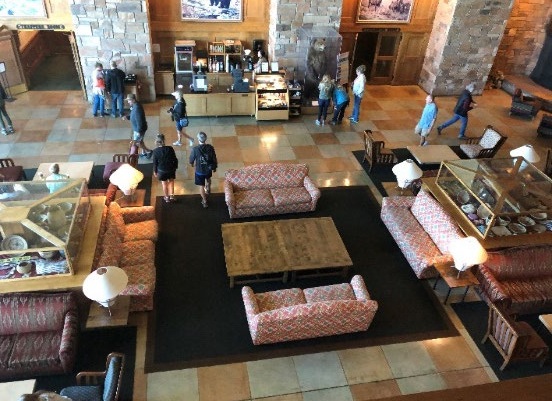
Jackson Lake Lodge is the most conspicuous of those buildings. Guests register in the main lodge, where they can also book a rafting trip or a horseback ride. The concession extends to Jenny Lake Lodge, Colter Bay Village and other facilities. Its largest opening expense makes more sense viewed from the far end of the contract, on the day an operator hands back the keys. [1]
What changes hands
Suppose a concessioner pays for an approved addition to a park building late in its contract. Guests may use the addition for decades, but the company has only a few summers left to earn back the cost. Federal law gives the company a financial interest in qualifying work. That right to compensation, called a leasehold surrender interest, survives the end of the contract. The Park Service can therefore ask an operator to invest even near the end of its tenure. [2][3]
Grand Teton’s amended prospectus shows how that arrangement looks to the next bidder. A successor must buy the outgoing company’s interest. The purchase amount then becomes the successor’s opening interest. In the Park Service estimate, that single transfer accounts for about 62 cents of every dollar needed at the start. Furniture and equipment, supplies and the cash to hire staff before the first guests arrive have to come from the rest. The financing plan also has to cover deferred maintenance and required improvements in the early years. [1]
What comes back
The draft contract pairs a 15-year operating term with a 40-year straight-line reduction in the opening claim. Apply those terms to the prospectus estimate and the original $44.44 million interest would have about $27.78 million left after a full term. That calculation isolates the opening balance. Subsequent qualifying work would have its own value and completion date. The draft also distinguishes a departing operator, which is entitled to payment, from a returning operator, whose remaining interest carries forward. [1][4]
For a bidder, the mistake would be to charge the whole purchase against the summers it expects to operate and give the surviving claim no value. The opposite mistake would be to treat the eventual payment as cash available for this season’s payroll. Even a reliable dollar due at handover is worth less today when financing carries a positive cost. A full lobby helps by generating cash in the meantime. A rise in room rates does nothing by itself to lift the scheduled value of the opening claim. [1][4]
Two pieces of evidence would settle how much that distinction matters in practice. At transfer, compare the executed contract’s opening balance and monthly deduction with the estimates in the bid documents. A government buyout of the existing interest before transfer would overturn the premise that a successor has to finance it. At the close of the first major rehabilitation, compare what the company spent with the amount the Park Service approved for the claim. The difference is money the operator must recover some other way, even as guests enjoy the finished work. [1][4]
Sources
- National Park Service, Grand Teton concession business opportunity, amended prospectus, especially pages 8 and 23–24.
- United States Code, title 54, section 101915, protection of concessioner investment.
- National Park Service, Management Policies, chapter 10, commercial services and investment in park facilities.
- National Park Service, Grand Teton draft concession contract, Exhibit A, leasehold surrender interest and the depreciation schedule.