
The Louisiana Channel clip "Writer Wole Soyinka: Advice to the Young," posted on January 30, 2024, runs only four minutes, but it does not behave like a motivational shortcut.[1] Soyinka opens with the bluntest possible apprenticeship rule: prepare to collect rejection slips, file them away, and keep writing.[1] On the surface, that sounds like durable craft advice of the oldest kind. What makes the clip worth a closer viewing is that Soyinka immediately widens the frame. Rejection is only the entry point. The larger argument is about how a writer avoids becoming narrow, premature, and self-sealed.[1]
That is why the video works best when set beside the longer Nobel interview Soyinka gave in April 2005 and the Nobel lecture that framed his literary and political imagination at greater scale.[2][4] In the interview, he speaks about childhood in Aké, about the untidy violence of decolonization, about theatre as a "tactile process," and about cultures meeting at a "human point" where influence cannot be reduced to one origin.[2] In the lecture, he returns to myth, power, and public violence with a seriousness that makes it impossible to hear his 2024 advice as simple career management.[4] The short Louisiana clip is practical, but the practice it recommends is public, historical, and comparative from the start.
Soyinka's official Nobel biographical page helps explain why this compression carries so much weight. It traces a career moving through poetry, drama, fiction, prison writing, political confrontation, and cultural criticism, while never letting literature detach from civic life.[3] The 2024 clip matters because it reduces that long career to a few portable principles without thinning them into slogans.
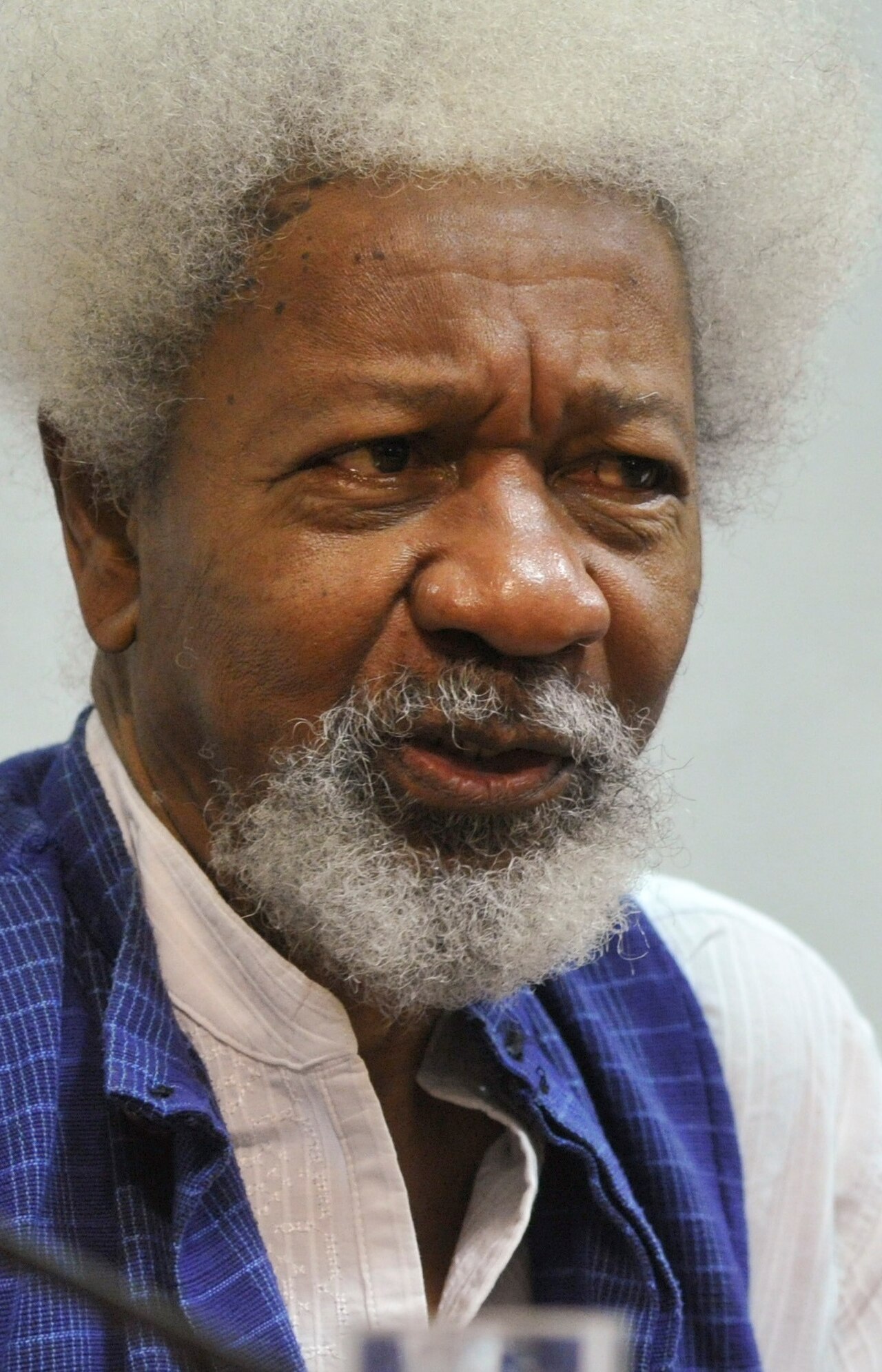
Image context: the cover uses a real 2015 photographic portrait from Wikimedia Commons rather than a symbolic desk or library still life. That choice keeps the article close to what the video itself values. Soyinka's authority in this clip is not decorative wisdom. It arrives through speech, memory, and a face still carrying the strain of public argument.[5]
The embedded video below is the official Louisiana Channel upload.
Around 0:00, rejection becomes a filing system rather than a verdict
Soyinka's first move is important because it changes the emotional meaning of failure.[1] He does not tell young writers to transcend rejection through confidence. He tells them to domesticate it. Put the slips in a drawer. Let them accumulate. Continue working.[1] The gesture is almost comic, but its seriousness lies in the way it strips rejection of metaphysical authority. A refusal letter is not evidence that the vocation was mistaken. It is paperwork generated by the vocation.
That stance belongs with the older Nobel interview more than it first appears to.[2] In the 2005 conversation, Soyinka describes political struggle, theatrical work, and the long mess of postcolonial public life without ever suggesting that literature develops inside protected interiority.[2] The writer is formed inside institutions, conflicts, and misreadings. Seen from that angle, the drawer of rejection slips is not a sentimental badge of resilience. It is training in proportion. The world answers late, badly, or not at all. The work continues anyway.
Around 0:43 and 1:11, publication is a route network and self-publishing is not self-ratification
The second stretch of the clip broadens the advice from endurance to circulation.[1] Soyinka tells young writers to send work not only to publishers but to literary journals, general magazines with literary pages, broadcasting stations, and online venues.[1] This is a small but meaningful correction to a common fantasy about literary arrival. Publication is not one gate with one keeper. It is a route network. A writer learns audience, scale, and form by moving through different kinds of public channels.
This part of the clip becomes sharper when he warns that self-publishing should be a last resort and that other people should assess the work before the writer does.[1] That warning is easy to misread as conservatism or nostalgia for older gatekeepers. It is doing something stricter. Soyinka is insisting on friction. A literary culture without external judgment can become a hall of mirrors in which expression is instantly completed by its own appearance. His advice is not anti-digital; he explicitly acknowledges online publication.[1] What he opposes is premature self-coronation.
That concern has deep roots in his public literary thought. The Nobel interview repeatedly returns to division, conflict, and argument, while the biographical page charts a career that kept meeting criticism in the open rather than seeking insulation from it.[2][3] In Soyinka's terms, writing is public before it is rewarded. That is why assessment matters.
Around 1:31 and 2:06, biography, history, and Shakespeare widen the writer's usable world
The most revealing section of the video may be the reading list that refuses to become a neat list.[1] Soyinka says writers should keep at least one biography in mind because biography reveals how people think, imagine, and talk.[1] Then he adds history, so the young writer can see how events are reported and recollected by others.[1] These are not ornamental recommendations. They are disciplines against provinciality. Biography enlarges the range of human motive. History interrupts the illusion that one's own moment explains itself.
From there he turns to theatre and Shakespeare, and the clip suddenly opens into the whole architecture of his career.[1] He says he has always been a theatre person, that he has gone through the complete works of Shakespeare repeatedly, and that a first encounter with Greek tragedy left him struck by raw passion, language, and the mixture of politics with human emotion.[1] This passage matters because it explains why Soyinka's literary advice never sounds narrowly workshop-bound. He is recommending forms that force the writer to encounter action, conflict, speech, and public consequence all at once.
The Nobel interview supplies the conceptual bridge. There he says theatre has an advantage because it reaches audiences through a tactile process, and later adds that cultures and concerns meet at a "human point" where everything is related.[2] Put beside the Louisiana clip, those older remarks clarify what the younger-writer advice is really trying to protect. Read biography so people stop looking schematic. Read history so events stop looking innocent. Read Shakespeare and tragedy so language reconnects with conflict, action, and stage pressure. The point is not prestige reading. The point is range.
Around 3:48, the moving library makes reading look like a survival habit
The last image in the clip is one of the best. Soyinka describes keeping a moving library in his car so that when Lagos traffic traps him, he can move from one book to another until the road opens again.[1] It is a practical anecdote, but it also works as a compact theory of literary life. Reading is not a preparatory phase that ends once the writer becomes a writer. It is the environment that keeps the mind from hardening.
This is why the clip's title, "Advice to the Young," is slightly misleading in a useful way.[1] The real subject is not youth. It is ongoing literary adulthood. The habits Soyinka describes are not temporary ladders to publication. They are methods for preventing enclosure: rejection filed but not worshipped, routes of publication kept plural, outside judgment accepted, biography and history kept close, theatre retained as a live measure of speech, and books carried even into traffic.[1][2][4]
That combination is what makes the video worth revisiting. Soyinka condenses a long public career into a discipline of movement. Keep writing. Keep sending work outward. Keep reading beyond your own comfort and generation. Keep literature close to history, politics, and human feeling rather than letting it shrink into self-display. The clip is only four minutes long, but it gives young writers something better than confidence. It gives them a working shape for seriousness.
Sources
- Louisiana Channel, "Writer Wole Soyinka: Advice to the Young," YouTube video, published January 30, 2024.
- NobelPrize.org, "Wole Soyinka - Interview" (April 2005 interview transcript and video page).
- NobelPrize.org, "Wole Soyinka - Biographical."
- NobelPrize.org, "Wole Soyinka - Nobel Lecture."
- Wikimedia Commons, "File:WoleSoyinka2015 (cropped).jpg" (source page for the lead photograph).