Most medical tools look obvious only after they have survived decades of ordinary use. The Apgar score is one of those tools. Five observations, each graded 0, 1, or 2, total score 0–10, written down at one and five minutes after birth—simple enough to teach quickly, robust enough to travel across hospitals, and still present in modern neonatal documentation. But the simplicity was not inevitable. It came from a specific person solving a specific workflow failure at a specific historical moment.
Virginia Apgar did not set out to invent a global language. She was an anesthesiologist inside the labor-and-delivery ecosystem, watching newborn status get described with inconsistent words at exactly the point where minutes mattered most. Her contribution was not a miracle metric that predicts every long-term outcome. It was a disciplined act of clinical standardization: convert scattered impressions into a reproducible bedside signal that teams can act on immediately.
That is why her story still matters in 2026. In an era of richer monitors and larger datasets, medicine still fails when teams lack a shared short-form language for first response.
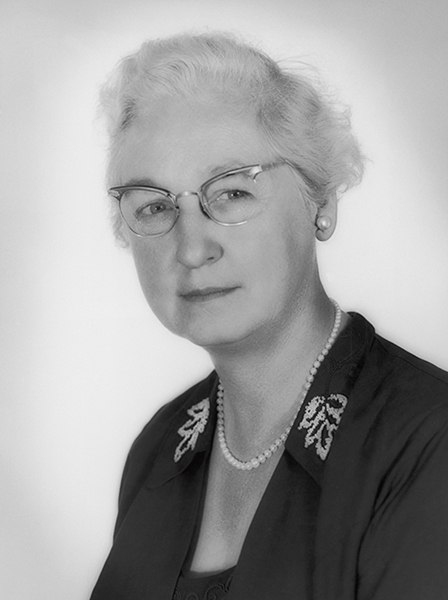
Image context: the cover image is a 1959 portrait of Virginia Apgar, included to anchor the article’s biographical lens on how a bedside scoring workflow emerged from obstetric-anesthesia practice.
1) The local problem Apgar saw before everyone else
Apgar’s career path already placed her at a junction most specialties treated as a boundary: maternal anesthesia, fetal transition, and immediate neonatal condition. The National Library of Medicine’s biography record captures that she built her work from obstetric anesthesia practice at Columbia, then designed the first standardized newborn transition assessment after seeing how variable post-birth handoffs were in real wards.[1]
The core operational problem was not a lack of clinical intelligence. It was a lack of structured comparability. One clinician might describe an infant as “a little blue but responsive,” another as “slow to breathe,” another as “doing better after stimulation,” and each description could be true yet hard to compare across shifts, teams, and records.
Apgar’s 1953 paper solved that with a compact schema: heart rate, respiratory effort, muscle tone, reflex irritability, and color, each scored 0/1/2.[2] The resulting 0–10 total did something crucial for team medicine:
- it converted bedside observation into a common syntax,
- it reduced handoff ambiguity during resuscitation windows,
- and it made trend tracking possible when a newborn changed between minute 1 and minute 5.
The point was never mathematical elegance. The point was interoperability under time pressure.
2) Why the five-part structure scaled
Many scoring systems die because they are either too vague or too burdensome. Apgar’s design sat in the narrow zone that clinical workflows can sustain:
- Low cognitive overhead: five checks performed in routine sequence.
- Uniform granularity: each domain uses the same 0/1/2 frame.
- Immediate repeatability: same schema at one minute, five minutes, and beyond when needed.
Modern professional guidance still reflects that architecture. ACOG and AAP guidance keeps universal one- and five-minute scoring, and recommends additional 5-minute interval documentation up to 20 minutes for infants with a score below 7 at five minutes.[3] That extension rule is not administrative decoration; it encodes a temporal idea: neonatal status is a trajectory, not a snapshot.
This “trajectory logic” is one of Apgar’s least appreciated design wins. A single number at a single time is clinically thin. A small sequence of numbers in the first 20 minutes can signal whether interventions are working, whether deterioration is continuing, and whether escalation is necessary.
3) The most important boundary: what the score is, and what it is not
Apgar scoring endures partly because later guideline authors kept its boundaries explicit. The score is for reporting current newborn status and response to resuscitation; it is not a standalone diagnosis of asphyxia, and not a deterministic forecast for an individual child’s long-term neurologic future.[3][4]
That distinction matters because the medical culture around a successful scorecard tends to overextend it. Once something is ubiquitous, people want it to answer every question. ACOG’s current framing pushes back against that drift:
- 5-minute score 7–10: reassuring range.
- 5-minute score 4–6: moderately abnormal.
- 5-minute score 0–3: low and concerning, but still nonspecific in isolation.[3]
The discipline is to treat Apgar as an early communication instrument nested inside broader clinical assessment, not as a complete causal explanation.
4) What population data added after Apgar’s lifetime
Apgar built a clinical language first; later cohorts tested how score gradients map to risk distributions. Two large Swedish population studies are especially useful because they include term, non-malformed singleton births at national scale.
In a cohort of 1,551,436 term infants (1999–2016), Apgar values within the “normal” 7–10 band still showed graded risk. Compared with score 10, infants with score 9 had materially higher adjusted odds for respiratory distress, with effect size increasing by timepoint: adjusted OR 2.0 at one minute, 5.2 at five minutes, and 12.4 at ten minutes.[5] In absolute terms, the adjusted rate difference for respiratory distress versus score 10 at ten minutes was 9.5% for score 9, and 41.9% for score 7.[5]
A second cohort (n=1,213,470, 1999–2012) tracked longer-horizon neurologic outcomes. It reported 1,221 cerebral palsy diagnoses (0.1%) and 3,975 epilepsy diagnoses (0.3%), with risk increasing across lower 5- and 10-minute Apgar values. Even a 5-minute score of 9 versus 10 was associated with higher hazard for cerebral palsy (adjusted HR 1.9), while very low scores carried much larger relative risk.[6]
These findings do not overturn the boundary rule; they refine it. Apgar remains a short-interval status tool, yet its gradients are epidemiologically meaningful at population level. Clinicians therefore need two simultaneous ideas in mind:
- do not over-interpret one infant’s score as destiny;
- do not ignore score gradients as “clinically trivial” when planning surveillance and quality improvement.
5) Microhistory lesson: she solved a system interface, not a single disease
Biography narratives often frame Apgar as a heroic inventor, but the more useful reading is infrastructural. She did not discover one pathogen or invent one curative drug. She repaired an interface problem between disciplines—obstetrics, anesthesia, and newborn care—where handoff quality could alter outcomes in minutes.
That makes her work resemble other durable healthcare innovations: triage tags, early-warning charts, standardized anticoagulation protocols, sepsis bundles. Their power comes less from theoretical novelty than from turning tacit judgment into shared operational signals.
This frame also explains why the score survived technological change. Pulse oximetry, blood gases, and advanced neonatal monitoring add depth, but they do not replace the need for immediate, structured team communication. In resource-limited settings, that communication function may be even more important.
6) The 2026 relevance: persistent neonatal risk and the need for fast shared language
Neonatal risk remains a live public-health challenge. CDC’s latest U.S. infant health fast stats report 20,145 infant deaths and 560.2 deaths per 100,000 live births in 2023.[7] Those deaths arise from multiple mechanisms, and Apgar alone cannot explain them. But Apgar’s design logic—rapid, standardized first-window status reporting—still anchors how teams coordinate the immediate transition period after birth.
The practical 2026 implication is not “trust the score more” or “trust it less.” It is “use it correctly in sequence.”
- Score at one and five minutes for all newborns.
- Continue five-minute interval scoring to 20 minutes when indicated (<7 at five minutes, or ongoing resuscitation context).[3][4]
- Interpret scores together with gestational age, maternal medication context, congenital conditions, and objective physiologic data.
- Treat declining trajectories (for example, 10 at five minutes to 9 at ten minutes) as meaningful operational signals rather than paperwork noise.[5]
This is exactly the kind of disciplined use Apgar’s original design invites.
7) What her biography adds to health-policy thinking
Apgar’s career also illustrates how structural constraints shape innovation. She moved from surgery toward anesthesiology in an era when specialty hierarchies and gender barriers sharply constrained professional pathways, then built authority by solving a clinical coordination problem that others had normalized as “messy but unavoidable.”[1]
Policy discussions often search for breakthrough technologies while underinvesting in standardization work. Apgar’s microhistory argues for the opposite balance: before adding complexity, first make baseline communication reproducible. In maternity and newborn care, where deterioration can unfold over minutes, reproducibility is itself a safety technology.
Bottom line
Virginia Apgar’s enduring contribution was not to produce a perfect predictor of neonatal futures. It was to create a compact bedside language that let teams see and communicate newborn condition under time pressure. Later evidence shows that score gradients carry population-level signal, including within the 7–10 range, but guidelines remain clear that Apgar cannot stand alone as causal diagnosis or individual prognosis.
That combination—useful, bounded, repeatable—is precisely why the score remains one of medicine’s most durable first-minute tools.
Sources
- U.S. National Library of Medicine, Biography - Dr. Virginia Apgar
- Apgar V. A proposal for a new method of evaluation of the newborn infant (1953), PubMed record
- ACOG Committee Opinion No. 644, The Apgar Score (2015, reaffirmed)
- NCBI Bookshelf (StatPearls), APGAR Score (updated 2024)
- Razaz N, et al. Association between Apgar scores of 7 to 9 and neonatal mortality and morbidity (BMJ 2019), PubMed record
- Persson M, et al. Five and 10 minute Apgar scores and risks of cerebral palsy and epilepsy (BMJ 2018), PubMed record
- CDC NCHS FastStats, Infant Health (U.S. 2023 indicators)
- Wikimedia Commons image source, Virginia-Apgar-July-6-1959.jpg