The crucial word in the title of the 2013 Targeted Temperature Management (TTM) trial is targeted. Niklas Nielsen and colleagues compared 33°C with 36°C in adults who remained unconscious after cardiac arrest outside hospital, of presumed cardiac cause. Both temperatures were deliberately managed. Reading the warmer arm as ordinary care with the cooling equipment switched off changes the experiment.[1]
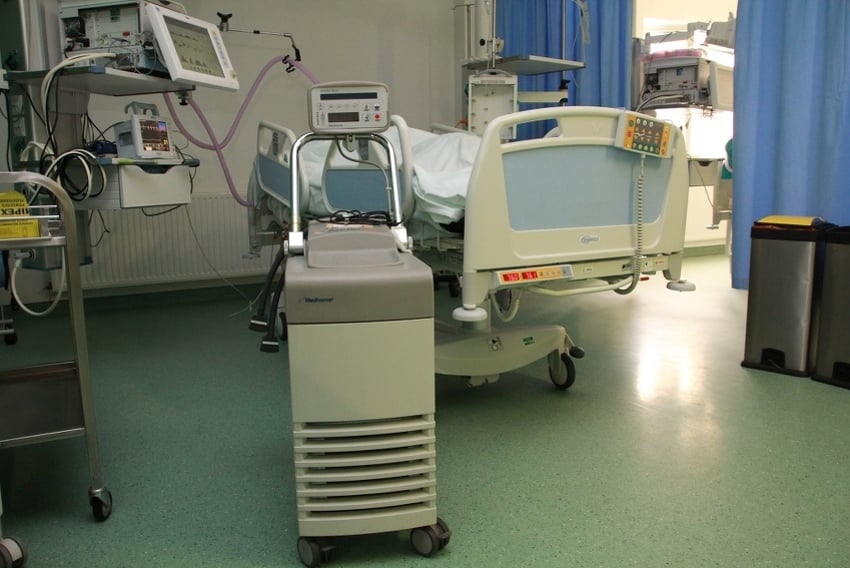
The distinction matters because cooling already had a persuasive history. Two small trials published in 2002 had suggested that lowering temperature after resuscitation could improve outcomes. As the Medical Research Institute of New Zealand later recalled, cooling became an established part of intensive care, supported by an industry supplying devices to deliver it.[3] A temperature target could therefore feel like a treatment whose essential value was settled, leaving only its implementation to refine.
Yet cooling and preventing fever happen together in a cooling protocol. The contribution of the lower temperature remained uncertain. The TTM investigators therefore kept temperature under deliberate control in both groups.[4]
What the warmer group received
The statistical analysis plan describes a 36-hour intervention: time to reach the assigned temperature, a maintenance period, and rewarming. Its stated purpose was to compare two strict regimens. The target of 36°C was an instruction to the clinical team, with its own demands on observation and treatment.[4]
The control group contained much of the treatment's surrounding work. The question was what the lower target added when temperature was already being managed.
The steering group approved the statistical plan in December 2012, before inspecting the results. Mortality was the primary outcome, with neurological outcomes and adverse events specified separately.[4] The thermometer could confirm delivery of a protocol; survival and function would determine what it accomplished.
The decision after the thermometer
Temperature was only one way the trial could influence survival. In a companion paper published in June 2013, Tobias Cronberg and colleagues examined neurological prognostication: how clinicians judged the prospects of patients who remained unconscious. Such judgments could lead to withdrawal of life-sustaining treatment. A mistaken prediction could therefore help produce the outcome it predicted.[5]
Cooling complicated that judgment. It could affect the reliability of examinations, partly through the use and slower clearance of sedating drugs. The TTM protocol generally delayed prognostication until at least 72 hours after the intervention ended, with specified exceptions. The assessor was unaware of the assigned temperature, and assessment drew on several kinds of evidence.[5]
This is an easily overlooked part of the experiment. If one group's treatment altered the time at which recovery became visible, an earlier decision to withdraw support could distort the comparison. Recording findings, recommendations and decisions made that pathway open to scrutiny. The protocol addressed an interpretive problem at the bedside as well as a biological question about cooling.[5]
What the result could support
The main report, released on 17 November 2013, included 939 patients in its primary analysis. By the end of follow-up, 235 of 473 patients assigned to 33°C had died, compared with 225 of 466 assigned to 36°C: approximately 50% and 48%. The hazard ratio was 1.06, with a 95% confidence interval of 0.89–1.28.[1]
Those figures did not establish a survival advantage for the lower target. They also did not prove exact equality: the interval remained compatible with benefit or harm. The conclusion applied to the enrolled population and the two treatment regimens. There was no unmanaged-temperature arm from which to infer that temperature care itself could be abandoned.[1][4]
A later trial changed the comparison
In 2021, TTM2 asked a related but different question. It compared 33°C with normothermia and early treatment of fever, using a fever threshold of 37.8°C. Among the 1,850 patients assessed for the primary outcome, six-month mortality was 50% with hypothermia and 48% with normothermia. The relative risk was 1.04, with a 95% confidence interval of 0.94–1.14.[6]
The later trial also counted the costs of treatment. Arrhythmias causing circulatory compromise occurred in 24% of the hypothermia group and 17% of the normothermia group. Disability outcomes did not show an advantage for hypothermia.[6] A lower number on the temperature display was therefore not sufficient evidence of a better result for patients.
TTM2 extended the question beyond a rigid 36°C target while retaining an active response to fever. Neither comparison directly measured fever treatment against leaving fever untreated.[6] That boundary is part of the finding, rather than a reason to disregard it.
The research institute's 2021 account emphasized the opportunity to redirect clinical attention toward other aspects of supportive care.[3] Read alongside the original papers, that is the durable lesson of TTM: a trial can question one demanding component of treatment while leaving the surrounding responsibilities intact. The warmer arm still required someone to watch the temperature, respond to it, and give recovery time to become visible.
Sources
- Niklas Nielsen and colleagues, “Targeted Temperature Management at 33°C versus 36°C after Cardiac Arrest,” New England Journal of Medicine (17 November 2013 online) — original trial report; full-text PDF hosted by MEDEST.
- Klix.ba, “Klinički centar u Sarajevu nabavio aparat za terapijsku hipotermiju” (19 July 2018) — clinical equipment photograph credited to KCUS; image provenance only.
- Medical Research Institute of New Zealand, “Cooling survivors of cardiac arrest below normal body temperature does not improve patient survival or recovery” (17 June 2021) — participating institution's account of the earlier cooling trials, clinical adoption and TTM2's implications.
- Niklas Nielsen and colleagues, “Detailed statistical analysis plan for the target temperature management after out-of-hospital cardiac arrest trial,” Trials 14:300 (17 September 2013) — rationale, intervention schedule, prespecified outcomes and analysis timeline.
- Tobias Cronberg and colleagues, “A structured approach to neurologic prognostication in clinical cardiac arrest trials,” Scandinavian Journal of Trauma, Resuscitation and Emergency Medicine 21:45 (10 June 2013) — the TTM investigators' explanation of delayed assessment and treatment-withdrawal safeguards.
- Josef Dankiewicz and colleagues, “Hypothermia versus Normothermia after Out-of-Hospital Cardiac Arrest,” New England Journal of Medicine 384:2283–2294 (17 June 2021) — original TTM2 report; full-text PDF hosted by Internet Book of Emergency Medicine.