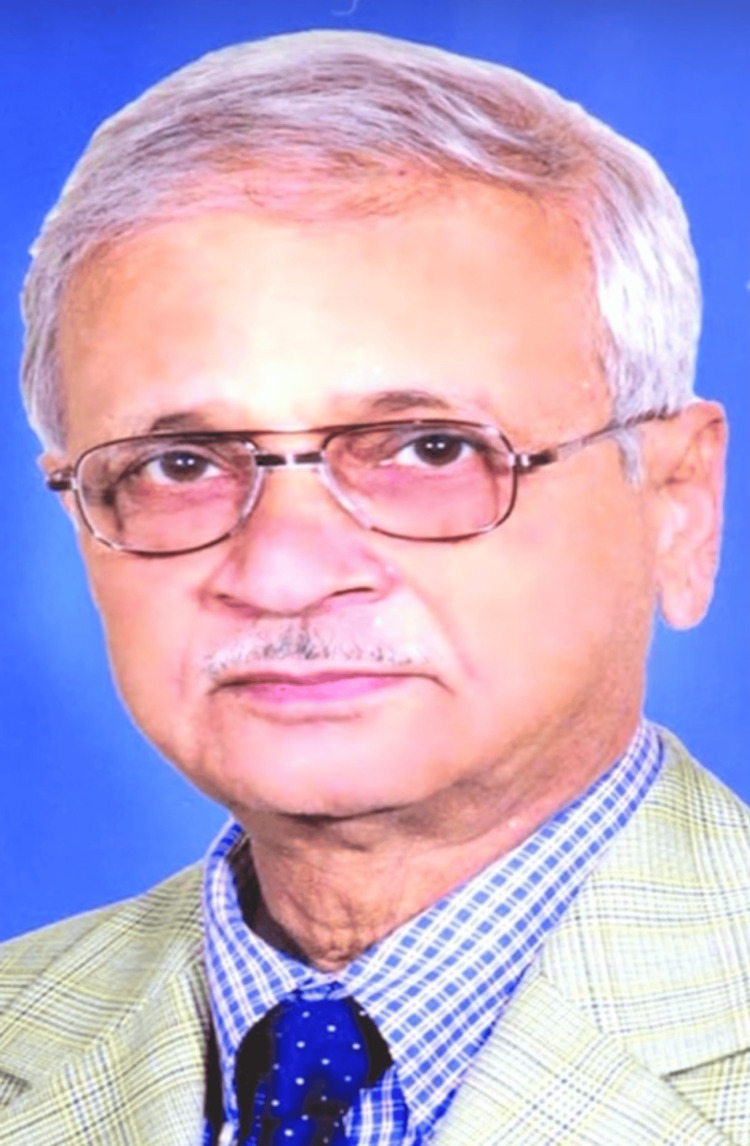
In the history of medicine, some advances win quickly because they look like medicine. They arrive in bottles, on stainless-steel trolleys, under the control of doctors and nurses. Oral rehydration did not look like that. It looked embarrassingly plain: water, glucose, salts, careful mixing, repeated small doses, and the willingness to let relatives do part of the life-saving work. The reason it became believable at global scale runs through one person and one place: pediatrician Dilip Mahalanabis in the 1971 refugee camps near Bangaon, on India's border with what was then East Pakistan.[1][2][6]
This is why the episode matters. By the late 1960s, the physiology behind glucose-facilitated sodium and water absorption was already being tested in controlled cholera settings. What had not yet been settled was whether the method could survive a crowded emergency where intravenous fluids were scarce, staffing was thin, and thousands of patients were arriving in waves. Mahalanabis did not merely help prove that oral rehydration solution worked. He helped prove that it could be organized under disaster conditions.[1][3][5]
Timeline anchors before the camp crisis
- 1968-1970: cholera studies in Dhaka and Calcutta showed that glucose-electrolyte solutions could correct dehydration in controlled clinical settings.[3][5]
- March 1971 onward: the Bangladesh war crisis pushed large refugee populations into India, with cholera and acute watery diarrhea spreading through overcrowded camps.[2][6]
- 1971, Bangaon camp period: Mahalanabis and colleagues used oral fluid therapy at scale when intravenous saline supply could not cover the case load.[1][2]
- April 1973: the Johns Hopkins Medical Journal published the field report that fixed the episode in the medical record.[1]
- 1975: WHO and UNICEF agreed on a standard packet formula for oral rehydration salts, turning an emergency improvisation into a programmatic tool.[3]
- 1979: BRAC began taking oral rehydration therapy and home-mixing instruction house to house across Bangladesh, shifting the therapy from clinic logic to household logic.[3]
The timeline shows the real arc. Oral rehydration was not born in one heroic instant. Its turning point came when a field emergency forced clinicians to decide whether the idea could leave the trial ward.
Before Bangaon: an elegant idea with a credibility problem
The scientific insight behind oral rehydration was already strong before Mahalanabis became its central field figure. Cholera dehydrates by stripping water and electrolytes from the body at terrifying speed, yet intestinal glucose-sodium cotransport remains intact. That meant a properly balanced oral solution could pull water back across the gut even during severe diarrheal illness.[5]
In a research setting, this was impressive. In a mass emergency, it still sounded fragile. The prestige hierarchy of medicine in the early 1970s leaned toward intravenous rescue. A hanging bottle of saline signaled seriousness and control. A packet mixed in bulk and given by mouth looked like compromise. Mahalanabis's later importance came from understanding that the practical question was not whether oral therapy was biochemically sound. It was whether it could be trusted when systems were failing.[2][5][6]
The 1971 camp: shortage turned method into system
Mahalanabis was working with the Johns Hopkins Center in Calcutta when cholera hit refugee camps near Bangaon. The camps were flooded with patients, but the crucial resource was not knowledge. It was intravenous fluid, sterile equipment, and the trained labor required to deliver them at scale. The original field report describes the stark asymmetry: one unit relying mainly on oral fluid therapy handled 3,703 admissions with 135 deaths; the better-supplied intravenous unit handled 1,190 admissions with 12 deaths. The oral-therapy unit's mortality was higher, but the key operational fact was that it absorbed a far larger case load under scarcity rather than collapsing for lack of bottles, needles, and staff.[1][2]
That point is easy to miss if the episode is reduced to a miracle narrative. Mahalanabis was not demonstrating that oral therapy made formal care unnecessary. He was designing a triage architecture. The sickest patients still needed intravenous saline. But once that scarce resource was reserved for those who truly could not drink, the rest of the camp no longer had to wait for a bottle that might never come.[1][2]
The delivery model mattered as much as the formula. The 1973 report records that family members administered much of the solution under supervision.[2] In other words, the treatment's scale advantage did not come from pharmaceutical sophistication. It came from reorganizing who was allowed to participate in care. A method that could be taught, repeated, and observed at the bedside by non-specialists had a different ceiling from a method trapped inside narrow professional bottlenecks.
That is the central inference of the episode, and it is an inference grounded in the sources: Bangaon did not only validate a solution; it validated a staffing model. Once the therapy became legible to families and auxiliary workers, cholera treatment could move from a scarce clinical procedure toward a public-health system.[1][2][5]
Why the episode changed minds
Mahalanabis's achievement was not that he worked alone or invented oral therapy from nothing. The sources do not support that mythology. They support a narrower and more interesting claim: he recognized the decisive test earlier than many of his peers. A method that succeeds only inside well-supplied research wards is medically useful. A method that survives refugee-camp chaos can reorganize global mortality.[1][3][6]
That distinction explains why the Bangaon experience kept being cited decades later. The 1994 history of ICDDR,B describes how work in Dhaka and Calcutta during 1968-1970 established the clinical foundation, but the later institutional story moves quickly to standard packets, broad program rollouts, and household teaching campaigns.[3] The 2021 review of oral rehydration therapy's evolution makes the same pattern visible from another angle: once oral therapy entered real-world programs, debates shifted from "does this principle work?" to questions of formulation, sodium balance, cholera versus non-cholera use, and how one packet could or could not fit every scenario.[5]
That is what mature infrastructure looks like. The argument is no longer about whether the treatment belongs in medicine at all. The argument is about how to standardize it, where to adapt it, and how to prevent program simplification from introducing new risks.
After the camp: from emergency improvisation to household routine
The afterlife of the 1971 camp episode is one of the most consequential translation chains in twentieth-century health policy. By 1975, WHO and UNICEF had agreed on a single oral rehydration salts formula and standard packet distribution. By 1978, diarrheal-disease control was being assembled as an international program domain. By 1979, BRAC was taking oral rehydration teaching into Bangladeshi households at national scale.[3]
Those dates matter because they show what institutions learned from Mahalanabis's field logic. The breakthrough was not to place a more advanced therapy into elite hospitals. It was to compress lifesaving care into a form that could travel across clinics, camps, village programs, and homes. WHO's current diarrhoeal-disease guidance still reflects that architecture: oral rehydration salts remain the first-line treatment for dehydration from diarrhea because they replace water and electrolytes cheaply, quickly, and at scales intravenous medicine cannot match on its own.[4]
The result was not total victory. ORT never eliminated the need for IV fluids, antibiotics in selected cases, clean water systems, or later zinc supplementation. Diarrhoeal disease still kills hundreds of thousands of children globally each year, and WHO continues to describe it as both preventable and treatable.[4] But the historical boundary is clear. After oral rehydration became standard practice, dehydration deaths were no longer limited by the number of glass bottles a health system could hang in a room.
Why Mahalanabis still matters
Biography can flatten public-health figures into medal lists. Mahalanabis did receive major recognition later in life, and later reviews present him as one of the central figures in diarrheal-disease management.[6] But his enduring importance sits in a colder, more useful place. He understood that credibility in medicine is often logistical before it is rhetorical. The camp near Bangaon forced a brutal question: when demand outruns professional capacity, what therapy can still be delivered safely enough, widely enough, and early enough to change the outcome curve?
Mahalanabis answered that question with a treatment simple enough to be mistrusted and robust enough to survive mistrust. That combination is why oral rehydration escaped the research ward and entered ordinary life. In the history of health systems, that is the real threshold. A discovery becomes infrastructure when it can be delegated without being degraded.
Sources
- Mahalanabis D, Choudhuri AB, Bagchi NG, Bhattacharya AK, Simpson TW, "Oral fluid therapy of cholera among Bangladesh refugees." The Johns Hopkins Medical Journal 132(4), 1973.
- Mahalanabis D, Choudhuri AB, Bagchi NG, Bhattacharya AK, Simpson TW, "Oral fluid therapy of cholera among Bangladesh refugees. 1973." Bulletin of the World Health Organization historical reprint, 2001.
- Rohde JE, "ICDDR,B and ORS: the history of a miracle discovery." Glimpse 16(2-3), 1994 abstract via PubMed.
- World Health Organization, "Diarrhoeal disease" fact sheet.
- Nalin D, "Issues and Controversies in the Evolution of Oral Rehydration Therapy (ORT)." Tropical Medicine and Infectious Disease 6(1), 2021.
- Kawalkar U, Mankar A, Kogade P, Naitam D, "Dr. Dilip Mahalanabis (1934-2022): Trailblazer in Diarrheal Disease Management." Cureus 16(6), 2024.