The easiest way to misunderstand fine dining in 2026 is to treat a reservation as a soft social plan. In many top tasting rooms, it now behaves more like an operating contract: fixed inventory, fixed staffing, and a high penalty when diners disappear late.
That shift is not only cultural. It is arithmetic.
Why no-shows hit tasting rooms harder than casual restaurants
OpenTable reports that 28% of Americans say they have no-showed at least one reservation in the past year.[1] For ordinary restaurants, that is painful. For tasting-menu rooms, where service is choreographed and prep is menu-specific, it can erase the night’s margin.
Eater’s no-show economics report gives a clean benchmark: if a restaurant expects 100 diners at a $100 average check, six missed covers means a 6% revenue drop for the day. Against typical full-service margins in the 3–5% range (Toast benchmark cited by Eater), that one miss pattern can consume most or all operating profit.[2]
The key point is operational, not moral: a tasting room cannot fully “swap in” replacement demand once mise en place, staffing, and sequencing are already locked.
The new contract terms are visible in public policy pages
Two Michelin-level U.S. rooms expose this operating logic unusually clearly.
Eleven Madison Park: fixed inventory with final-sale discipline
EMP’s current FAQ lays out a highly explicit transaction model:[3]
- full tasting menu at $385;
- bar tasting menu at $225;
- reservations released on the first day of each month for the following month;
- all sales final and non-refundable;
- wine pairing starts at $125;
- corkage at $75 per 750ml bottle.
This is not merely pricing. It is demand-shaping: if demand is uncertain but labor and prep are committed, refund flexibility moves from “guest convenience” into “business-risk transfer.”
Ever: lead-time gating plus all-in fee transparency
Ever’s FAQ shows the same architecture with different controls:[4]
- booking windows generally 2–3 months ahead;
- regular release cadence at 9:00 a.m. Central, first Tuesday monthly;
- tasting experience around 2.5 hours;
- 20% service charge added to each check;
- corkage at $125 per bottle;
- all sales final and non-refundable;
- arriving more than 10 minutes late may cause guests to miss part of the experience.
Operationally, this is a throughput model. The restaurant is selling a synchronized production block, not a free-form table occupancy slot.
Platform economics explain why policies tightened
Reservation policy cannot be separated from platform costs. Eater’s reporting includes one operator disclosure of $499 monthly platform base fee plus $1 per seated diner, with cover fees reaching roughly $3,000 per month in that case.[2]
That means the restaurant is balancing three risk layers at once:
- no-show and late-cancel revenue loss,
- prepaid labor and perishables,
- recurring distribution/platform spend.
In that environment, stricter cancellation and deposit language is less “luxury theater” and more margin defense.
What this changes for diners
For guests, the practical mistake is to budget only menu headline price. In this contract-heavy model, the real commitment is:
- menu price,
- service charge or discretionary gratuity policy,
- beverage/corkage decision,
- schedule certainty (release windows + arrival discipline),
- and cancellation irreversibility.
If you want one useful behavior upgrade: treat premium reservations like flights, not like loose dinner plans. Book only when your party and timeline are already stable.
Counterweight and uncertainty boundary
Not every fine-dining room runs final-sale policy, and platform fee structures vary by contract and geography. OpenTable’s no-show figures are platform-reported, and operator examples in media reporting are snapshots rather than universal averages.[1][2]
Still, the directional signal is strong across high-control tasting formats: as labor and ingredient risk stay elevated, policy strictness is becoming an operating default, not an exception.
Bottom line
Fine dining in 2026 is increasingly sold as a controlled service system. The guest buys cuisine, but also buys into a production schedule. Once you read reservation terms as an operations document instead of hospitality fine print, pricing and cancellation rules stop looking arbitrary and start looking coherent.
Sources
- OpenTable for Restaurants — “No-show diners by the numbers” (28% no-show self-report; relative no-show differences by booking channel)
- Eater Atlanta — “The Most Expensive Restaurant Table Is an Empty One” (no-show economics examples; margin benchmark attribution; platform fee operator disclosure)
- Eleven Madison Park FAQ (menu prices, release cadence, cancellation policy, wine pairing and corkage)
- Ever FAQ (release cadence, duration, cancellation policy, service charge, corkage, lateness policy)
- MICHELIN Guide — Eleven Madison Park listing (current positioning and operating hours context)
- MICHELIN Guide — Ever listing (current positioning and operating hours context)
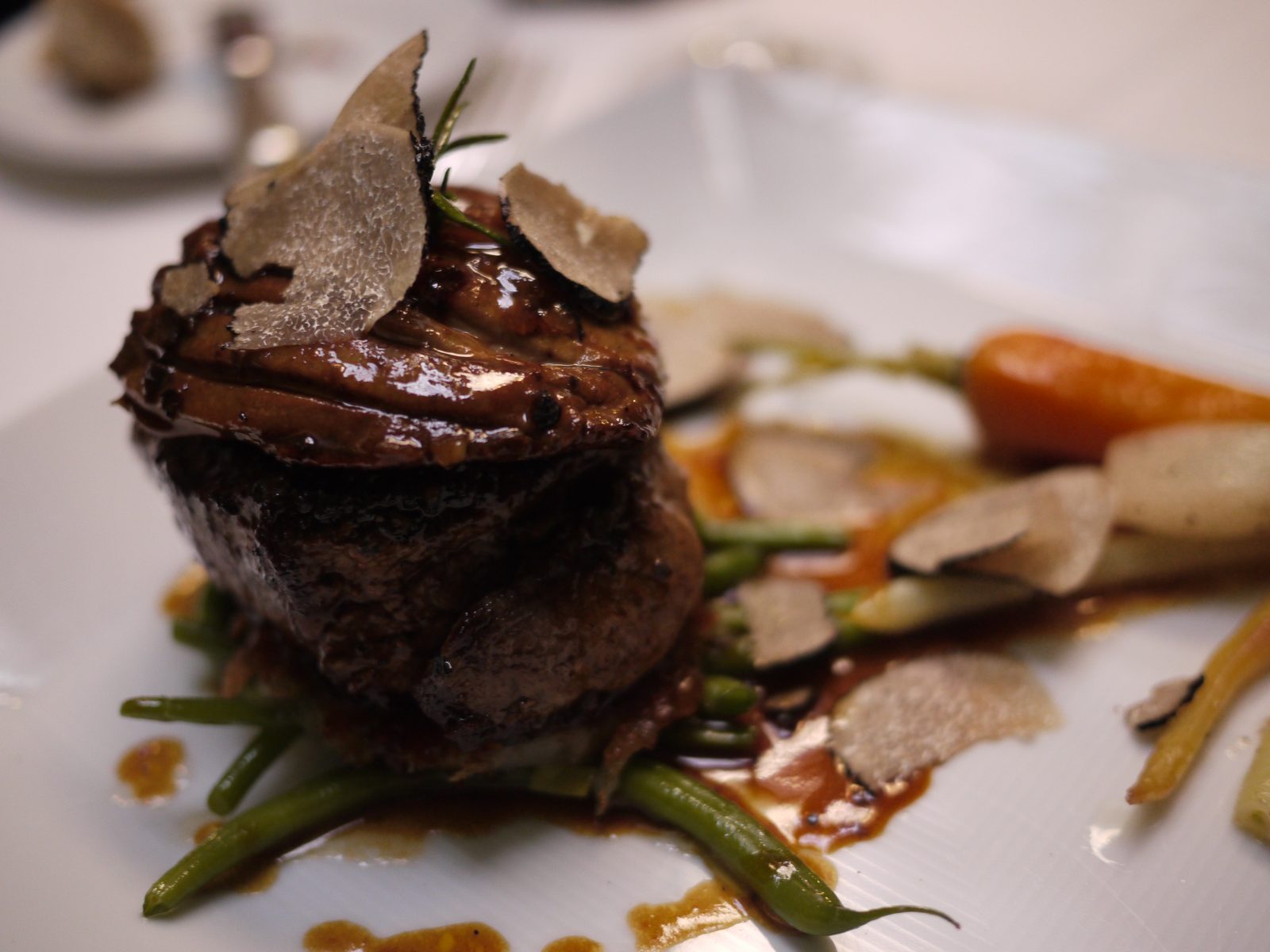
- Wikimedia Commons — “Tournedos Rossini with Truffle Madeira Sauce” (article image source)