The easy silver thesis is that deficits lift prices. The harder 2026 thesis is that prices have become high enough to change behavior: the metal is scarce, but one of its most important industrial buyers is learning how to use less of it.
That makes silver a cleaner scenario trade than a simple shortage story. The market is already being asked to pay for a fifth consecutive annual deficit, a 2025 price shock, and a sixth deficit forecast for 2026.[1][2] What is less settled is whether the new substitution loop in photovoltaic manufacturing turns scarcity into durable pricing power or into self-inflicted demand destruction.
What Is Priced
The starting point is tight. The Silver Institute's 2026 survey says total silver demand fell to 1.13 billion ounces in 2025, while industrial demand slipped to 657.4 million ounces after four years of strong growth.[1][2] That decline did not make the market loose. Global mine production rose to 846.6 million ounces in 2025, recycling reached a 12-year high, and the market still posted a deficit.[1][2]
The reason investors have stayed interested is that the deficit is not a one-off inventory accounting oddity. The Silver Institute expects another shortfall in 2026, widening to 46.3 million ounces, even with total demand forecast to fall modestly and mine output essentially flat.[1][2] USGS tells the same broad supply story from the official minerals side: U.S. mine output was only about 1,100 metric tons in 2025, and most domestic silver still came from a mix of primary silver mines plus byproduct and coproduct operations.[3] Silver supply cannot respond like a factory line when price rises; much of it arrives as a byproduct of lead, zinc, copper, and gold economics.
That is the bull case in one chain: inventories have been drawn down, primary supply is not highly elastic, and investment demand can make a small physical imbalance feel large. The Silver Institute also notes that silver's average price rose sharply in 2025, then moved above $121 per ounce in January 2026 before falling back into the mid-$70s in early April.[1] In other words, the market has already discovered that silver can gap when physical liquidity gets thin.
What Is New
The new variable is PV behavior. Photovoltaics had become the cleanest industrial demand story for silver because solar cells need conductive metalization, and deployment growth had turned that use case into a large slice of the market. But the 2026 survey shows the pressure point clearly: PV silver demand fell to 186.6 million ounces in 2025 and is forecast at 151.0 million ounces in 2026, a further 19% decline.[2]
This does not mean solar is collapsing. It means silver intensity is falling faster than installed solar capacity can rescue demand. The survey describes manufacturers adopting lower-silver pastes, narrower finger widths, zero-busbar designs, silver-coated copper, and early copper-electroplating pathways.[2] It also says average silver loadings per unit fell by more than 15% in 2025, with another 15-20% reduction expected this year.[2]
That is a different problem from ordinary cyclical weakness. If jewelry buyers retreat because the price is high, demand can return when affordability improves. If PV producers redesign the cell stack to permanently use less silver per watt, a portion of demand is not deferred; it is engineered away.
USGS adds why that matters beyond a commodity chart. Silver was added to the final 2025 U.S. Critical Minerals List, and USGS lists solar cells, batteries, electrical circuits, and anti-bacterial medical instruments among the uses behind its strategic relevance.[3][4] The status upgrade supports attention from policymakers and investors, but it does not repeal the cost discipline of module manufacturers competing in a low-margin industry.
Scenario One: The Deficit Keeps Control
In the bullish path, PV thrifting is real but not enough. Industrial demand outside solar stabilizes, coin and bar demand rises as forecast, and ETP holdings remain sticky rather than becoming supply. In that scenario, the 46.3 million ounce forecast deficit matters more than the PV decline because the market remains short after demand destruction has already been counted.[1][2]
The investable implication is that silver retains a scarcity premium, especially during periods when lease rates or exchange-vault movements show that available metal is tighter than headline inventories imply. Miners with clean balance sheets and high silver exposure get operating leverage; royalty and streaming structures keep optionality without absorbing full mine cost inflation; physical and ETF exposure behave more like volatility instruments than income assets.
Scenario Two: Substitution Wins The Argument
In the bearish path, PV is the signal rather than the exception. Higher prices pull forward every thrifting project that had previously been optional. Jewelry and silverware demand stay weak. If investors begin to view industrial decline as a broken growth story, coin, bar, and ETP demand can stop offsetting the fabrication losses. The deficit then narrows faster than expected, and the market starts pricing silver less like a strategic shortage and more like a high-beta precious metal that overshot.
This is the danger in treating critical-mineral status as an investment thesis by itself. Strategic importance can bring policy attention, but it can also accelerate substitution research. A buyer that must have silver for reliability will pay. A buyer that can redesign around it has every reason to do so after a price spike.
Scenario Three: Volatility Becomes The Product
The middle path may be the most realistic. Silver can remain structurally tight while still suffering violent demand-rationing episodes. That would mean repeated squeezes, not a smooth shortage curve. Prices can rally when physical metal is hard to source, then fall when manufacturers prove that less silver per watt is becoming standard.
This path favors position sizing over heroic forecasts. The metal's dual identity matters: silver is both an industrial input and a precious-metal asset. When macro uncertainty, dollar worries, and geopolitical risk dominate, investment demand can overwhelm the PV story. When manufacturers report faster thrifting or copper substitution, industrial demand discipline can cap the upside.
The Falsifier
The silver-scarcity thesis is wrong if the 2026 deficit fails to materialize while PV demand falls roughly as forecast and investment demand weakens at the same time. A cleaner signal would be this: published survey updates or visible inventory data show the market moving close to balance without a mine-supply shock, while silver fails to rally on macro risk days. That would mean the shortage narrative has lost both its physical and financial transmission channels.
Watchlist
- PV silver intensity: whether 2026 updates confirm another 15-20% loading reduction or show a slower substitution curve.[2]
- Coin, bar, and ETP demand: whether investment demand keeps absorbing the industrial demand loss or turns into a source of supply.[1][2]
- Mine and byproduct output: whether lead, zinc, copper, and gold operations accidentally add enough silver supply to loosen the market.[2][3]
- Policy and critical-mineral follow-through: whether the new U.S. critical-mineral status leads to procurement, recycling, or permitting changes that alter available supply.[3][4]
Silver still has a scarcity story. The mistake is assuming scarcity ends the analysis. In 2026, high prices are doing exactly what prices are supposed to do: ration demand, fund substitution, attract investment, and expose which parts of the market truly cannot do without the metal.
Sources
- The Silver Institute, "Elevated Lease Rates, Regional Liquidity Tightness, and Robust Investor Interest Resulted in Record Silver Prices in 2025" (April 15, 2026), summarizing World Silver Survey 2026 demand, supply, price, and outlook data.
- The Silver Institute and Metals Focus, World Silver Survey 2026 PDF, especially supply-demand tables, market outlook, and photovoltaic demand sections.
- U.S. Geological Survey, Mineral Commodity Summaries 2026 (version 1.3, May 2026), silver chapter and U.S. production, uses, import reliance, and critical-mineral context.
- Federal Register, "Final 2025 List of Critical Minerals," 90 FR 50494 (November 7, 2025), listing silver among the final 2025 critical minerals.
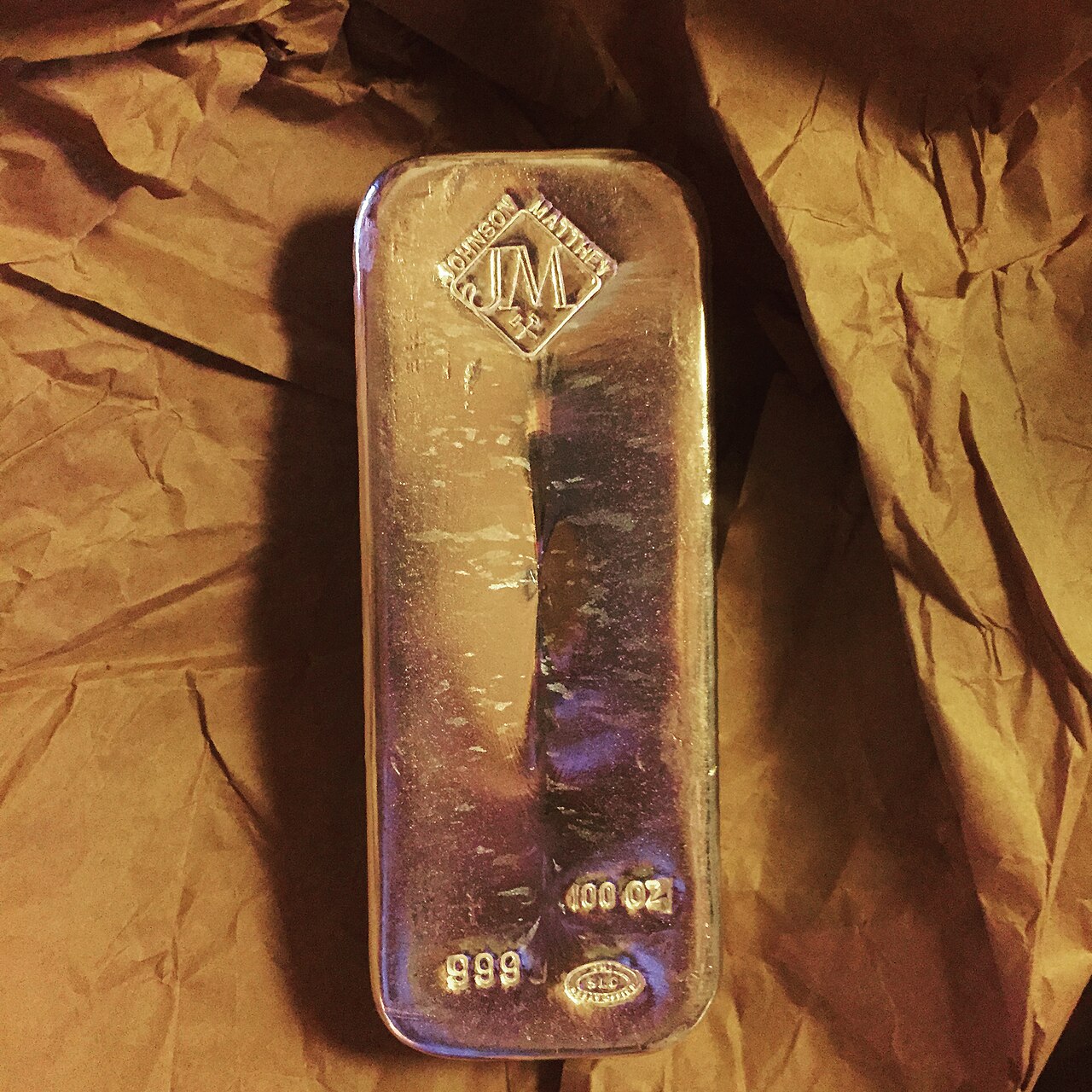
- Ausecure, "100 Troy oz. Silver Bullion Bar from Johnson Matthey.jpg," Wikimedia Commons photograph used for the article image.