Priced: senior housing already has the clean demographic story investors like, with aging households, constrained new construction, and listed landlords positioned to buy or operate scarce communities. New: the 2026 spread is not demand. It is whether higher occupancy can reach net operating income after labor, care intensity, affordability, and replacement supply take their share.[1][2][3][4]
That makes the trade less like a simple apartment rent cycle and more like an operating-leverage test. A multifamily landlord can benefit from a tight market with relatively light service delivery. Senior housing has a different constraint: each additional resident brings rent, but also meals, care coordination, cleaning, supervision, marketing, and staff coverage. Scarcity improves pricing power. It does not remove the need to run the building.
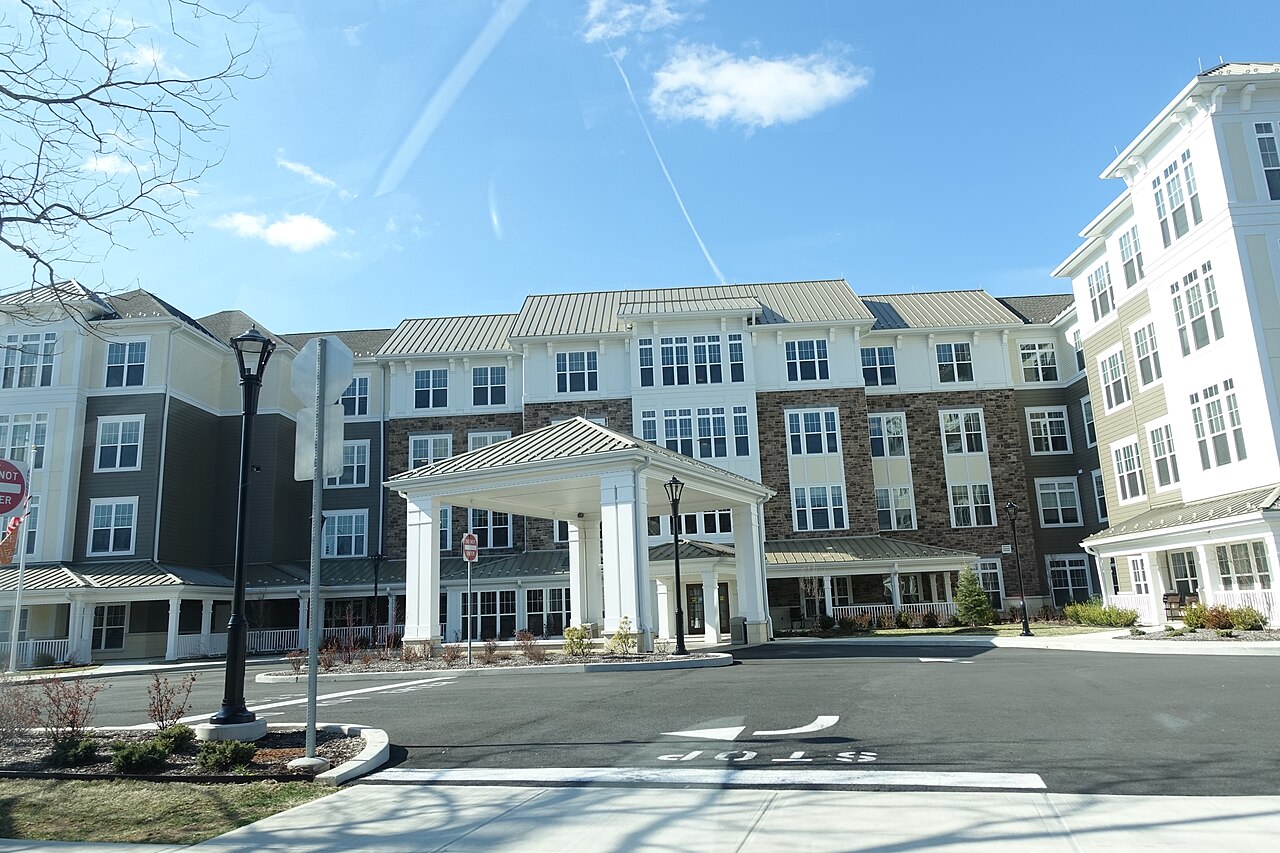
The cover photograph is intentionally ordinary: a Sunrise Senior Living property in Staten Island, not a demographic chart or a glossy "silver economy" graphic.[6] The finance question lives in ordinary buildings like this. If the building is full and well staffed, scarcity becomes cash flow. If staffing is thin or wage inflation outruns rate growth, scarcity can become service risk.
The Mechanism
The demand signal is unusually visible. NIC MAP reported that senior housing occupancy in its primary markets reached 89.5% in the first quarter of 2026.[1] The supply signal is just as important: year-over-year inventory growth hit only 0.4%, with new units under construction at a long-cycle low.[1] That combination is why the sector has rerated. Investors can see a market where demand is arriving faster than fresh buildings.
But senior housing NOI is not only a rent spread. It is a throughput equation. Operators need leads, move-ins, resident retention, price increases, acuity management, labor scheduling, food and utilities control, and enough local reputation to keep families comfortable with the choice. A high-occupancy building with poor service can damage itself quickly because the product is trust, not just shelter.
Welltower's first-quarter 2026 update shows the attractive branch. Its seniors housing operating portfolio generated 22.1% same-store NOI growth.[2] That is operating leverage doing what investors hoped: occupancy recovery, rate, scale, and platform discipline pushing revenue growth into margin expansion.
Ventas tells the same story with a slightly different emphasis. Its senior housing operating portfolio produced more than 15% same-store cash NOI growth in the first quarter, helped by revenue growth, operating leverage, and 310 basis points of average occupancy gain.[3] The useful read-through is that the recovery is not isolated to one balance sheet. Better operators are showing that a tight market can compound through same-store portfolios.
The catch is labor. O*NET's BLS-sourced employment trends show home health and personal care aide employment projected to grow 17% from 2024 to 2034, much faster than the all-occupation average.[4] That supports the demand story, but it also describes the staffing market senior housing must compete in. A building cannot convert move-ins into durable margins if aides, nurses, dining staff, and managers are scarce or expensive. Labor demand is not outside the thesis. It is the thesis's cost side.
Why Scarcity Cuts Both Ways
The bullish version is straightforward. New supply is muted because development costs, financing, land, entitlement, and operating risk remain difficult. NIC MAP's age-wave analysis argues that even maintaining current penetration rates would require a large wave of additional senior housing inventory late in the decade.[5] If that is even directionally right, existing communities in desirable submarkets should have pricing power before new construction can catch up.
That is the part investors have largely learned to price. The harder part is quality-adjusted scarcity. A market can be short of units and still punish operators that let care quality, food service, staffing stability, or family communication slip. Senior housing is a high-emotion purchase. Families do not only compare rent. They compare safety, responsiveness, reputation, medical coordination, memory-care capability, distance from adult children, and whether the resident will actually accept the move.
This is where the best operators deserve a different multiple from the average building owner. Data systems, referral funnels, staff scheduling, regional density, operator selection, and capital for refresh projects matter because they determine whether occupancy gains become margin rather than churn. The sector's scarcity is real, but not all scarcity is equally monetizable.
Counterweight
The strongest counterargument to caution is that the recovery still has room. Occupancy approaching 90% does not mean every portfolio is full, and Welltower's and Ventas's first-quarter numbers show that same-store operating leverage remains powerful.[2][3] If demand keeps arriving while construction stays muted, landlords with strong operators can raise rates, fill remaining vacancy, and use scale to absorb some wage pressure.
That counterweight is credible. Senior housing also benefits from a need-based demand layer that ordinary apartments lack. A resident may delay a move, but assisted living and memory care decisions often become harder to defer once caregiving stress, falls, dementia progression, or isolation changes the household math.
The caution is affordability and execution. Rate growth that outruns household budgets can slow move-ins or invite political pressure. Staffing shortcuts can turn occupancy into reputational risk. Acquisitions can add growth but also integration complexity. The sector has a demand tailwind, but the investable spread belongs to owners that can run the operating model without pretending it is passive real estate.
Falsifier
This thesis is wrong if the next two quarters show that occupancy keeps rising while labor and operating-cost pressure fade, allowing senior housing same-store NOI to keep growing materially faster than revenue without service-quality strain. In that case, scarcity would be flowing cleanly to owners, and the market should pay more for the platform premium.
It is confirmed if occupancy improves but margin conversion narrows. Watch especially for rising expenses per occupied room, higher turnover, weaker move-in conversion, discounting to protect occupancy, or operators needing heavier renovation and staffing spend to hold resident satisfaction. Those are signs that the demand story is true but not free.
Watchlist
- NIC MAP's next quarterly occupancy and construction update for the quarter ended June 30, 2026: the key is whether occupancy crosses 90% while inventory growth stays near record lows.[1]
- Welltower's and Ventas's second-quarter 2026 SHOP disclosures: compare occupancy, revenue per occupied room, expense per occupied room, and same-store NOI margin rather than only headline investment volume.[2][3]
- Direct-care labor indicators through 2026: faster wage pressure or hiring difficulty would cap the operating leverage that scarcity is supposed to create.[4]
- New-development and acquisition commentary over the next construction cycle: if capital markets reopen before operators solve staffing, supply can return in the wrong places at the wrong cost.[1][5]
The practical conclusion is narrow. Senior housing scarcity is real, and the best platforms can turn it into cash flow. But the sector should not be underwritten as a demographic autopilot. The proof line is labor-adjusted NOI: more residents, enough staff, acceptable service, and margin that survives after the building is actually run.
Sources
- NIC MAP, "Senior Living Occupancy Grows Amid Construction Slowdown, Limiting Options for Older Adults" (April 23, 2026) - Q1 2026 occupancy, inventory growth, construction, and market detail.
- Welltower, Business Update 1Q26 (April 28, 2026) - seniors housing operating portfolio same-store NOI, margin, occupancy, and investment activity.
- Ventas, "Ventas Reports 2026 First Quarter Results" (April 27, 2026; Business Wire release via Financial Times markets announcement) - SHOP same-store cash NOI, revenue, occupancy, investment, leverage, and liquidity data.
- O*NET OnLine, "Employment Trends: 31-1121.00 - Home Health Aides" (site updated May 19, 2026), citing U.S. Bureau of Labor Statistics 2024-2034 employment projections for home health and personal care aides.
- NIC MAP, "The Impending Age Wave: Navigating the Urgent Need for Senior Housing" (2026) - unit-demand estimates, demographic pressure, and construction-cycle context.
- Wikimedia Commons, "File:New Dorp Ln Mill Rd td (2022-04-02) 04 - Sunrise Senior Living of New Dorp.jpg" - Tdorante10 photograph of a Sunrise Senior Living building in Staten Island.