As of 2026-05-08 UTC, Sempra's first-quarter release made the company's next valuation test much narrower. Adjusted EPS came in at $1.51, the businesses invested approximately $3 billion of capital in the quarter, and management kept framing the enterprise around a record $65 billion 2026-2030 capital plan with 95% allocated to utility investments in Texas and California.[1] The broad story is already familiar. Priced is that Sempra is becoming a simpler, more regulated utility-growth vehicle. New is whether capital recycling lands on time and on the promised terms, so the company can fund that buildout without reopening the usual questions about equity needs, deconsolidation drag, or holding-company complexity.[1][2][3]
The April Oncor order is why that distinction matters now. Sempra said the Public Utility Commission of Texas adopted Oncor's base-rate settlement with an annual revenue requirement of about $6.97 billion, a revised capital structure of 56.5% debt and 43.5% equity, an authorized return on equity of 9.75%, and an authorized cost of debt of 4.94%.[1] Oncor can also surcharge the difference between new billing rates and current rates back to January 1, 2026, with accounting impacts beginning in the second quarter.[1] That is what a utility rerating looks like when it becomes real: not a thematic speech, but an actual order that changes the earning power of the asset base.
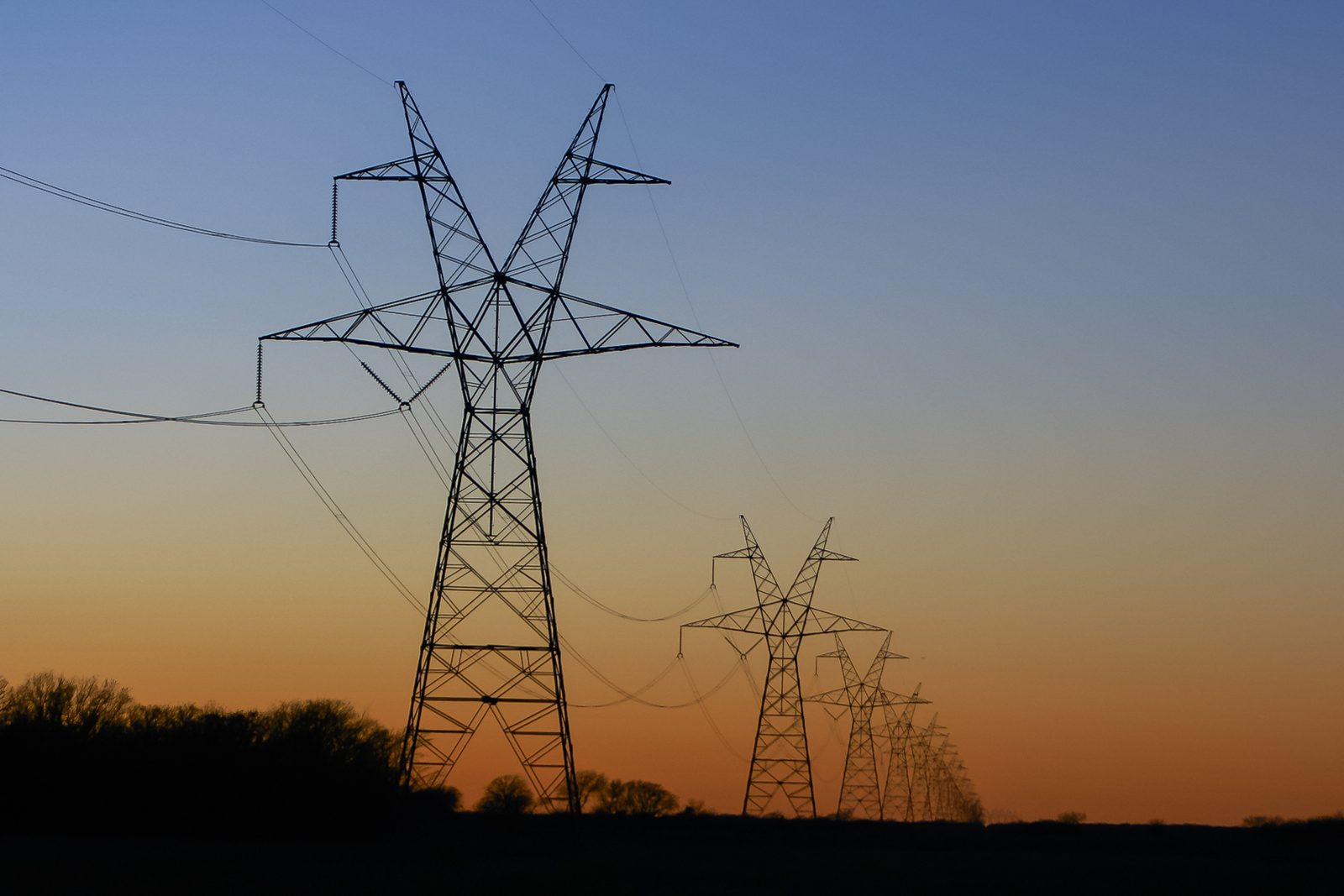
Image context: the cover uses a real East Texas transmission-tower photograph from Wikimedia Commons.[5] That is the right visual language for this article because Sempra's finance story is about wires, substations, and recoverable utility investment. The argument fails if those assets do not keep moving into rate base on time.
The Base Case: Utility Growth Holds, But The Funding Clock Matters
The base case is not hard to describe. Oncor's rate order begins to show up in second-quarter accounting, Sempra keeps executing the utility-heavy capital campaign, and the pending asset sales do enough work that management can preserve the cleaner balance-sheet story. The company's 2025 financial-results release laid out the bridge plainly: 2026 EPS guidance of $4.80 to $5.30, 2027 EPS guidance of $5.10 to $5.70, a 2030 outlook of $6.70 to $7.50, and long-term adjusted EPS growth of 7% to 9%.[2] Those are utility-growth numbers, not restructuring-placeholder numbers.
The annual report makes the mechanism even clearer. Management says it expects to invest $65 billion from 2026 through 2030, drive 11% compound annual rate-base growth, raise the regulated-earnings mix to roughly 95% by the end of the decade, and avoid common-equity issuance for the base capital plan.[3] If investors believe those four lines together, the multiple can stay supported even with the usual utility objections around rate lag and affordability.
That is where capital recycling stops being an optional corporate-finance detail and becomes the core of the scenario. Sempra's annual report says the company signed a definitive agreement to sell a 45% stake in Sempra Infrastructure Partners, highlighting an implied equity value of about $22.2 billion for that business, and described the transaction as a way to reduce enterprise risk, improve the balance sheet, and help fund the 2026-2030 capital plan.[3] The March 2025 capital-recycling announcement laid out the same logic earlier, presenting the SI Partners sale and the Ecogas process as the mechanism for redeploying capital toward the regulated utility buildout.[4] The 2025 results release sharpened the timing: Sempra expects the SI Partners transaction and the Ecogas sale to close in the second or third quarter of 2026.[2] If those closings slip, the company does not instantly lose the utility story. It does, however, risk turning a clean "funded growth" narrative back into a more conditional holding-company narrative.
The Upside Case: Deconsolidation Works Exactly As Advertised
The upside case is that Sempra is already closer to its target shape than the market is crediting. Oncor remains the most important proof asset because it keeps combining asset growth with regulatory mechanics that reduce lag. The annual report says Oncor built or upgraded nearly 3,100 circuit miles of transmission and distribution lines in Texas during 2025, grew premise count by more than 65,000, and increased electricity volumes by 6.2%.[3] That is the kind of operational backdrop investors want under a large capex plan.
If the SI Partners sale closes on time and its debt is deconsolidated as intended, the simplification story strengthens in two ways at once. First, Sempra becomes more legibly utility-centric. Second, the market can stop treating non-utility infrastructure exposure as a capital sink that competes with Oncor and the California utilities for funding attention. The same logic applies to Ecogas: a non-core asset sale matters less for the cash amount alone than for what it says about management's willingness to keep narrowing the portfolio toward the highest-multiple businesses.[2][3]
There is also a smaller but useful upside from execution sequencing. The annual report says Energía Costa Azul LNG Phase 1 reached mechanical completion and was expected to come online later in 2026.[3] If that asset turns operational while Sempra is simultaneously closing the SI Partners transaction, the company can argue that it is monetizing and derisking infrastructure from a position of completion rather than from a position of unfinished spending. That would make the capital-recycling story look more disciplined and less defensive.
The Downside Case: Timing Slips Bring Back The Old Discount
The downside case is not that Oncor suddenly becomes a bad utility. It is that the pieces do not line up cleanly enough for the market to keep paying for the simplified structure in advance. Utility-growth equities can absorb a lot if the funding path looks settled. They lose altitude faster when the same capex promises have to coexist with delayed transactions, contested recoveries, or a renewed need to discuss equity financing.
Sempra itself gives the market reasons to watch the timing carefully. In the first-quarter release, management said a final decision on the Oncor base-rate matter is expected in the second half of 2026.[1] That means the current order is a major positive, but the regulatory story is not fully closed. The annual report also describes the usual Texas risk plainly: approved levels and timing of recovery can differ from requested levels and timing, especially during periods of increased capital spending, inflation, or higher interest rates.[3] That is the normal utility bargain, and it matters more when the company is asking investors to capitalize a multi-year plan so heavily.
The second downside branch is simpler: if capital recycling takes longer or closes with more leakage than expected, the "no common equity issuance" line stops acting like a confidence marker and starts acting like a question.[3] Investors do not need the company to become risk-free. They do need the sequencing to remain coherent: sell lower-multiple or non-core interests, deconsolidate debt, keep utility spending moving, and let the regulated mix rise toward the promised 95%.[2][3] If one part slips badly enough, the market may keep the utility growth but refuse the full rerating.
Six Numeric Anchors
- Quarterly proof point: first-quarter 2026 adjusted EPS was $1.51, and the businesses invested approximately $3 billion of capital in the quarter.[1]
- Capital intensity: Sempra's 2026-2030 base capital plan is approximately $65 billion, with 95% allocated to utility investments in Texas and California.[1]
- Regulatory economics: Oncor's rate order includes an annual revenue requirement of roughly $6.97 billion, a 43.5% equity ratio, a 9.75% authorized ROE, and a 4.94% cost of debt.[1]
- Growth shape: management's 2025 results release gave 2026 EPS guidance of $4.80 to $5.30, 2027 guidance of $5.10 to $5.70, and a 2030 outlook of $6.70 to $7.50.[2]
- Rerating claim: the annual report says the plan should drive 11% compound annual rate-base growth and lift regulated earnings mix to roughly 95% by decade end.[3]
- Capital-recycling scale: Sempra agreed to sell a 45% stake in SI Partners at an implied equity value of about $22.2 billion, with management expecting that transaction and the Ecogas sale to close in the second or third quarter of 2026.[2][3]
Those anchors point to a simple conclusion. Sempra is no longer asking the market to imagine a utility transformation. It is asking the market to believe that the transformation is funded, sequenced, and close enough to visible to deserve the multiple today.
Strongest Counterweight
The strongest pushback is that this framework may still be too cautious. Few U.S. utilities can point to Oncor's scale, California utility exposure, a clearly disclosed multi-year capex runway, and explicit "no common equity issuance" language in the same breath.[1][2][3] If the market wants a large-cap name with visible rate-base growth and a credible simplification plan, Sempra has already done much of the hard work.
That counterweight is real. It is also why the debate now belongs to timing rather than direction. The article's claim is not that Sempra lacks good assets. It is that the rerate depends on the asset sales, deconsolidation, and regulatory cadence continuing to line up without forcing investors back into the old discount for complexity.
Falsifier
This cautious frame is wrong if three things happen together over the next two quarters: Oncor's accounting pickup in the second quarter comes through cleanly, the SI Partners and Ecogas transactions close within the company's Q2-Q3 2026 window, and management keeps the capital-plan and no-common-equity message intact while reaffirming the 2027 and 2030 earnings ranges.[1][2][3] If that happens, the market will have been right to pay in advance for a cleaner utility-growth company.
Watchlist
- Second-quarter 2026 results: this is when Sempra said Oncor will begin recognizing accounting impacts from the base-rate order.[1]
- Q2-Q3 2026 transaction closings: management expects the SI Partners sale and the Ecogas sale to close in the second or third quarter of 2026.[2]
- Second-half 2026 final decision on the Oncor base-rate matter: the company said another regulatory decision is expected later this year, which keeps Texas execution on the watchlist even after April's order.[1]
- Later in 2026 for ECA LNG Phase 1: commercial start-up would strengthen the case that Sempra is monetizing infrastructure from a position of completion, not from balance-sheet stress.[3]
Takeaway
Sempra's bull case now has real numbers under it. The company has a large utility capex plan, a helpful Oncor rate order, a disclosed path toward a roughly 95% regulated earnings mix, and a stated intention to avoid common-equity issuance for the base plan.[1][2][3]
The narrower finance question is sequencing. If capital recycling closes on time and the Texas order flows into earnings as expected, Sempra can keep shedding the old complexity discount and look more like a pure utility-growth compounder. If that timing slips, the assets can stay good while the rerate waits.
Sources
- Sempra, "Sempra Reports First-Quarter 2026 Results" (May 7, 2026).
- Sempra, "Sempra Reports 2025 Financial and Business Results" (February 25, 2026).
- Sempra, 2025 Annual Report (March 2026).
- Sempra, "Sempra Announces Continuation of Capital Recycling Program" (March 31, 2025).
- Wikimedia Commons, "File:Transmission towers at sunset in East Texas.jpg" - source page for the transmission-line photograph used as the article image.