A lower commercial-property limit can cut the premium while leaving the owner funding part of a repair bill that looks comfortably insured. The surprise arrives when a claim tests the value of the whole building, rather than simply comparing the damage with the policy limit.[1]
That distinction changes the economics of buying less cover. A business may think it has retained only the risk of a catastrophic loss. Under an active coinsurance clause, it can also retain a share of an ordinary partial loss. The apparent saving needs to be measured against both exposures.
Sources checked on 15 October 2026. The building, policy amounts and loss below are illustrative assumptions, not a reported claim or an insurance quotation. The example concerns U.S. commercial-property coverage.
A smaller fire, a larger valuation test
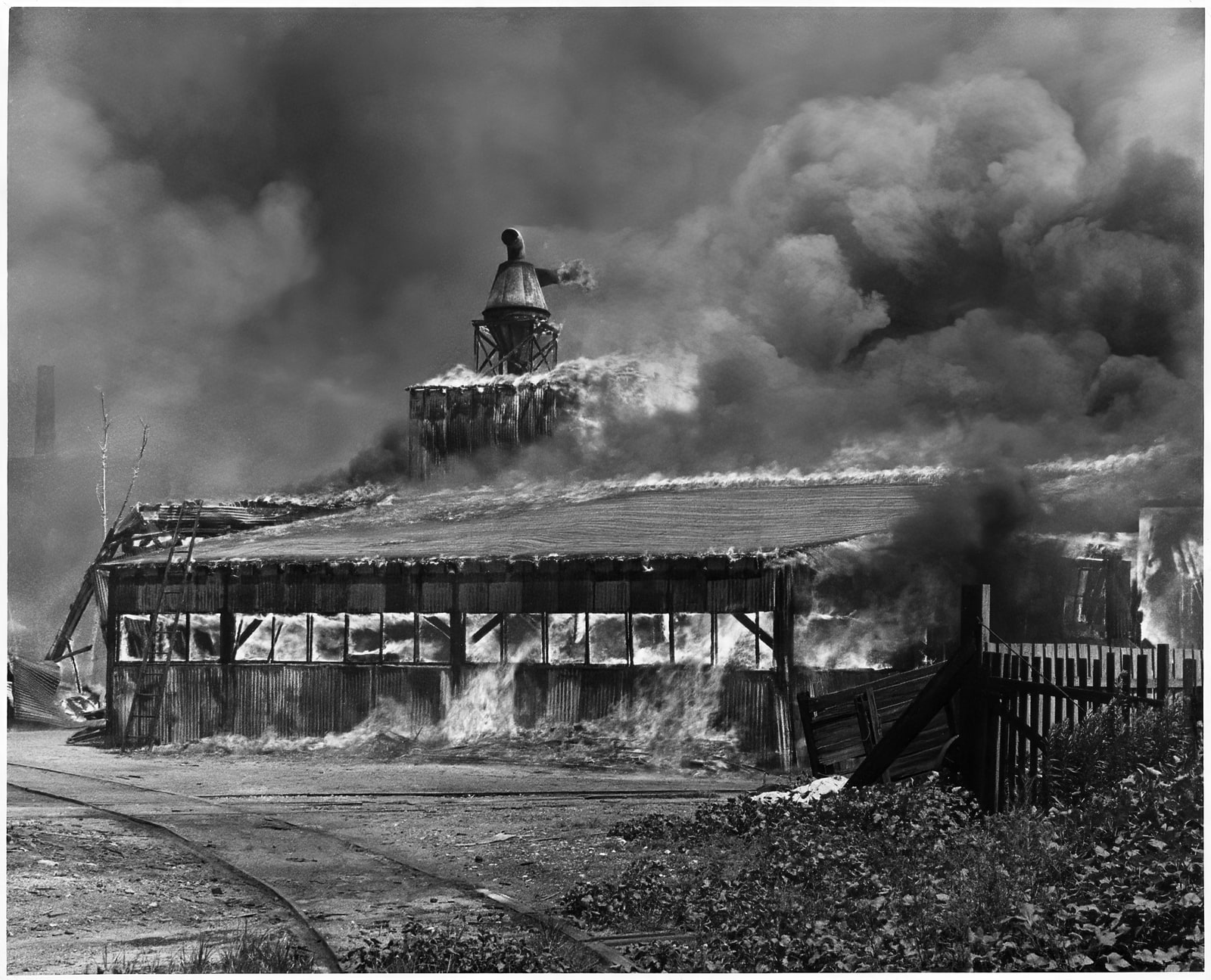
Imagine a distributor whose warehouse has a $2 million replacement value at the time of loss, measured on the policy's valuation basis. It carries $1.2 million of building insurance, with an 80% coinsurance requirement. A fire causes $400,000 of covered building damage. Assume replacement-cost settlement conditions are met, no coinsurance waiver applies, and there are no other adjustments beyond the deductible.
The repair bill is far below the limit. But the limit is also below the insurance required by the clause: the building's replacement value multiplied by the coinsurance percentage comes to $1.6 million. The owner has bought only three-quarters of that required amount.
Applying the standard calculation illustrated by Travelers, the insurer therefore recognizes only three-quarters of the covered damage: $300,000 before the deductible. The calculation is carried insurance divided by required insurance, multiplied by the covered loss. The deductible then reduces the payment further.[1]
For the distributor, the missing quarter of the repair bill is a financing need. A contractor still has to be paid to restore the damaged roof and loading area. If management had budgeted only for the deductible, reopening now competes with payroll, supplier payments and the next stock order. Those consequences are the scenario's cash-flow implications; they are not additional policy benefits or penalties.
What buying enough cover changes
Now change only the amount insured. If the warehouse carries the required $1.6 million at the time of this same loss, it meets the assumed coinsurance threshold. The covered repair cost is no longer reduced for underinsurance, although the deductible still applies.[1][2]
The percentage is therefore a test of how much insurance to maintain. It does not mean that the insurer automatically pays four-fifths of every claim. Nor does satisfying the test make the building fully insured against destruction: the required amount in this example remains below its full replacement value. Avoiding a partial-loss penalty and funding a total rebuild are separate objectives.[2]
This explains the clause's commercial purpose. The NAIC describes property coinsurance as an incentive to maintain adequate insurance, with a larger share of loss falling on an owner who fails the requirement.[3] Without such a mechanism, a buyer could select a small limit to cover expected repairs while leaving much of the building's value outside the premium calculation. Coinsurance makes that choice affect the smaller claim too.
There is no premium quote in this example, so it cannot establish which policy purchase offers better value. An owner with ample cash might deliberately retain more exposure. What the calculation rules out is treating the lower limit as a saving that matters only when the entire building burns down.
The renewal can look unchanged while protection shrinks
Under replacement-cost coverage, the relevant valuation concerns replacing the insured property with comparable new property. California's insurance regulator also notes that building coverage includes completed additions and permanently installed equipment, and describes inflation protection as a way to help keep limits adequate.[2]
That creates a quiet failure path. Imagine the distributor renews the same limit while construction costs rise or a building addition enters service. The declarations still show the familiar amount, but the valuation against which it will be tested has changed. Travelers explicitly assesses the property's value at the time of loss.[1] A once-adequate limit can therefore become inadequate without any deliberate decision to buy less insurance.
The operational lesson is a connection between records: the person approving the building project and the person renewing the insurance need to be working from the same description of the property. A premium budget alone cannot show whether the coverage still fits.
The exception has an expiry date
The strongest counterweight is an active agreed-value provision. In the ISO sample Building and Personal Property Coverage Form, this optional coverage suspends coinsurance for the specified property. But it can still reduce payment when the insurance limit is below the agreed value, and coinsurance returns if the option expires without extension.[4]
The scenario's coinsurance explanation is falsified if the loss falls under an effective agreed-value option with the limit at least equal to the agreed value. The ordinary valuation shortfall would then fail to explain the reduced payment. Deductibles, limits and other settlement conditions would still matter. “Agreed value” is not a promise to pay the entire stated value for every damaged roof.[4]
Three events make the exposure observable before the next claim:
- At the next renewal: reconcile the building valuation, insurance limit and coinsurance percentage. Compare the cost of adequate cover with the cash the business is prepared to retain at risk.[1][3]
- When an addition or major building improvement enters service: update the property description and valuation assessment, then check whether the insurance needs changing. An unchanged premium is not evidence of unchanged exposure.[2]
- Before any agreed-value option expires: confirm its extension for the relevant property and compare the limit with the declared agreed value. The operative dates and amounts determine whether this exception survives.[4]
Sources
- Travelers, “Calculating Coinsurance” — valuation at the time of loss, required insurance, proportional settlement and deductible sequence.
- California Department of Insurance, “Commercial Insurance Guide” — building coverage, replacement-cost valuation, coinsurance and inflation protection.
- National Association of Insurance Commissioners, “Glossary of Insurance Terms,” entry for Coinsurance — the incentive to maintain adequate property insurance.
- Insurance Services Office, Building and Personal Property Coverage Form, CP 00 10 10 12, printed pages 10 and 13–15 — sample policy wording, including agreed-value conditions and expiry; hosted by Merlin Law Group.
- National Archives and Records Administration, “Warehouse engulfed in a raging blaze. St. Louis,” 1944, identifier 283525 — restored archival photograph and provenance, Wikimedia Commons.