Priced: exchange-led 23x5 access is no longer a proposal trade: Cboe EDGX has SEC approval, NYSE Arca has published its intended schedule, and NSCC's longer clearing window is live. New: the SEC's August dataset shows demand growing quickly from a small, concentrated base. For exchange operators and brokers, the gap is whether new transaction and data revenue can outrun the cost of capacity, surveillance, support, and best execution before broad liquidity arrives.[1][3][4][5]
The slogan is 24-hour trading. The market system is less glamorous: liquidity providers commit capital and post quotes; consolidated processors disseminate eligible quotes and completed trades; venues match orders under listing-exchange safeguards; and NSCC guarantees and clears accepted executions. These layers interact rather than forming a neat conveyor belt, but each must work. If one remains thin or offline, investors may gain the ability to click without gaining the execution quality they associate with the opening bell.
Evidence cut-off: September 12, 2026 at 10:35 UTC. “Overnight” follows the SEC staff memorandum's 8:00 p.m.–4:00 a.m. Eastern session definition; planned exchange and protection windows differ at the edges. Volume statistics describe August 2026, not a forecast. Statements about incentives, economics, and likely market behavior are interpretation, not a recommendation to trade or invest in any exchange, broker, or security.[1][3][4][6]
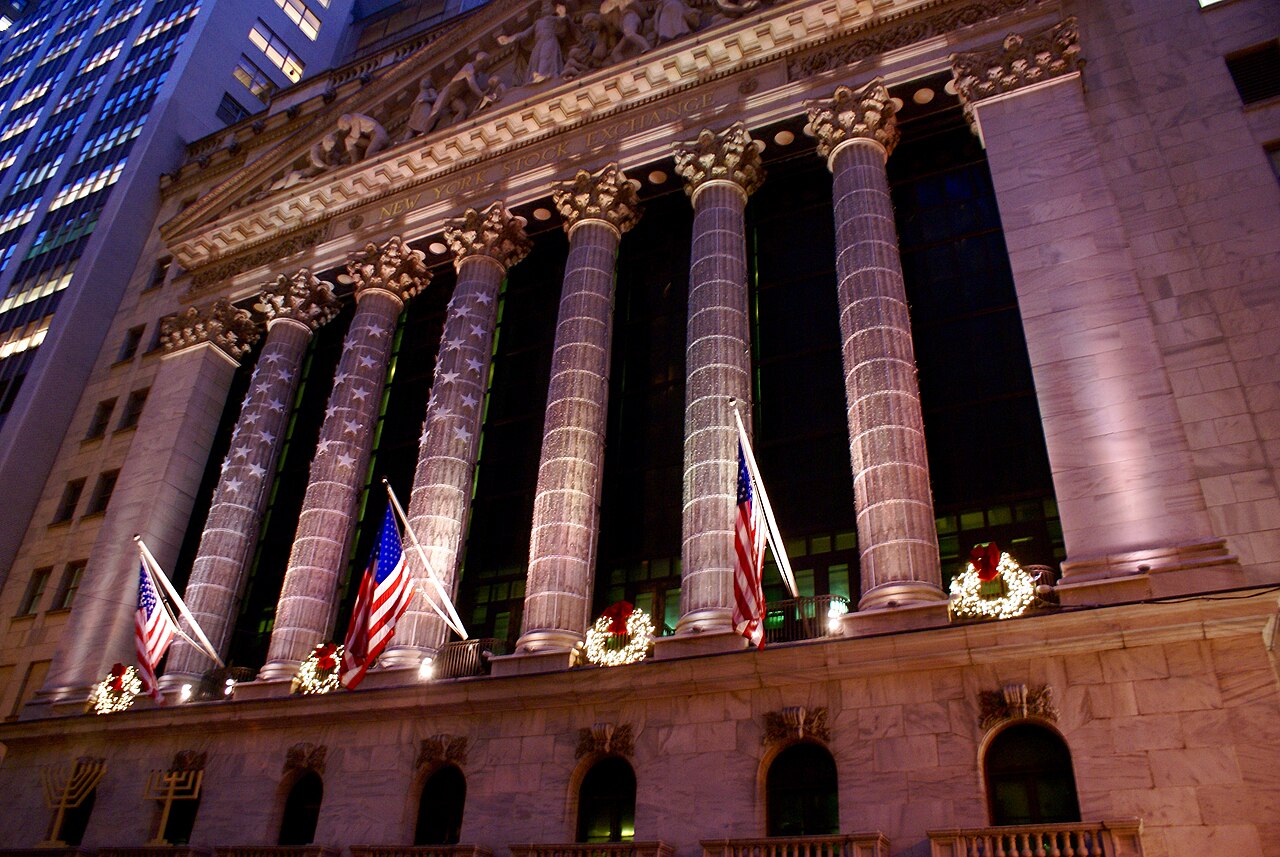
Image context: the cover is a resized photograph of the NYSE facade after dark, published under CC BY 2.0. It supplies place and atmosphere, not a picture of the electronic venues, data feeds, or clearing systems that will carry overnight orders in 2026.[8]
A longer trading day requires four clocks to agree
NYSE's published design divides a planned 23-hour day into an overnight session from 9:00 p.m. to 4:00 a.m., an early session, the familiar 9:30 a.m.–4:00 p.m. core, and a late session ending at 8:00 p.m. Cboe EDGX has SEC approval for the same broad Sunday-evening-through-Friday architecture and targets December 2026, pending industry readiness.[3][4]
The exchange clock is only the visible one. Three others have to line up:
- The data clock: the securities information processors must collect and publish consolidated quotes and trades so a customer is not comparing one private window with darkness elsewhere.
- The risk clock: listing exchanges need common handling for price bands, regulatory halts, corporate actions, and the closing prices on which funds, derivatives, and account statements depend.
- The cash clock: trades need a clearing business date, a central counterparty guarantee, margin treatment, and a settlement path even when an order crosses midnight.
Some of that plumbing is already live. DTCC says its National Securities Clearing Corporation moved to 24x5 clearing in June, from Sunday at 8:00 p.m. to Friday at 8:00 p.m., after participating firms completed testing. NSCC can now apply its central-counterparty guarantee immediately to overnight activity accepted in that window.[5]
Other pieces are deliberately unfinished. The SEC's September 17 roundtable agenda devotes separate panels to surveillance, closing-price processes, clearance and settlement, failover, cybersecurity, staffing, and shorter maintenance windows. That list is revealing. The industry's hard problem is not accepting an order at 2:00 a.m.; it is preserving the connected protections around that order when fewer humans and less redundant liquidity may be present.[2]
Growth is real; activity is not yet broad
The SEC's September staff memorandum gives both sides of the overnight story. In August, share volume was up 359% year over year and dollar volume was up 249%, although both measures retreated from July. This is no longer a rounding error for the brokers, venues, and operations teams serving it.[1]
It remains small relative to the whole market. Overnight activity represented only 0.9% of total NMS share volume and 0.8% of dollar volume per trade date. The gap between those two shares also hints at a lighter-priced mix: overnight trading is growing quickly, but it is not yet where most capital changes hands.[1]
Concentration makes the boundary sharper. In August, the 100 most active overnight names accounted for 82.0% of overnight share volume, versus 34.0% during regular hours. Access can be broad while activity remains concentrated in a narrow front rank. This volume comparison is not itself a measure of quoted depth; it sets the burden of proof for the new session.[1]
That distinction matters for the business case. An exchange can open another session, a broker can add another button, and an investor can submit another order. None of those actions guarantees a second market maker at the inside price. The economic upside arrives only when enough participants overlap to narrow spreads, add displayed size, and make prices resilient after a large order or a news shock.
The maintenance hour is a price, not a footnote
Near-continuous still contains a seam. The planned consolidated-data schedule pauses from 8:00 p.m. to 9:00 p.m. Eastern, Monday through Thursday, for technical maintenance. Yet SEC staff found that 21.2% of current ATS overnight share volume in August occurred during that same hour.[1]
That is a useful stress test of the design. The pause preserves a predictable window for releases, checks, and recovery work across systems that cannot safely change while every dependency is live. It also sits exactly where existing customers already trade. Activity in that hour will have to shift in time or remain outside the consolidated exchange window, subject to the rules and disclosures of the venue handling it.
The seam therefore measures a real tradeoff. Make the pause too short and operational risk rises; make it too long and liquidity fragments around the closure. “Always on” is not the same as “never maintained.” The better system is the one that makes the boundary explicit and recoverable, not the one that hides it in marketing copy.
A safety rail is not daytime liquidity
The first overnight protection regime is intentionally simple. From 9:00 p.m. to 4:00 a.m., the primary listing exchange for each security will calculate bands around the lower and higher of two reference points—the official close and the last consolidated round-lot sale as of 7:45 p.m. The percentage parameter is 20%, but for a stock closing at $1 or more each side also has a minimum $3 distance from its applicable reference price; the effective rail for a lower-priced stock can therefore be wider than 20%. Hitting a band does not trigger the same automatic trading pause used during regular hours; the primary listing exchange may instead call a regulatory halt that lasts through the overnight session.[6]
Those bands address an absurd print, not an expensive ordinary one. A buy can remain inside an overnight band and still cross a spread much wider than the daytime spread. A thin quote can be formally valid and economically fragile. The protection should therefore be read as a floor under market integrity, not proof that all sessions have equivalent execution quality.
This is where consolidated exchange trading could improve the current setup. Overnight business is presently dominated by off-exchange venues without an overnight consolidated tape or national best bid and offer. Bringing multiple exchanges, quotes, and common protections into the same window can increase competition for order flow and make poor executions easier to detect.[6][7]
It could also redistribute rather than create volume. Orders may migrate from ATSs or from today's early and late sessions without adding much net activity. For exchange operators, more hours create potential transaction and data revenue but also capacity, surveillance, and support expense. For brokers, a longer menu creates a best-execution and disclosure burden. For investors, immediacy has value only after the spread, displayed depth, order type, and reference price are understood.
The strongest counterweight: liquidity can follow infrastructure
The cautious reading should not become a claim that overnight markets cannot work. NSCC clearing is already operating on the longer schedule, the consolidated processors have a dated transition plan, and the SEC has approved uniform first-phase price protections. These are complements: clearing reduces counterparty friction, public data lets venues compete on visible prices, and common rails make participation easier to govern.[5][6]
Nor does low overnight volume automatically mean wild prices. A Nasdaq analysis of BOATS ATS transactions across 20 trading days in January 2026 found that most stocks had a smaller overnight trading range than during the core session. The sample is one off-exchange venue and one month, not the entire market. Nasdaq also emphasized the important boundary: a quiet range does not erase wider spreads, lower depth, or the absence of today's consolidated protections. Low activity can produce little movement right up until a meaningful order arrives.[7]
The bull case is therefore endogenous. Better infrastructure attracts more market makers; more competing quotes improve execution; better execution draws more global order flow. If that loop starts, today's 0.9% share is a poor ceiling. If it does not, extending the clock mostly lengthens the hours during which liquidity is scarce.
Falsifier
Set the test before the launch. Conditional on exchange-led overnight trading being live by December 31, the cautious thesis—that infrastructure will arrive before broad liquidity—is falsified if the quarter ending March 31, 2027 shows all four of these outcomes: overnight dollar share reaches at least 2.0%; the top-100 share-volume concentration falls to 60% or less; the median effective spread for those names is no more than 1.5 times its like-for-like core-session spread in comparable venue-published data; and no infrastructure failure causes a market-wide overnight outage longer than 30 minutes. These are author-set thresholds, not agency forecasts. Clearing all four would show the new session creating competitive price discovery rather than merely relocating existing off-exchange flow.
Four dated checks
- September 17, 2026: use the SEC roundtable to separate completed work from dependencies. The most useful disclosures will concern overnight consolidated data, closing-price governance, corporate actions, broker routing, failover, and who staffs an incident when the core session is closed.[2]
- December 6, 2026: test the planned start of the extended SIP schedule and first-phase overnight price bands. Watch whether the 8:00–9:00 p.m. maintenance boundary holds cleanly and whether venues publish comparable execution-quality data around it.[1][6]
- December 31, 2026: check implementation against the operators' stated 2026 window. Cboe targets a December EDGX launch pending industry readiness, while NYSE describes a 2026 rollout; record which venues actually opened, which symbols and order types were eligible, and whether the common data and clearing layers were present.[3][4]
- March 31, 2027: if exchange-led overnight trading was live by year-end, close the first full-quarter measurement window. When the first quarterly protection report and comparable venue execution data appear, apply the predeclared falsifier rather than grading the launch on hours advertised.[1][6]
Sources
- U.S. Securities and Exchange Commission, Staff Memorandum: Roundtable on Preparations for 24-Hour Trading (September 10, 2026) — August overnight volume, market share, session timing, participation, and concentration data.
- U.S. Securities and Exchange Commission, “SEC Announces Agenda and Panelists for Roundtable on Preparations for 24-Hour Trading” (September 1, 2026) — September 17 agenda and the industry's stated readiness questions.
- New York Stock Exchange, “Extended Hours Trading” — proposed NYSE Arca session schedule and dependencies on consolidated data and clearing.
- Cboe Global Markets, “Market Metrics That Matter: U.S. Cash Equities May Volume Briefing” (June 8, 2026) — SEC approval for EDGX's 23x5 schedule, all-NMS-stock scope, December target, and industry-readiness condition.
- DTCC, “NSCC Now Live with Clearing Hours Extended to 24x5 Model” (June 29, 2026) — live clearing window, testing, and central-counterparty treatment for overnight activity.
- U.S. Securities and Exchange Commission, Order Approving Temporary Price Band Protections in Overnight Trading, Release No. 34-106042 (August 5, 2026) — band calculation, halt mechanics, implementation timing, and first-quarter reporting.
- Nasdaq, “Just How Volatile Are U.S. Stocks Overnight?” (May 28, 2026) — observed trading ranges and the distinction among volatility, spreads, depth, and consolidated protection.
- Georgio via Wikimedia Commons, “NYSE lit up at night” (photographed December 3, 2008) — source page, CC BY 2.0 license, and provenance for the resized cover photograph.